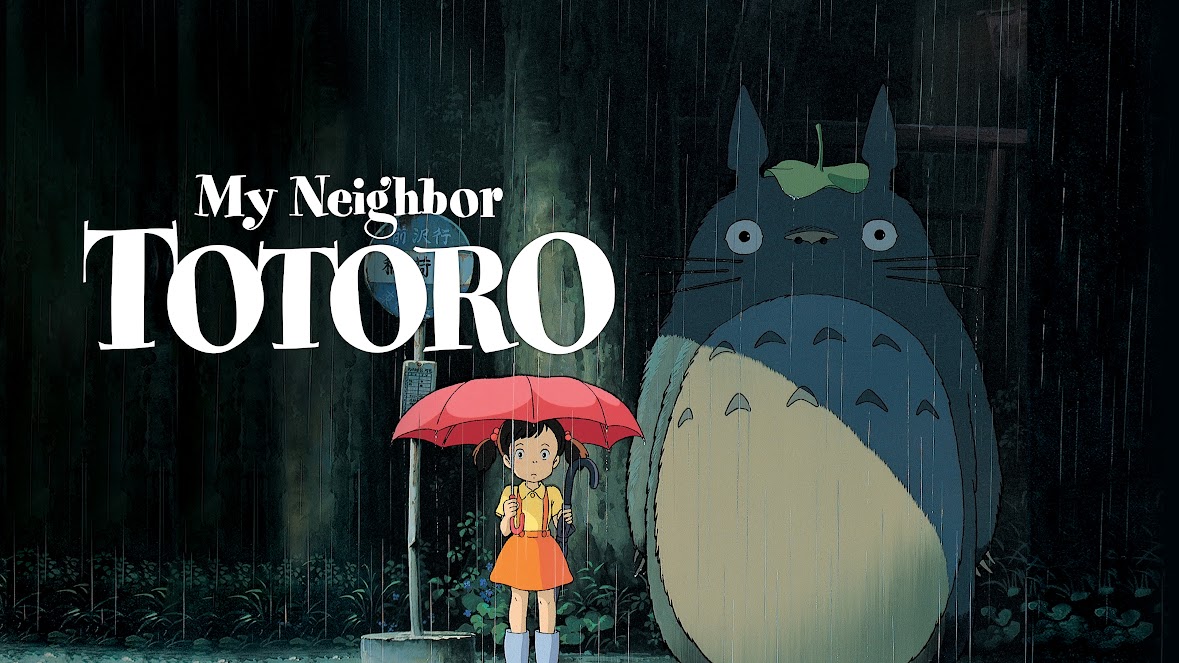
My Neighbor Totoro
Can Christians watch My Neighbor Totoro and is the film family-friendly? Our Christian My Neighbor Totoro will dive into themes, character, spiritual concerns, and other key concepts from a faith-based lens. We will also provide a parents’ guide for the Studio Ghibli film.
Quick Facts about My Neighbor Totoro
Creator: Hayao Miyazaki (Studio Ghibli)
Rating: G
Year: 1988
Runtime: 1h 26m
Quick My Neighbor Totoro Content Guide
Romance, Nudity, & Sexual Content: Girls shown naked in the bath with their father (cultural, non-explicit, though butt cheeks are visible). A man wears a loincloth.
Frightening Scenes, Gore, and Violence: The girls’ mother is sick. Mei goes missing. A teacher hits a student with a book. People hit each other with rags. Totoro has large teeth, though he is very docile.
Language: Basically none. An insult or two.
Substances: None.
Spiritual: Forest spirits, fantastical creatures, and other spiritual elements present.
My Rating
What is the age rating for My Neighbor Totoro?
Common Sense Media suggests an age rating of 5+ for My Neighbor Totoro. From a secular standpoint (ignoring the film’s spiritual aspects), we agree that it’s safe for most children, potentially even those under the age of five.
However, from a Christian perspective, we recommend the anime film for older children due to My Neighbor Totoro’s spiritual themes.
Is My Neighbor Totoro safe for Christians?
With wisdom and discernment, Christians may enjoy My Neighbor Totoro, but they will want to be aware of some spiritual themes and religious influences in the film, which we will explore more in our Christian review below.
Is My Neighbor Totoro family-friendly?
Yes, My Neighbor Totoro is family-friendly.
Synopsis: What is My Neighbor Totoro About?
When Satsuki, her little sister Mei, and their father move into a new house in the countryside, the two girls are thrilled. Shortly after, Mei is playing outside and finds a unique, transparent creature. Curious and excited, Mei follows it far from home and stumbles across a large, fluffy, sleepy, and docile creature named Totoro.
Mei insists that Totoro is real, but she is unable to find his home again. Satsuki wants to meet Totoro, yet there is no sign of him anywhere.
Who is Totoro?
My Neighbor Totoro Christian Review
My Neighbor Totoro, also known as Tonari no Totoro, is one of Studio Ghibli’s most iconic films. To this day, Totoro is the official mascot of Studio Ghibli.
Only one sequel has ever been made for a Studio Ghibli movie, Mei and the Kittenbus, which follows Mei and a kitten version of the catbus. It’s only 13 minutes long and available only at the Ghibli Museum’s Saturn Theater, but the fact that Totoro even has a sequel further establishes its importance in Studio Ghibli history.
And perhaps even more surprising, it released alongside another Studio Ghibli film with a far darker tone.
My Neighbor Totoro Tone: An Interesting Release History
On April 16, 1988, two of Studio Ghibli’s masterpieces were released as a double feature in theaters. One was, of course, the G-rated My Neighbor Totoro, a lighthearted film about childhood whimsy, excitement, and sisterhood. The other was Grave of the Fireflies, an unrated film following a brother and sister in the midst of war. Grave of the Fireflies is infamously depressing—at the very beginning, audiences learn that neither sibling survives, and its impact on viewers is still discussed today.
It’s a very odd pairing of films as a double feature, but both films are masterpieces in their own right.
In honor of this double feature, we will be releasing our reviews of My Neighbor Totoro and Grave of the Fireflies back-to-back.
This first post is, of course, My Neighbor Totoro.
My Neighbor Totoro: Tone & Structure
My Neighbor Totoro is, by far, one of the lightest Studio Ghibli films. Totoro contains very little conflict—sisterly squabbles, an ill mother, and a climax where one of the sisters is missing, and it’s uncertain if she’s drowned. However, she hasn’t; Mom survives, and the sisters make up.
It’s this lack of traditional conflict that makes many Studio Ghibli films stand out. Studio Ghibli films sometimes utilize kishōtenketsu, an Asian 4-part story structure: introduction, development, twist or reversal, and resolution.
Kishōtenketsu “builds narratives through contrast and surprise. No villain required. No ticking clock. The story works because something unexpected recontextualizes everything the reader thought they understood.“
It’s not that there is never conflict in kishōtenketsu. It may “not center on conflict as part of its structure,” but “Tension exists in kishōtenketsu stories. Suspense exists. Emotional stakes exist. What doesn’t exist is the Western assumption that these things must come from opposing forces.” The tension comes from “something unexpected,” which can be something as small as ants infesting someone’s house.
This article from Loreteller beautifully describes the technique and explains how Studio Ghibli utilizes it, using My Neighbor Totoro as an example. I highly recommend reading it, as it explains Studio Ghibli’s connection much more coherently and accurately than I ever could.
My Neighbor Totoro is ultimately a peaceful and calming story about family, and it’s beloved by audiences and critics alike.
Critical Reception
My Neighbor Totoro boasts a 94% critic and 97% audience score on Rotten Tomatoes. Common Sense Media calls the film a “Beautifully animated fantasy about friendship fit for all,” and PluggedIn calls it “a lovely film.”
Personally, I think these ratings could be higher, but that’s difficult when so many Studio Ghibli movies compete for the top spots!
My Neighbor Totoro English Dub
My Neighbor Totoro’s English Dub (Disney’s version) is absolutely wonderful. Satsuki and Mei, the two sisters central to Totoro, were voiced by Dakota (Coraline) and Elle Fanning (Sunrise on the Reaping), respectively, a real-life sister duo. Casting these two iconic sibling actresses was a fantastic choice, as it adds believability to their relationship onscreen.
Other voice actors include Frank Welker (Curious George, Scooby-Doo, Nausicaä of the Valley of the Wind, Porco Rosso) as Totoro and the Catbus, Pat Carroll (The Little Mermaid), Lea Salonga (Sofia the First, Mulan, Aladdin), and Kath Soucie (Kiki’s Delivery Service, Winnie the Pooh: Springtime with Roo).
For a full list of My Neighbor Totoro’s English dub cast, click here.
My Neighbor Craig
My Neighbor Totoro is such a cute and brilliant film, but Americanizers allegedly considered American names for the titular character in the English dub.
According to ScreenRant:
Regardless of whether it actually happened, it’s humorous to think that Totoro could have been named Craig. Thankfully they stuck with Totoro, though, which was a far wiser decision in my opinion.
Does My Neighbor Totoro contain spiritual themes?
Yes, My Neighbor Totoro contains spiritual themes. As PluggedIn accurately describes it: “…[T]his flick is birthed from a Japanese culture that accepts that there are natural spirits all around us: In the trees, in the rocks, in the dark and dirty corners of a room that needs cleaning. And that may well be the biggest sticking point for some parents.“
Indeed, the film’s titular character, Totoro, is allegedly a forest spirit. Mei and Satsuki’s father grows excited at the idea of living in a haunted house, and the family thanks the forest spirits for taking care of Mei. Granny seems superstitious, rubbing a sandal and seemingly praying for Mei’s safe return.
A character or two may identify Totoro as a forest spirit, but that doesn’t mean he is one. After all, the girls’ father never sees Totoro himself. Depending on how you choose to look at it, he could be a cuddly and fluffy forest creature, a forest spirit, or even a mysterious friend.
PluggedIn reminds us that Totoro and his friends are only visible to the girls, not the adults, and that it’s unclear whether the dad actually believes the spirits and other creatures exist. However, “…[I]t’s that comforting and calming side of the ethereal Totoro’s nature that invites …interpretations. A creative parent might, for example, even find biblical parallels in the creature’s actions.”
And there are certainly opportunities for biblical parallels. PluggedIn reminds us that Totoro is truly a “helpful” creature.
When Satsuki has no one else to turn to, she turns to Totoro, and he comes and helps her. In some ways, that’s like how, when we turn to Christ, He helps us, too. Totoro is certainly not Christ, but his actions offer an opportunity to remind children that whenever they are in trouble, they can turn to Jesus.
And that is a wonderful thing.
A Childhood Sense of Wonder: Mei and Satsuki in My Neighbor Totoro
Mei and Satsuki have a childlike wonder. They run around, enjoy their new house, and find lots of things to get excited about and laugh about. Their house is literally falling apart in places, but the girls find fun everywhere: in a broken house beam, in exploring, and even in acorns.
The girls’ childlike wonder, enthusiasm, and contentment in the small things are wonderful things for us to model.
Matthew 19:14 (NIV) says:
14 Jesus said, “Let the little children come to me, and do not hinder them, for the kingdom of heaven belongs to such as these.”
Sometimes, we need to become like little children and truly seek God, setting aside the burdens of adult life and seeking Him in trust and love.
Childlike Trust in My Neighbor Totoro
The girls also trust Totoro immediately. Totoro has rather large teeth and, in my personal opinion, seems rather frightening at first, but Mei isn’t concerned at all.
I like to joke that she has no sense of self-preservation because when you find a large sleeping creature with teeth, you’d usually try to keep your distance. But no, Mei chooses to mess with him while he is sleeping, thinking his reactions are hilarious. She’s certainly lucky he’s docile:
Although we should not blindly trust random forest spirits (if you ever encounter one, you should run) or anyone other than the God of the Bible, there is an element in Mei’s interactions with Totoro that I want to highlight: childhood trust. Our culture often encourages us to rely on ourselves and question everything, and while analyzing everything through the lens of Scripture is important, sometimes we lose sight of what true faith looks like.
Hebrews 11:1 (NIV) says:
Now faith is confidence in what we hope for and assurance about what we do not see.
Sometimes, God doesn’t offer all the answers, and we don’t understand what God is doing in our lives. However, even when things do not make sense, we are called to fix our eyes on Jesus. As Hebrews 12:2 says:
looking to Jesus, the founder and perfecter of our faith, who for the joy that was set before him endured the cross, despising the shame, and is seated at the right hand of the throne of God.
Jesus is always sovereign, and we can trust Him even when we can’t see through the muddy water.
Totoro is not God or Jesus, but we could all use a little more childlike trust in God.
Family in My Neighbor Totoro
Family is central to My Neighbor Totoro. Satsuki and Mei have a very healthy sister relationship. Of course, they certainly squabble at times (as all siblings do), but they truly love one another and enjoy being with each other.
Their mother is kindhearted and caring, and Satsuki loves writing her letters. She’s sick, so most of the film she’s in the hospital, which is very hard for the girls. They receive a telegram about their mother that sends them into a panic. Mei even runs away to try to go to the hospital, which causes chaos and panic for her loved ones—and at one point, it seems possible that she drowned. However, Satsuki, along with her new neighbors, tries to find Mei, and she even receives some assistance from Totoro! Clearly, Mei and Satsuki love their mother and each other deeply.
Their father is kind and very involved with his daughters, but he is not perfect. On Satsuki’s first day of school, Mei gets lost, and he doesn’t realize it for hours. It’s actually a bit concerning because he was distracted, and Mei could have gotten seriously hurt—or worse. However, other than this situation, he’s a fairly involved father who encourages the children’s whimsical ideas.
Mei also isn’t the best listener, and she makes choices that are often reckless (to be fair, she’s super young, and needs her father to be more focused on her during work hours). However, Satsuki is highly mature.
Satsuki’s Maturity
Satsuki is very mature for her age. She not only looks out for her sister, but she also makes lunch for the family. She’s quick to help, very polite, and helps clean their new house. She’s a pretty great role model. When Mei is sleepy, she gives her a piggyback ride. She’s not perfect, as she does squabble with her sister, but her virtues far outweigh her flaws.
And when it’s raining, she and Mei go to bring their father an umbrella. It’s very sweet and considerate.
However, Mei and Satsuki run into Totoro at the bus stop, and Satsuki gives him their father’s umbrella instead. This is really sweet, and it shows how considerate she is.
Plus, she even realizes that she was in the wrong by yelling at her sister.
FAQs for My Neighbor Totoro
Where to watch My Neighbor Totoro
My Neighbor Totoro is available to watch and stream at the services listed here.
Is Totoro a spirit?
Yes, Totoro is identified in the film as a forest spirit, but that doesn’t mean he is one.
Is Totoro based on Japanese mythology?
Although it’s inarguable that Totoro is inspired by Shintoism, “Here’s the hard truth for those of us fervently trying to understand this character: Totoro is completely fictional. It did not exist before Hayao Miyzaki made it up…out of his brain. When you look at Japanese myths, folklore, and culture, Totoro does not exist before the film came out in 1988. My Neighbor Totoro is, in fact, a fantasy movie and not so much realistic fiction.“
What are soot sprites?
Soot sprites are little spirits appearing in My Neighbor Totoro and Spirited Away.
Is My Neighbor Totoro sad?
No, My Neighbor Totoro is not sad, although there are a few moments (mother’s sickness, a missing child, etc.) that may affect the most sensitive viewers. No one dies.
My Neighbor Totoro Parents’ Guide
Sex, Romance, and Nudity in My Neighbor Totoro
- Mei, Satsuki, and their father take a bath together. They are naked, and butt cheeks are visible. Non-sexual. Common Sense Media summarizes it as follows: “A nonsexual scene with partial nudity shows bare shoulders, chests, legs, and buttocks when a family bathes together in a traditional soaking tub.”
- A man wears a loincloth with no shirt on.
Violence, Gore, and Frightening Scenes in My Neighbor Totoro
- A teacher hits a student on the head with a book to get him to focus. Not intended to be violent.
- People hit each other with rags.
- Totoro has large teeth, though he is very docile.
- Mei goes missing. There’s a sandal in the water which might be Mei’s (it isn’t).
- Satsuki trips and falls onto Totoro.
Language in My Neighbor Totoro
- “What a stupid bucket.”
- “You’re such a baby. Just grow up.”
- “Are you crazy?”
- “Fool.”
Substances in My Neighbor Totoro
- None.
Spiritual Content in My Neighbor Totoro
- Mention of ghosts and soot gremlins.
- Their dad is excited about the idea of living in a haunted house, which is his childhood dream.
- As a child, Granny could see soot sprites.
- Mention of a haunted house.
- The girls’ mom talks about meeting ghosts.
- Mention of a troll in Mei’s book.
- Mention of lucky girl/lucky.
- Mention of forest spirits.
- Characters greet the forest spirits/tree by asking it to look out for them, and thanking them for looking out for Mei.
- Mention of trees/humans being friends.
- The girls put their hands together and talk to a statue in a shrine.
- Instead of telling the truth, a boy hides the fact that he let someone borrow his umbrella from his mother.
- Totoro and his friends walk and jump around where the acorns are planted and do a dance. The girls join in, and the trees start to grow. Here’s the clip.
- Granny rubs a sandal and seems to be doing some sort of ritual/prayer.
- Satsuki asks the forest to allow her to see Totoro.
- Most people cannot see the cat bus.
- Religious statues. Mention of a shrine in subtitles.
Conclusion: My Neighbor Totoro Christian Review
My Neighbor Totoro is a lighthearted, whimsical film, family-friendly Studio Ghibli film.
There are a few spiritual concepts (for example, Totoro being a forest spirit) that Christian parents will want to be aware of, but besides that (and the scene where the girls bathe with their dad in a culturally acceptable manner), there is very little to be concerned about.
So, can Christians watch My Neighbor Totoro? With wisdom and discernment, Christians will likely enjoy the lighthearted film about family and sisterhood.
And next time you watch Toy Story 3, don’t forget to look for Totoro!
Recommended Posts
Photo credit: My Neighbor Totoro poster courtesy of GKids Press Room. © 1988 Hayao Miyazaki/Studio Ghibli


One Comment
Comments are closed.