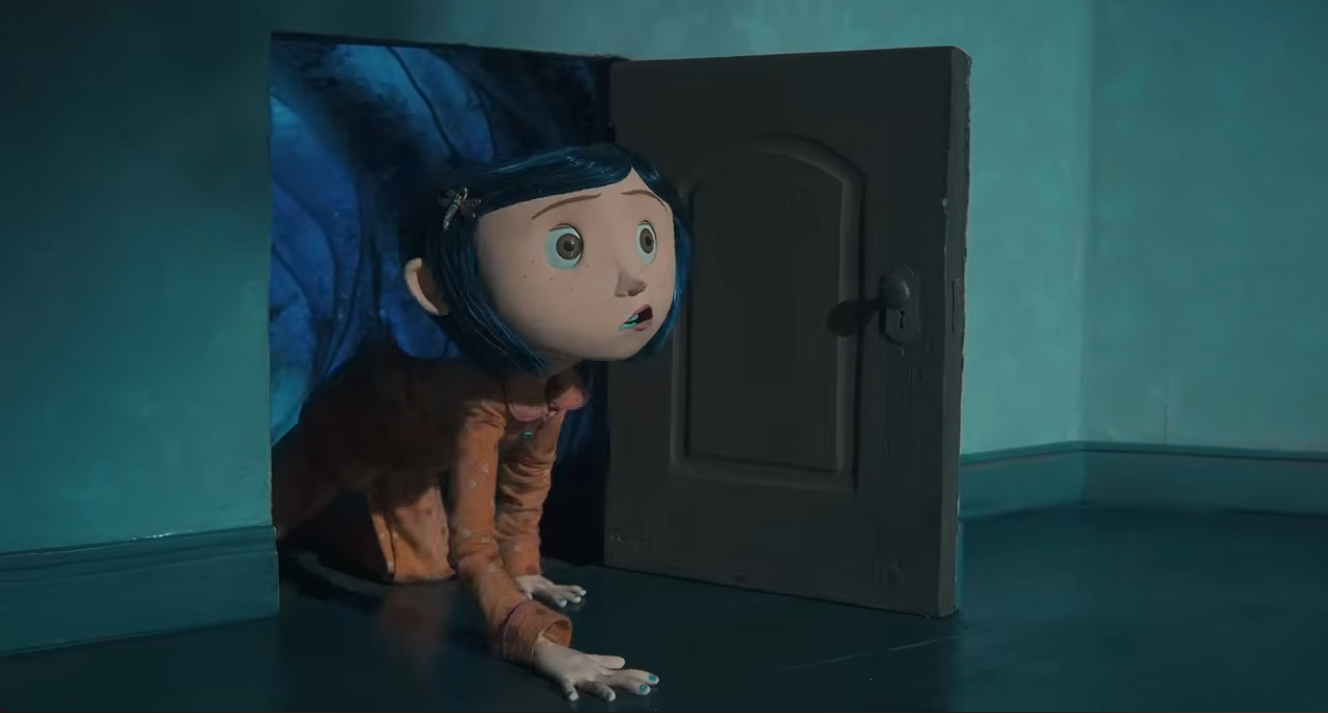
Why Coraline Still Haunts Me: A Christian Reflection on Media Discernment
We All Have Childhood Films that Haunt Us
Coraline is possibly the scariest movie I’ve ever seen, and I’ve called it that for years. It’s more haunting than Children of the Corn, A Quiet Place, or even 1408. After 17 years, I haven’t rewatched Coraline, and I’m not sure that I ever will.
There’s something about that first truly terrifying film you’ve watched that sticks with you, even if it’s “kid-friendly.”
For Selah, that film is Spirited Away. As she explained in her article on media discernment, rewatching the film years later was helpful for her, and now she really likes the film.
For me, it’s Coraline, the film we will be exploring toay. Today’s discernment post will discuss Coraline’s status as a PG-rated film, why it’s so terrifying for children, and why even PG-rated films require discernment.
What is Coraline About?
Coraline is a terrifying film based on Neil Gaiman’s children’s story of the same name. It follows a young girl named Coraline, voiced by Dakota Fanning (yes, the Dakota Fanning who voiced Satsuke from My Neighbor Totoro), who discovers a portal to another world. In this world, she meets a seemingly perfect “Other Mother” who meets her needs in ways her real mother doesn’t.
However, as this “Other Mother” entices Coraline, things are clearly not as good as they seem. Indeed, this “Other Mother” wants Coraline to stay there forever, desiring to turn Coraline’s eyes into buttons. Coraline must then escape from this “Other Mother” or join the ranks of the other children the “Other Mother” has captured.
Despite the horrifying premise, Coraline is a children’s film with a PG rating.
My Childhood Experience with Coraline
Coraline may not be objectively darker or scarier than an adult horror film, but I think part of the reason why Coraline stuck with me so deeply is because of the age I was when I saw it.
I was about 10 years old when it first came out, and since I grew up in a huge movie household, it wasn’t uncommon for us to pick up a random new film to watch as a family.
I remember the day my parents brought the movie home. They seemed excited about it and mentioned that it was a film I had seen a commercial for, and that it was about the doll. I’m not sure that I really knew what they were talking about, but either way, we went ahead and watched it.
Since Coraline is rated PG, it should have been fine for a 10-year-old…but it wasn’t.
One of my parents was concerned while watching, and if they could go back in time, we wouldn’t have watched the film.
It’s hard to describe an event that happened 17 years ago, and how I felt. Sure, I was scared and terrified, and that night was not fun, but the actual details are hard to pinpoint. And honestly, sometimes childhood experiences are like that. You know it had a negative effect on you and it stays with you, even if you can’t remember every little moment during and afterwards.
Regardless, I believe that Coraline requires heavy discernment, and it is NOT a film for every family.
Is Coraline a Family-Friendly Movie?
Despite being marketed for children, we found out the hard way that it was not safe for our family.
Collider understands the difference in Coraline’s marketing and content:
When Coraline arrived in theaters in 2009, it was sold as a darkly whimsical stop-motion fantasy by Laika. The trailers highlighted its inventive animation, curious heroine, and the novelty of a spooky children’s story brought to life in painstaking detail. Parents were reassured by its PG rating, and kids were drawn in by the promise of a secret world behind a tiny door. What few expected, despite it being an adaptation of Neil Gaiman’s novel, was just how deeply unsettling Coraline would be.
Personally, I wish the marketing had emphasized how terrifying the film actually is for sensitive children because my family clearly wasn’t the only one caught off guard by Coraline.
Coraline made it onto BuzzFeed’s “21 Movies That Basically Scarred An Entire Generation” list, and someone even mentioned it in part two of the article.
This Reddit user watched it as a child and rewatched it during their childhood, and it still scared them. They observe: “I’m an adult now, and despite being able to watch full r-rated [sic] horror films no problem. I still cannot watch Coraline without mentally [censored] my pants.”
Another user asked about the PG rating of Coraline, noting, “Having seen it, I’m kind of surprised it got a PG rating. Not that PG-13 necessarily seems appropriate either, but this movie would likely be terrifying to kids. The concept is quite dark, that you may have a sinister ‘other mother’ living in your walls who wants to kidnap you. There are many frightening scenes, much disturbing imagery, distorted faces and bodies, scary fighting scenes [sic].”
Some users chimed in with their own Coraline horror stories (including adults being scared), and others disagreed with the original poster. However, a parent wrote this only two years ago:
My kids and I watched this at the movies yesterday I regretted bringing them almost right away. They asked to leave halfway through the movie and I regret having even stayed that long. All I could think of while watching it was how on earth is this movie rated PG?!?!…I’m writing this because my son just came up to me asking me to please give this movie a bad review so we can warn other parents that it’s not really a children’s movie… that’s how scared he was. (source)
Coraline is clearly still haunting children today.
Everyone Misjudges Media at Some Point
Everyone misjudges media at some point, and I know I’ll do the same when I have kids. My parents had films that scare them as children. For one, it was Bambi; for another, Jaws.
Parents do their best to protect their kids, but that doesn’t mean a film/show/game/book will have content that they later realize was not good for their child. Plus, every child is different, and every family has different needs.
That’s why we need to have grace when we make mistakes, and use discernment and wisdom when considering any sort of media so that we don’t make the same mistakes.
There are plenty of parent guide options out there these days (here’s ours for Coraline), but each parent guide is different, and it’s still easy to trust the PG rating.
But the fact remains: some children’s films, like Coraline, are questionable for children, even if they’re technically made for kids.
Why Is Coraline So Scary for Kids?
What makes Coraline so scary, other than the fact that it’s directed at kids and the villain is terrifying?
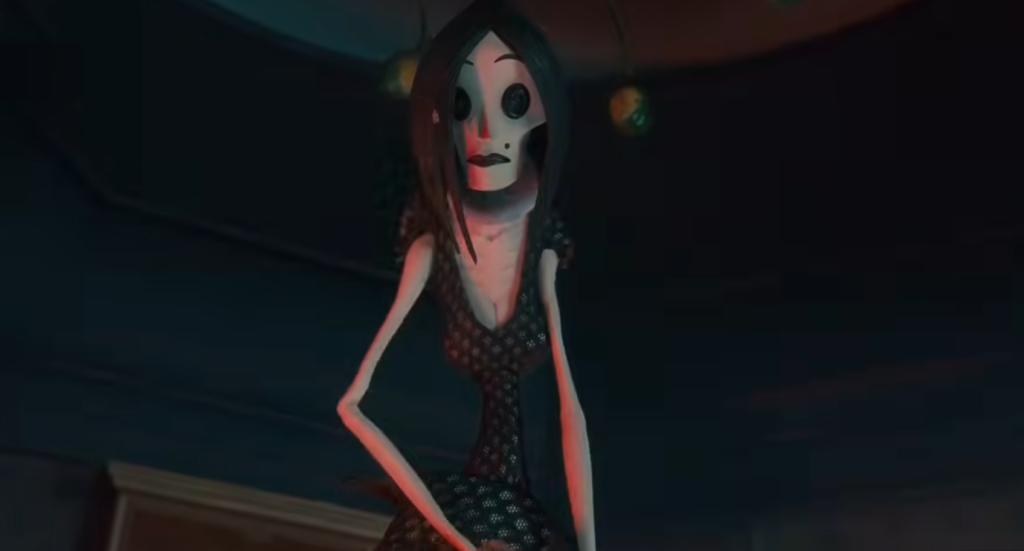
For starters, Coraline subverts the expected. After Coraline allegedly defeats the Other Mother and is safe, the Other Mother shows up for one final showdown. For a 10-year-old who was used to things being resolved in a happily ever after, watching Coraline yanked from safety into another life-threatening situation is unsettling, discomforting, and terrifying.
According to Ailish Brassil,
In Coraline, the heroine’s home, her safe space, is invaded with evil, deception and ‘other’ beings. (source)
That’s one of the many reasons why Coraline is so scary: it takes what should be comforting (family, home, parents) and makes it unsafe and terrifying.
Plus, Coraline is a different animation style than many other popular children’s films. Anyone can make a claim about the color palette and what it means or the character design, but when a story is told less familiarly, that can make it terrifying or uneasy for young viewers.
Most family films that flirt with horror quickly soften the edges…Coraline takes the opposite approach. From its opening sequence showing a doll being dissected and rebuilt, the film establishes a tone closer to gothic horror like you’d expect to see in a Guillermo del Toro film than traditional family animation. The stop-motion aesthetic only enhances the discomfort, with slightly unnatural character movements creating a constant sense that something is wrong.
Why? Potentially because of the uncanny valley effect.
In the article “Coraline in the Valley of Dolls,” the author notes, “Her animation, interestingly, is done in the style of stop-motion, adding another layer of ‘unrealness’ that even subconsciously doesn’t seem ‘right’ to us, but appropriate for someone in a cartoon.”
Whether something is stop motion, claymation, or another unique animation style, it’s not uncommon for something to feel “off” even in much safer, family-friendly franchises like Wallace and Gromit or Shawn the Sheep.
Coraline is an uncanny valley film. In the aforementioned “Valley of Dolls” article, the author claims, “The Uncanny Valley perfectly fits the tone and mood of the story and film as a whole, and thus, it is embraced rather than ignored.“
Coraline is a children’s film, and the uncanny valley aspects only add to the scariness; it does not soften the film for younger audiences (unless, for some reason, the animation’s disconnect between reality and fiction helps kids realize that the film is make-believe).
Why So Many People Find Coraline Scary
Hopefully, by now, my personal experience, paired with the personal experience of other families, explains how scary the film is, but it’s not just your average family that finds Coraline scary.
Collider calls Coraline “one of the most genuinely frightening films of the 2000s.”
Common Sense Media calls the film a “cool but creepy animated fantasy too scary for young kids” and gives it a 9+ rating (which is, coincidentally, the same age recommendation they give for Spirited Away).
The Guardian does not mince their words, calling Coraline “a horror film for children.”
And then there’s renowned film critic Roger Ebert, who noted in his review of Coraline:
The director of “Coraline” has suggested it is for brave children of any age. That’s putting it mildly. This is nightmare fodder for children, however brave, under a certain age. I know kids are exposed to all sorts of horror films via video, but “Coraline” is disturbing not for gory images but for the story it tells. That’s rare in itself: Lots of movies are good at severing limbs, but few at telling tales that can grab us down inside where it’s dark and scary. (source)
Roger Ebert’s quote speaks volumes. Coraline was “nightmare fodder” for my siblings and me, and in many cases I don’t think children should be watching it, at least not without wisdom and discernment. Wisdom and discernment here involve knowing your child, pre-screening the film beforehand, and using Biblical wisdom to ensure that the film is actually okay for your child even if the film is rated PG.
Why Is Coraline Rated PG?
In the UK, like the United States, Coraline has a PG rating. One of the reasons for the UK’s rating involves the lessening of scariness due to specific elements:
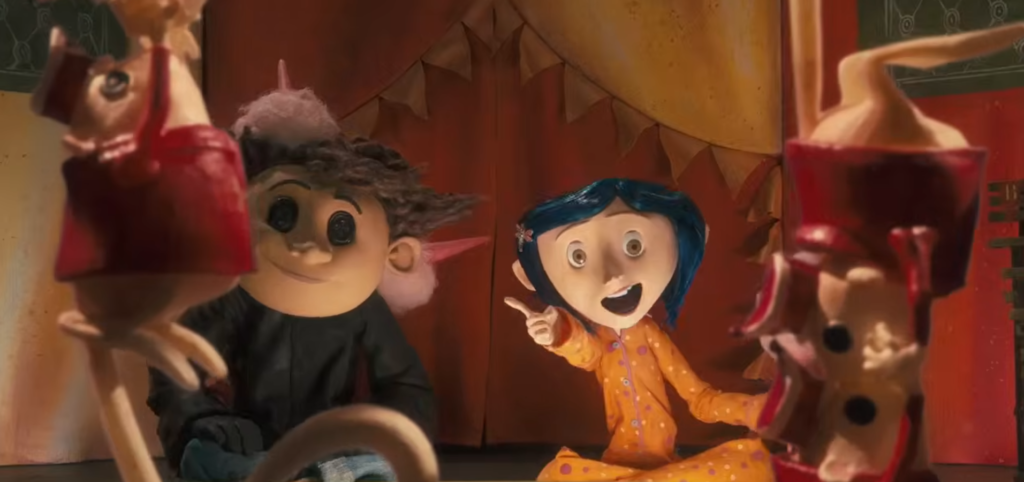
Despite the scariness, Coraline features a number of ‘mitigating factors’ – elements which lessen the intensity of the more frightening scenes. These included moments of comedy and fun like silly songs, performances by dancing mice and the strange behaviour of the amusing and colourful neighbours. Additionally, a lot of emphasis is placed on the reassuring happy ending.
However, I believe that Coraline, as a whole, is a weird film. The “silly songs,” “performances,” and “strange behavior” of characters are not necessarily going to mitigate fear. The weird aspects that come along with Coraline‘s design may make kids uncomfortable.
I’m not the only one who disagrees with the PG rating Coraline received, and I wish it had been upped to PG-13.
Regardless, Coraline teaches us an important lesson: a PG rating does not automatically mean a film is family-friendly.
PG Does NOT Mean Family-Friendly
Coraline is a great example of why we shouldn’t automatically trust a PG rating.
At some point, many of us have probably misjudged a PG rating. It’s rather easy to bunch G and PG together in a generalized “family-friendly” film category and may be shocked when a PG story is, surprisingly, not suitable for everyone.
PG stands for “Parental Guidance Suggested.” It means that the film is not necessarily safe to show all ages; there generally needs to be some level of parental involvement. But it’s easy to forget when so many PG films are rather family-friendly, like Paddington, The Muppets (5+), or The Lego Movie (6+).
With these safer films, it’s easy to forget that there is a wide range of content permissible in a PG-rated film.
Coraline is rated PG. The same rating as Lilo and Stitch, The Incredibles, and Toy Story 5.
PG is also the rating for Dead Poets Society, The NeverEnding Story, The Bridge to Terabithia, Poltergeist, The Graduate, Watership Down, Monster House (10+), Gremlins (11+), and even Big, which Common Sense Media rates 13+, despite it having a PG rating! There are numerous PG films with heavy themes, many of which are better for adults or mature audiences.
A PG film could be family-friendly and wholesome. Or it could include an affair, s**cide, the death of a child, violence, gore, the death of beloved characters, or be a straight-up horror film.
It’s imperative to judge each film on an individual content basis, not based on its rating. PG films are on a spectrum.
That’s why shows like The Amazing Digital Circus are getting so much pushback. According to Bark:
The bright, colorful animation combined with the PG rating led plenty of parents to assume this was a kid-friendly cartoon. In reality, it’s closer to psychological horror wrapped in dark comedy. (source)
The content in The Amazing Digital Circus is rather mature, and there was even a petition launched in September of 2026 to cancel the series.
Common Sense Media gives this show a 12+ age recommendation, which is the same age they recommend The Good Place for (which I disagree with; The Good Place is much more mature than people lead it on to be).
Conclusion: PG Movies Still Require Media Discernment
Coraline is a terrifying film that traumatized me as a kid, and many others as well. However, that doesn’t mean it’s off-limits to everybody; plenty of people do enjoy and celebrate the film.
That’s why it’s imperative that you use a rating as a starting point, not the deciding factor.
For parents, Christians, and discerning viewers, please use wisdom and discernment when considering Coraline (or anything else, for that matter).
Use parents’ guides. Preview the film yourself. Read reviews.
And sure, after doing these things you may decide that Coraline is right for you or your child. And that’s totally fine. But make that decision because you’ve done the research and understand what’s in a film (or show, game, book, or anything else). Decide because you used wisdom and discernment, and avoid getting caught in a problematic situation.
Don’t allow two letters to lower your guard.
Recommended Posts
Photo Credit: Rotten Tomatoes Classic Trailers on YouTube.



One Comment
Comments are closed.