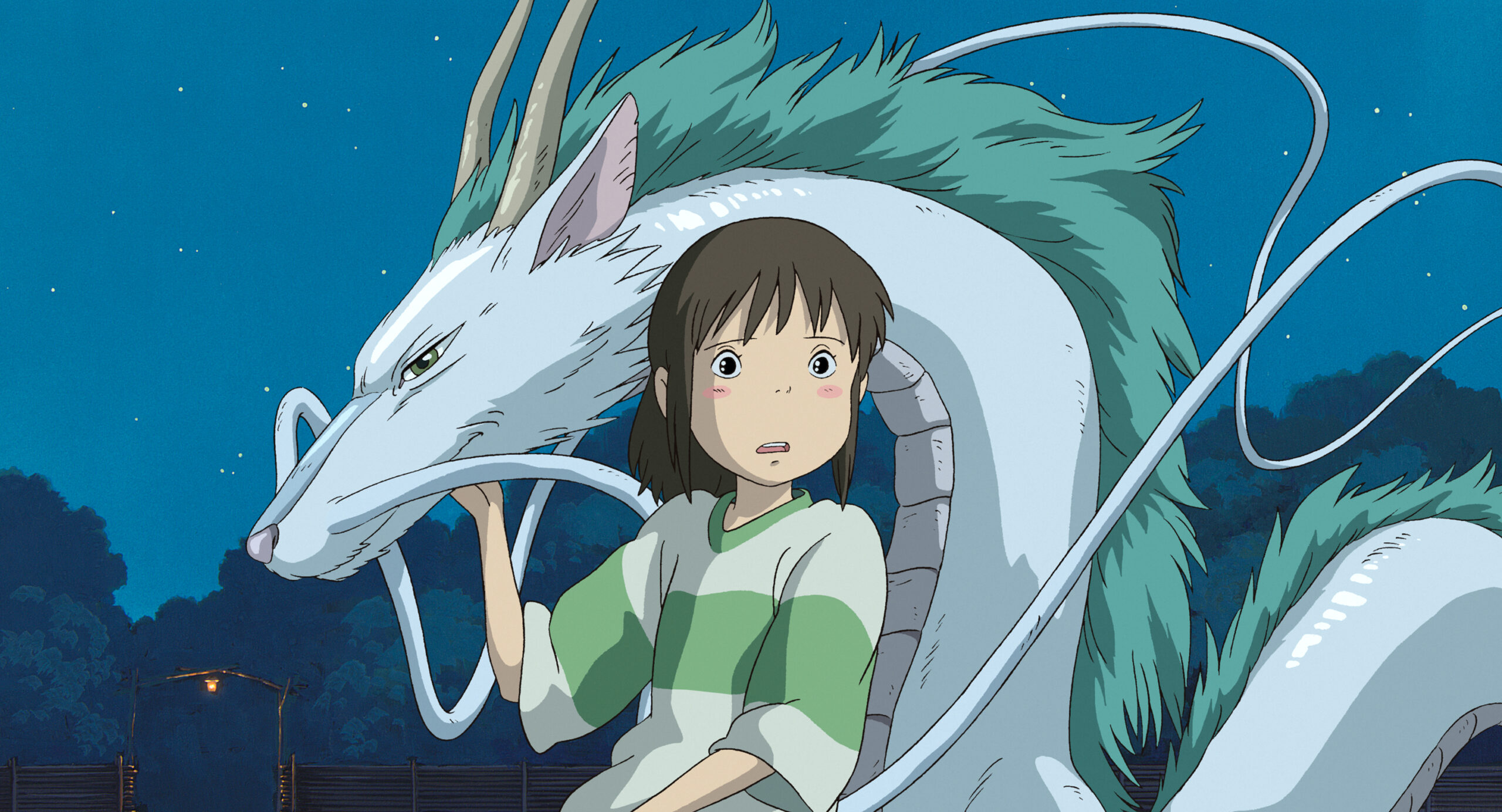
Spirited Away Christian Review & Parents’ Guide
Our Spirited Away Christian review discusses the film’s age appropriateness, scariness, characters, spiritual content, and themes from a faith-based perspective. Our Spirited Away parents’ guide is also included.
We aim to answer the question: Is Spirited Away safe for Christians, children, and sensitive viewers?
Quick Facts about Spirited Away
Creator: Hayao Miyazaki (Studio Ghibli)
Rating: PG
Year: 2001
Runtime: 124m (2h 4m)
Quick Spirited Away Content Guide
Sex and Nudity: Very little. Non-explicit, non-sexual partial nudity visible.
Violence and Gore: Some blood and violence, including a massive injury that causes blood to go everywhere.
Frightening Scenes: More severe than expected for a PG movie. Plenty of intense scenes and villains.
Language: Some insults and exclamations.
Substance Abuse: A little bit of smoking and mention of sake (alcohol).
Spiritual: Plenty of references to gods, spirits, magic, magic contracts, witches, and Shinto beliefs.
My Rating
Is Spirited Away Appropriate for Kids?
Spirited Away may be appropriate for older children, but it can be too intense or confusing for younger kids.
What age is Spirited Away appropriate for?
We agree with Common Sense Media’s recommendation for Spirited Away, which is ages 9+. Spirited Away is generally too intense for the majority of young children. Although some children under 9 may be able to handle it, we recommend parental pre-screening due to the intensity and scary elements.
There is also a noticeable amount of blood for a PG movie.
Is Spirited Away scary?
Yes, Spirited Away is undeniably scary for younger or sensitive viewers. Teens and adults may also find some elements objectively frightening.
Scariness in Studio Ghibli Films: Spirited Away’s Age Rating
Despite Spirited Away’s PG rating, this film is likely too intense for younger viewers. I would recommend waiting until your child is a preteen to see this one, and Common Sense Media gives Spirited Away an age rating of 9+.
Spirited Away is fairly mature. Despite a PG rating, the anime film aligns better with films like Nausicaä of the Valley of the Wind than Studio Ghibli’s family-friendly films like Ponyo or The Secret World of Arrietty. This is due to the film’s scary villains, blood, and intense premise—Chihiro’s parents literally turn into pigs, and Chihiro grapples with magic and monstrous creatures.
Although the film may be too intense for some children, it may be intense for some adults, too.
Personally, I think PG may seem too low of a rating, but PG-13 would be a bit much. It sits solidly between the two—too mature for most young children but too tame for teenagers.
I did not watch Spirited Away until my mid-20s. However, one of our writers and editors, Selah (who showed me the film for the first time), was frightened by the film as a child. She’s written a reflection on her experience, and it’s available here.
Synopsis: What is Spirited Away about?
Chihiro is an elementary schooler moving to a new home with her parents. When they take a detour to an “abandoned theme park,” Chihiro feels that something is off, but her parents don’t heed her warning.
Chihiro wanders off and meets Haku, a mysterious boy who tells her to leave immediately. She returns to her parents only to find that they’ve been turned into pigs. This is no abandoned theme park—it’s an entrance to the spirit world.
To save her parents and escape the spirit world, Chihiro teams up with Haku to get a job at the bathhouse there, which is run by the corrupt witch Yubaba. She’ll face monsters, magic, and a spirit called No Face while finding courage and kindness along the way.
Spirited Away Review: A Christian Perspective on One of Studio Ghibli’s Best Films
Spirited Away, also known as Sen to Chihiro no kamikakushi, is a beautiful Studio Ghibli film about love, greed, bravery, identity, and transformation.
Rotten Tomatoes ranks it #52 in their “300 Best Movies of all Time” list.*
For 19 years, Spirited Away was “the highest-grossing film in Japanese history.” Additionally, it “became the first hand-drawn, non-English-language animated film to win the Academy Award for Best Animated Feature at the 75th Academy Awards. The film is frequently regarded as one of the greatest animated films ever made.” (source, accessed 23 April 2026).
The film is well-animated with a beautiful soundtrack, but it’s not for the faint of heart.
Spirited Away English Dub Cast
The Spirited Away English dub cast is stacked with popular voices. Daveigh Chase, the voice of Lilo in Lilo and Stitch, voices Chihiro, the main character of Spirited Away. Jason Marsden, the voice of Max in A Goofy Movie and Kovu in The Lion King II: Simba’s Pride, voices Haku.
David Ogden Stiers, the voice of Cogsworth in Beauty and the Beast and Grandpa Piccolo in Porco Rosso, voices Kamaji.
Susan Egan, the original Belle in the Broadway version of Beauty and the Beast, the voice of Megara in Hercules, and the voice of Gina in Porco Rosso, voices Lin, Chihiro’s boss.
Tara Strong, one of the most prolific voice actresses in history (and the voice of Twilight Sparkle in My Little Pony: Friendship is Magic), voices Boh, Yubaba’s baby. Bob Bergen (Ponyo, When Marnie was There) voices No Face and the frog.
Well-known anime voice actress Colleen O’Shaughnessey, the voice of Reina in Didn’t I Say to Make My Abilities Average in the Next Life?! provided additional voices for the film.
The Characters of Spirited Away
Chihiro: The Film’s Strong Protagonist
At the beginning of Spirited Away, Chihiro is difficult to like.
From an adult’s perspective, she’s extremely immature, whiny, and disrespectful. Despite Chihiro’s flaws, she does have a solid head on her shoulders, sensing that something is off at the “theme park” her parents insist on exploring. She was right to be concerned, as the food her parents eat there transforms them into pigs. Chihiro learns that the “theme park” is a place where spirits roam, and it’s very dangerous.
Although Chihiro is initially skittish and easily frightened, she experiences immense growth through the film. For example, the first night in the spirit world, she was frightened going down steep stairs, but as she grows, she becomes brave and determined enough to run across an unstable pipe that, if it breaks, will likely cause her to fall to her death.
Chihiro is also extremely determined to save those she loves and do her job well. When a possible “stink spirit” comes to the bath, Chihiro provides respectful, efficient service despite the spirit’s nauseating odor. Afterwards, Yubaba praises her and tells the others to learn from her.
She also exhibits compassion and kindness to others frequently. She helps the stink spirit remove the thorn in his side (despite getting a face full of odorous mud in the process), welcomes No Face in from the rain, carries Boh the mouse-baby when he’s tired, and embarks on a dangerous quest to save Haku.
Overall, Chihiro blossoms from an annoying child into a brave heroine with a heart for others.
No Face: A Complicated Villain (Spoilers)
No Face is an extremely complex character. He seems rather harmless at first—offering Chihiro gift after gift—but in a dark twist, he eats one of the bathhouse employees.
He then offers the bath employees gold in exchange for food, baths, and the like. All the employees hurry to serve him so they can get rich, and No Face uses this opportunity to take advantage of others. He becomes extremely fat as he gets more and more food, and he even eats more employees.
According to the article “Unmasking No-Face: What Hayao Miyazaki Really Meant in Spirited Away“:
…[O]nce brought into the bathhouse, No-Face begins to mirror its environment. It offers gold — a symbol of material wealth — to anyone willing to accept it, hoping this will earn attention and friendship. This reflects a deeper yearning for recognition from others.
Unfortunately, the bathhouse’s atmosphere amplifies greed and excess. As No-Face consumes more — both gold and other spirits — it grows larger and more chaotic, embodying the corrupting influence of material desire and the dangers of defining oneself through external validation. (source)
Chihiro is different from the other employees. No Face wants her to take his gifts, but she often refuses, focused on her own goals. He has an odd fascination with her and chases her through the bathhouse in a rather intense moment.
Yet, Chihiro shows him kindness. She gives him the precious medicine she was saving for her parents, and takes him on the train ride with her. By the end, he’s become a calm, harmless creature who knits peacefully with his companions.
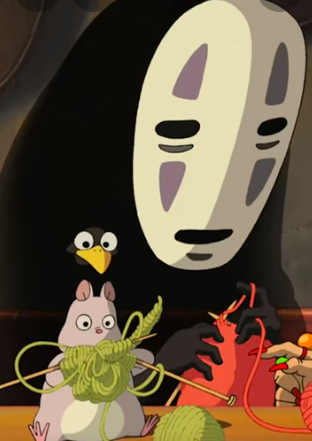
His environment and the people around him negatively influence him. This is a dangerous reality that many of us experience.
Paul mentions a similar idea in 1 Corinthians 15:33 (NIV) that “…Bad company corrupts good character.”
Chihiro’s Allies: Kindhearted Characters within the Spirit Realm
Haku
Haku is Chihiro’s first ally. He tries to get her to leave the spirit realm before it’s too late, and when she’s unable to, he helps protect her and serves as her guide.
(Spoiler) After Chihiro signs a contract, his demeanor towards her changes—he wants her to call him “Master Haku.” He seems like a completely different person, and Chihiro’s coworkers warn her about him, but the cold exterior is a facade.
(Spoiler) He must put up appearances due to his status in the bathhouse, and behind closed doors, he helps Chihiro immensely throughout her journey.
(Spoiler) Haku is the right-hand man for Yubaba, the witch who runs the bath house. He wanted to learn magic from her, but working for her came at both personal and moral costs. For example, Yubaba puts him under a spell and forces him to steal her sister’s special seal. Because of his morally ambiguous actions, he’s not particularly well-liked by characters such as Lin.
(Spoiler) Despite his flaws, Haku helps Chihiro save her parents—and, in the process, she saves him, too.
Kamaji
Kamaji, the multi-armed boiler room man, is a rather interesting character. He refuses to give Chihiro a job at first—something she desperately needs—but he is reliable when she needs him.
When Lin, one of the bathhouse attendants, comes to bring Kamaji his dinner, she notices Chihiro. Kamaji tells Lin that Chihiro is his granddaughter and requests that she help Chihiro get a job. Kamaji didn’t have to lie to protect her, but he chose to help her at personal risk to his job.
One of my favorite moments is when Kamaji notices Chihiro passed out on the floor of his boiler room. He covers her with a blanket, a simple yet tender moment. He also gives her train tickets he had saved for years so she can complete her quest and save Haku.
Lin
Lin is Chihiro’s co-worker and guide at the bathhouse. She’s initially curt, tough, and no-nonsense with Chihiro. She’s asked to take Chihiro to Yubaba, which she does—after being bribed with food first.
After Chihiro signs her contract with Yubaba, Lin’s attitude changes. She becomes friendly, kind, helpful, and even a bit maternal towards Chihiro. It’s a drastic shift, but Lin becomes one of Chihiro’s most dependable allies.
Lin may have to put on a tough exterior in front of most bathhouse employees, but she really is a kindhearted character.
The Radish Spirit: One of the Film’s Most Underrated Characters
The Radish Spirit may not speak, but his actions reveal a lot about his character.
He meets Lin & Chihiro as they are heading to Yubaba’s floor and follows them to the elevator, as shown in the clip below:
When Lin is forced to distract one of the bathhouse workers, she leaves Chihiro in the elevator—which means that Chihiro must finish the climb without Lin.
But Chihiro is not alone. The Raddish Spirit actually rides with Chihiro all the way to the top, where Yubaba lives. He didn’t need to go that high since his own stop is lower than Yubaba’s floor, but he chose to go out of his way regardless.
A really interesting detail that supports the Raddish Spirit’s kindness is revealed at the top of Yubaba’s floor. The elevator has an arrow pointing downward, reminding us that there is nothing past Yubaba’s floor—and thus no reason for the Raddish Spirit to ride all the way up with Chihiro other than him helping her (or him not knowing how to use an elevator, which is debunked when he is shown riding the elevator back down on his own).
Whereas most of the creatures freak out when they notice Chihiro, the Raddish Spirit doesn’t. He chooses kindness.
Yu-Bird & Boh (Baby)
Yu-Bird is one of Yubaba’s minions, and Boh is Yubaba’s baby. Outside of money, Boh is the most important thing to Yubaba.
Boh is extremely selfish, spoiled, and immature at the beginning of the movie.
(Spoiler) However, he becomes a better person after turning into a mouse. Yu-Bird is turned into a mini birdlike creature, and the two of them become inseparable. Yu-Bird flies Boh (who is much bigger than it is) around, and the two travel with Chihiro to visit Zeniba, Yubaba’s sister.
(Spoiler) Boh becomes significantly less selfish as he spends time as a mouse.
A Deal with Yubaba
One of the more alarming parts of Spirited Away from a Christian perspective is the contract Chihiro signs with Yubaba. Yubaba is a witch with crazy, creepy powers, and Yubaba provides Chihiro with a contract that literally takes away Chihiro’s name.
Yubaba renames Chihiro “Sen,” and after doing so, Chihiro starts to forget her own name.
(Spoiler) It’s only thanks to Haku that she’s able to hold onto her name and eventually get out of the contract.
Spiritual Content in Spirited Away
It should come as no surprise that a film called Spirited Away will have spiritual content.
There are witches, magic, rituals to get rid of evil, and spirits/demons. Most of the film takes place in the spirit world.
It’s heavily influenced by Japanese cultural and religious beliefs, including Shintoism. Many of the characters are based on gods and creatures in the religion, including Haku, Yubaba, and even the paper birds.
If you’re sensitive to spiritual themes, Spirited Away is not the Studio Ghibli film for you.
The Power of Greed Versus Love: The Theme of Spirited Away
There are plenty of themes in Spirited Away—the importance of family, determination, and sacrifice, but one of the biggest themes that ties into nearly everything else is greed versus love.
Most characters in the anime are greedy. When No Face offers the bathhouse employees gold, they go crazy and do whatever they can to earn more. When Chihiro’s parents are presented with food that doesn’t belong to them, they eat anyway and turn into literal pigs.
Chihiro is one of the exceptions. No Face offers her many things—excess bath tokens, as shown in the picture below, or even gold—and Chihiro doesn’t care about them. She takes what she needs but no more.
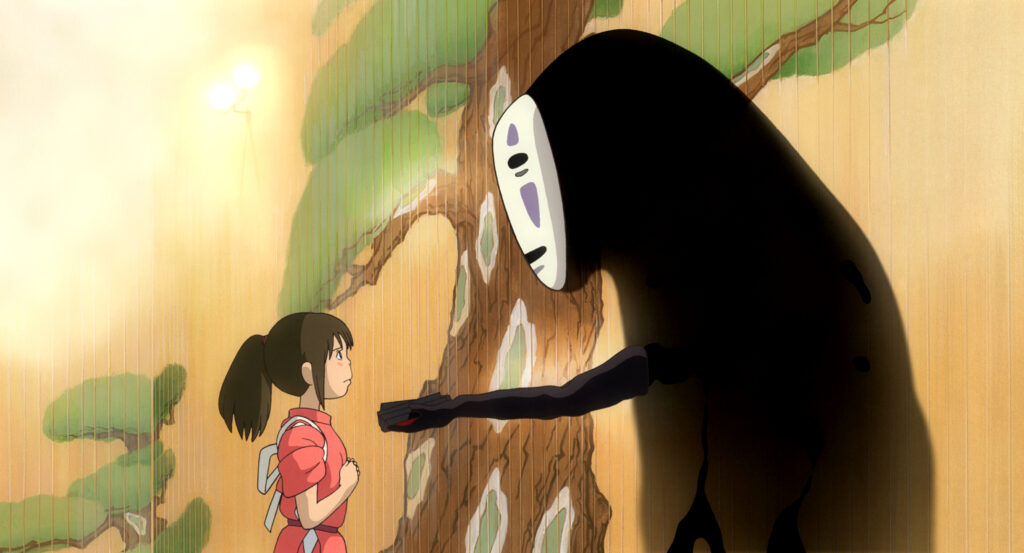
Unlike the other employees, she isn’t interested in superficial things.
Instead, she cares about others, and her love drives everything she does. Most notably, Chihiro shows Haku love—when he’s in need, she willingly gives him her previous gift from the river spirit, believing that it will save him, instead of keeping it for her parents. She gives the rest of it to No Face, someone she doesn’t need to care about, and puts him above her parents.
Chihiro even goes out of her way to visit Zeniba and apologize for Haku in order to save his life.
Her main goal is to get home and save her parents, but she willingly pauses this goal for others.
Chihiro’s love alters everything. It saves Haku, No Face, and even makes her a few more friends along the way.
Don’t Look Back
Haku says one of the most powerful lines in Spirited Away: “You have to promise not to look back. Not until you’ve passed through the tunnel.”
This concept is very Biblical. Genesis 19:26 (ESV) tells us what happened to Lot’s wife when she looked back at Sodom and Gomorrah: “But Lot’s wife, behind him, looked back, and she became a pillar of salt.”
Lot’s wife looked back on a town filled with evil despite being warned not to, and she was forever transformed by it.
Luke 9:62 (ESV) says, “Jesus said to him, ‘No one who puts his hand to the plow and looks back is fit for the kingdom of God.'” BibleRef writes:
Luke is showing that following Jesus is a serious commitment. We can’t look back at the past; we need to keep our eyes on our work and where it will take us in the future. Jesus’ comment about looking back reflects a modern proverb: “you steer where you look.” A person driving a vehicle tends to drift when they let their eyes wander from the road ahead. If someone is plowing a field and looks back, they will naturally turn and not plow in straight rows. Jesus wants the man to look straight ahead and leave his old life behind. (source)
We have to leave everything to follow Jesus, focusing on what’s ahead, not what’s behind.
That’s often easier said than done, but it’s awesome to see this parallel between a secular anime film and the Bible.
FAQs for Spirited Away
Does Spirited Away have any inappropriate content?
Spirited Away contains a few butt cheeks and non-sexual, non-explicit nudity consistent with its PG rating. Some insults and phrases are used, including some religious expressions (“gee” or “geez”, “thank goodness”), but no curse words.
Is Spirited Away safe for Christians?
Spirited Away contains plenty of spiritual content based on Eastern religion that requires heavy discernment from Christian viewers.
Spirited Away is a masterful film, but it must be watched with discernment, wisdom, and a faith-based lens.
What are the spiritual themes in Spirited Away?
Spirited Away contains a storyline heavily influenced by Shinto beliefs. There are magical contracts, gods, magic, and witches in the film. It is one of the most spiritually influenced Studio Ghibli films.
Why is Spirited Away rated PG?
Spirited Away is rated PG for some scary moments.
Can families watch Spirited Away together?
Due to the film’s content, we do not recommend families watch Spirited Away with their children under the age of 9, at a minimum.
Is Spirited Away confusing for kids?
Spirited Away may be confusing for kids.
What should parents know before watching Spirited Away?
Spirited Away is one of the more intense PG-rated Studio Ghibli films. It contains intense scenes (parents turning into pigs, a few scary villains) as well as heavy spiritual content influenced by Shintoism.
Is Spirited Away family-friendly?
Spirited Away is not particularly family-friendly. A better option would be Ponyo or The Secret World of Arrietty.
Spirited Away Parent Guide
Sexual Content, Romance, and Nudity in Spirited Away
- Some women seem romantically interested in Haku.
- A radish spirit wears a loin cloth, but his butt is visible. He also has visible nipples.
- A few women have cleavage.
- The girls’ pajamas show their backs.
- Yubaba’s baby wears an outfit that shows his butt.
- A quick cutscene shows Chihiro underwater. She’s naked, but nothing sensitive is shown.
- A character kisses someone in joy.
Language & Insults in Spirited Away
- “It’s gonna stink.”
- “Scaredy ca.t”
- “For heaven sake.”
- “Little runts/runts.”
- “Darn” (used in subtitles).
- “Stupid sootballs.”
- “Stupid request.”
- “Dope.” x3
- “Idiot.”
- “Pathetic little girl.”
- “Stinking useless weakling.”
- “Lazy spoiled crybaby.”
- “Lazy bums.”
- “Gee” or “geez.”
- “Jerks.”
- “Useless scum.”
- “Klutz.”
- “Shut your mouth.”
- “Spoiled brat.”
- “Shut your big mouth!”
- “Porker.”
- “Pea brain.”
- “Greedy little thief.”
- “He’s a monster!”
- “Thank goodness” x2.
- “Shut up!”
Scary & Intense Scenes in Spirited Away
- Chihiro’s parents turn into loud, realistic-looking pigs.
- Haku tells Chihiro to run and leave immediately.
- As Chihiro runs away, dark, shadowy spirits coalesce into corporeal forms.
- Chihiro starts to become see-through.
- When Chihiro goes down the stairs, she falls and breaks one of the stair slats. She starts screaming as she runs down the rest of them.
- Chihiro gets stuck under water (but she is saved by Haku).
- No Face eats a frog and two humans.
- Chihiro has a nightmare where she can’t remember which pigs are her parents. There are many pigs crowding her and squealing, which might be intense for sensitive viewers.
- Haku gets hurt and bleeds a lot. He also spits blood.
- Chihiro and Haku fall from the top floor to the bottom floor.
- No Face’s appearance changes to include a head of hair, a wide mouth full of teeth, and a fat body reminiscent of a frog.
- No Face projectile vomits brown sludge.
- No Face chases Sen full-tilt through the bathhouse.
- Yubaba gets angry at Haku. She breathes fire and has huge eyes, and looks scary.
Gore & Violence in Spirited Away
- Yubaba’s baby kicks her.
- No Face eats a frog (the frog is an actual character who speaks, so eating him is like eating a person).
- Haku is attacked by paper birds. He bleeds a lot, dripping blood from his mouth. The blood then gets on the walls and even on Chihiro.
- Yubaba’s baby threatens to cry and alert Yubaba to Chihiro’s presence, which will allegedly cause Yubaba to kill Chihiro. The baby also threatens to break her arm (and hurts Chihiro in the process).
- Yubaba’s bird attacks Chihiro. She is not visibly injured.
- Zeniba threatens to rip Chihiro’s mouth out, but doesn’t follow through.
Substances in Spirited Away
- A frog-like character opens the window and smokes.
- Yubaba smokes a cigar.
- Yubaba says that “Sake’s on the house tonight.”
Spiritual Content in Spirited Away
- Subtitles mention luck.
- Characters say “Good luck.”
- Shrines appear (allegedly “little spirits” might reside in them).
- Haku has some sort of magical ability. He uses it to distract the spirits to help Chihiro escape.
- Haku uses “the name of wind/water” to help Chihiro. He uses some sort of magic.
- Chihiro has to hold her breath while crossing the bridge, or else the spell will break and the spirits will be alerted to Chihiro’s presence.
- Yubaba is a witch.
- Kamaji cast a spell and now he has soot sprites to work for him.
- Yubaba has many magic powers, and can even steal names.
- Chihiro signs a contract that takes away her name.
- Haku puts a spell on a rice ball/onigiri.
- Zeniba transforms creatures/people into different creatures/people, like turning a baby into a mouse.
- A magic seal has a spell on it, and the thief will die.
- A slug is known as bad luck.
- Kamaji does some sort of ritual to get rid of the evil from the slug, and later, the mouse repeats it.
- Haku wanted to learn magic from Yubaba.
- Zeniba is a dangerous witch.
- Chihro gets a magic protective hair tie.
Conclusion: Spirited Away Christian Review
Spirited Away is a beautiful masterpiece from Studio Ghibli. However, it is not for the faint of heart, and it is very intense—most likely too intense for most children.
Spirited Away contains plenty of spiritual content that requires Biblical discernment. Christians may enjoy the themes of determination, hard work, facing your fears, and forgiveness.
Ultimately, Spirited Away is undeniably one of the best Studio Ghibli films of all time.
Recommended Posts
Cover Photo: © 2001 Hayao Miyazaki/Studio Ghibli, NDDTM. From GKids Press Room.
*Ranking as of 23 April 2026.


2 Comments
Comments are closed.