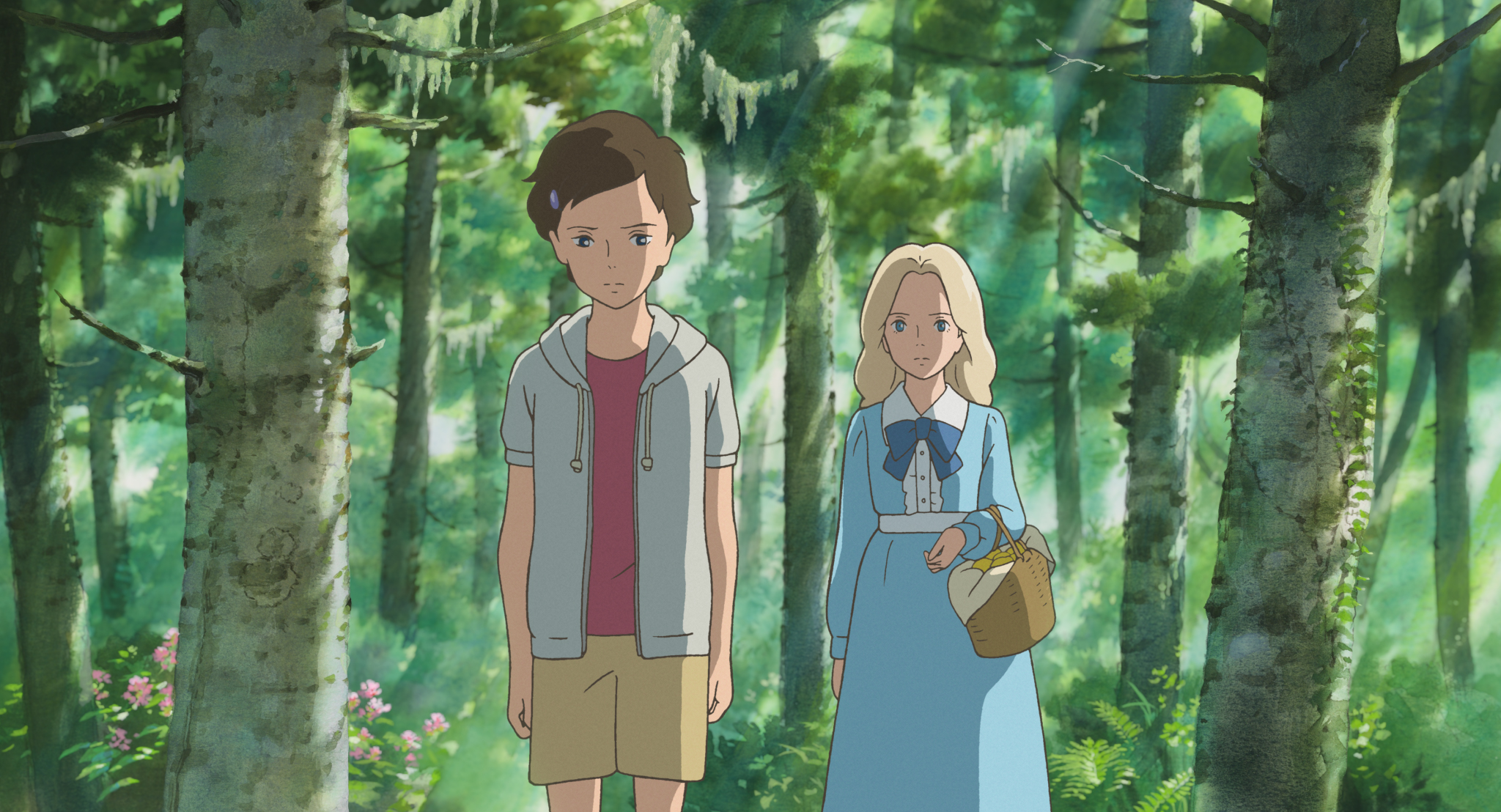
When Marnie Was There Christian Review & Parent Guide: A Discussion of the Emotionally Heavy Studio Ghibli Film
Our When Marnie Was There review will discuss the Studio Ghibli film from a Christian perspective. We will discuss ghosts, characters, forgiveness, and character growth. Our review also includes a When Marnie was There parent guide.
When Marnie Was There is a sad ghost film appropriate for older children and teens with discernment.
Quick Facts about Spirited Away
Creator: Studio Ghibli
Rating: PG
Year: 2014
Runtime: 1h 43m
When Marnie Was There Quick Content Guide
Sex and Nudity: None. A character listens to another character’s chest (not explicit). A character mentions pregnancy/marriage.
Violence and Gore: Mild. Some fighting, mention of pulling a knife (not true), a character’s servants abuse her.
Frightening Scenes: Some scenes—especially involving the silo—may be intense for some viewers.
Language: Some name-calling, insults, and unkind phrases.
Substance Abuse: Characters (including minors) drink alcohol. Smoking also occurs.
Spiritual: Ghosts, magic circle, and cultural festival occur.
My Rating
When Marnie Was There Review: Synopsis
12-year-old Anna considers herself an outsider. Anna loves to draw, and has little interest in making new friends.
When she is sent to live with distant relatives, she doesn’t know what to expect.
Anna’s new home is supposed to be temporary—a summer arrangement to hopefully cure her asthma.
There, she makes the acquaintance of a mysterious girl, Marnie. But Marnie’s existence is filled with mystery. Who is Marnie, and why does she only appear at certain times?
When Marnie Was There Christian Review
While the premise may seem simple, When Marnie Was There, also known as Omoide no Mânî or Omoide no Marnie, is a beautiful anime film about family, loneliness, abuse, and friendship by the renowned Studio Ghibli.
Marnie is much heavier (emotionally) than some of the studio’s lighter films such as The Secret World of Arrietty or Ponyo, making it less child-friendly than some of their other anime films.
However, in contrast to some of Studio Ghibli’s more mature films, like Nausicaä of the Valley of the Wind, Marnie is not violent or gory—it’s just emotionally mature.
The film’s emotional weight makes When Marnie Was There so masterful. It’s about processing emotions, and it conveys the importance of letting go and moving on so beautifully.
Our When Marnie Was There Christian review will explore the film through a faith-based lens, and provide a parent guide for the anime.
Animation in When Marnie Was There
When Marnie Was There has such a beautiful animation style, and Marnie is my favorite Studio Ghibli character design. She’s elegant and beautiful, and her European features and old-fashioned clothing are striking.
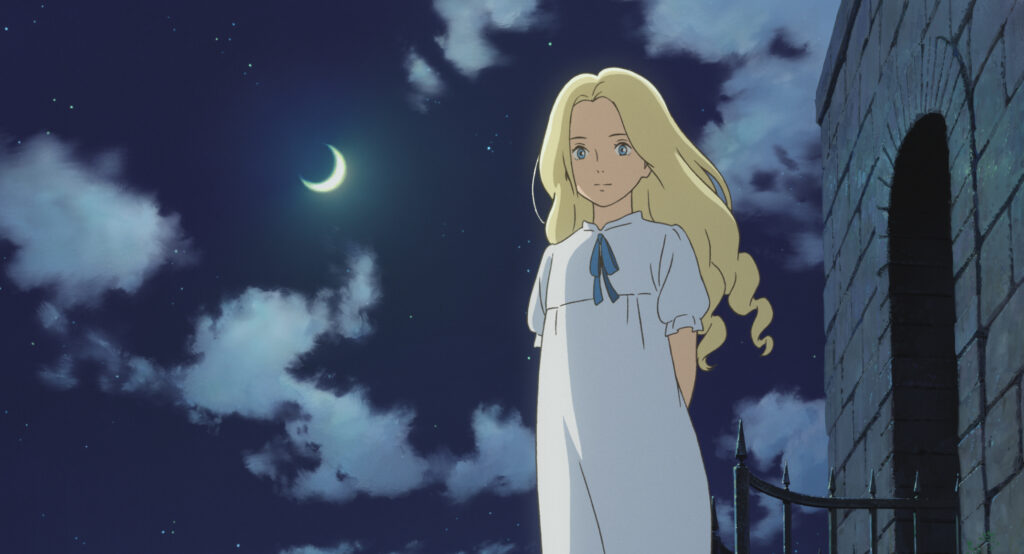
I love Marnie’s design, but to be honest, Anna’s design isn’t as striking in my opinion.
In fact, before I knew Anna was a girl, I initially thought she was a boy. Her character design, especially on the cover, is not the most clearly feminine, and in contrast to Marnie’s overtly feminine design—long hair, a flowing dress—it’s easy to make that mistake.
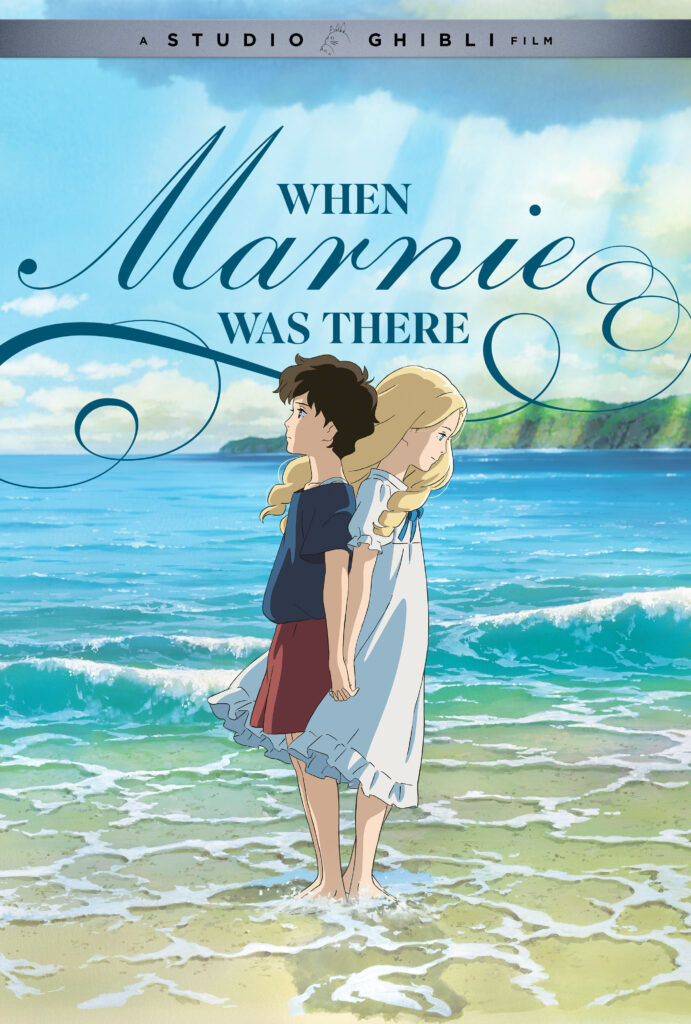
Anna’s design may not be as striking as Marnie’s, but it fits her character.
When Marnie Was There English Dub Cast
The English voice cast of When Marnie Was There is a mix of celebrities, mainstream voiceover professionals, and anime dubbing professionals.
Anna was voiced by Hailee Steinfeld and Marnie was voiced by Kiernan Shipka. Both did a great job portraying their characters.
Other notable voice actors include the renowned voice actress Grey Griffin (Clifford, Avatar: The Last Airbender), Bob Bergen (Ponyo, Spirited Away), and Laura Bailey (Fruits Basket).
The Overall Themes of When Marnie Was There *Spoilers*
When Marnie Was There is ultimately a story of grief, forgiveness, loss, and moving forward.
Anna initially struggled with unforgiveness and hurt from losing her family. Her parents and grandmother both died, so she ended up in a foster home. When she discovered that her foster parents receive funds for raising her, her hurt became overwhelming.
Anna had not only lost her biological family, but she felt like a burden for her foster parents, too.
However, her relationship with Marnie gave her the security, comfort, and love she so desperately needed.
Forgiveness & Moving Forward *Spoilers*
At the silo, Marnie abandons Anna, and Anna is hurt deeply—she even refuses to forgive her for “leaving me behind without a word.”
When she sees Marnie, Marnie begs for her forgiveness, and Anna finally is able to forgive Marnie. Her forgiveness doesn’t just impact her friendship with Marnie—it helps her to move forward despite her grief and emotional baggage.
After forgiving Marnie, Anna is lighter. She invites her foster mom to come visit her at the Oiwas, and invests in her friendship with Sayaka, the girl who moved into Marnie’s mansion.
Marnie may be a figment of her imagination—or possibly a ghost—but she was exactly what Anna needed to process her emotional baggage and move forward with her life.
*Spoiler* Anna’s forgivness is even more powerful when you realize that not only does Anna forgive her friend Marnie, but she forgives her grandmother as well. Marnie is her grandmother who died and abandoned her, and Anna is finally able to understand that she wasn’t intentionally abandoned—by her friend Marnie, or her grandmother Marnie. This is why Anna’s forgiveness is so powerful.
Forgiveness is Powerful
Ephesians 4:32 (ESV) tells us “Be kind to one another, tenderhearted, forgiving one another, as God in Christ forgave you.”
We are called to forgive because Christ forgave us.
Studio Ghibli Characters: Marnie
Marnie is such a fantastic character. She’s loving, kind, and cares for Anna, helping her to open up and process her emotional baggage.
Marnie is adventurous, naughty, and filled with life—although she has her own struggles and baggage, too.
*Spoilers* In fact, Marnie’s life is filled with emotional and physical abuse from her Nan and two maids. Her maids once dragged her to visit the place she is terrified of—the silo—and love to scare the poor girl. Her Nan brushes her hair roughly and pulls her by her arms.
Despite her family’s wealth, Marnie is actually more abused than Anna, who has a loving family even if she often convinces herself otherwise.
Marnie still finds the ability to love and care for others despite being treated poorly by others—and that’s beautiful.
Studio Ghibli Characters: Anna
I prefer Marnie’s character to Anna’s, but Anna’s character is exceptionally well-developed.
Anna suffers from asthma and considers herself an outsider. She’s rather emotionless, standoffish, and at times even mean. Other than Marnie, few people can get through to her.
She speaks negatively to herself—believing she’s ugly, stupid, moody, and unpleasant—and even says that she hates herself.
The Festival
A key moment in Anna’s development starts when Mrs. Oiwa, Anna’s relative, wants Anna to go to a festival with her friend’s daughter, Nobuko Kadoya. Anna doesn’t want to, believing that she should “mind her own business.”
Anna ends up going to the festival with Nobuko, who isn’t great at keeping up with Anna. Despite this, Nobuko still tries to be kind to Anna and get to know her.
During the festival, the children write down their wishes. Anna writes “I wish for a normal life everyday,” and Nobuko takes Anna’s wish and reads it. This wasn’t very respectful or kind, of course, but she asks what Anna’s wish meant.
Before Anna can explain, Nobuko notices Anna’s beautiful blue eyes, saying “I can’t believe your eyes,” and describing them as “sort of blue.”
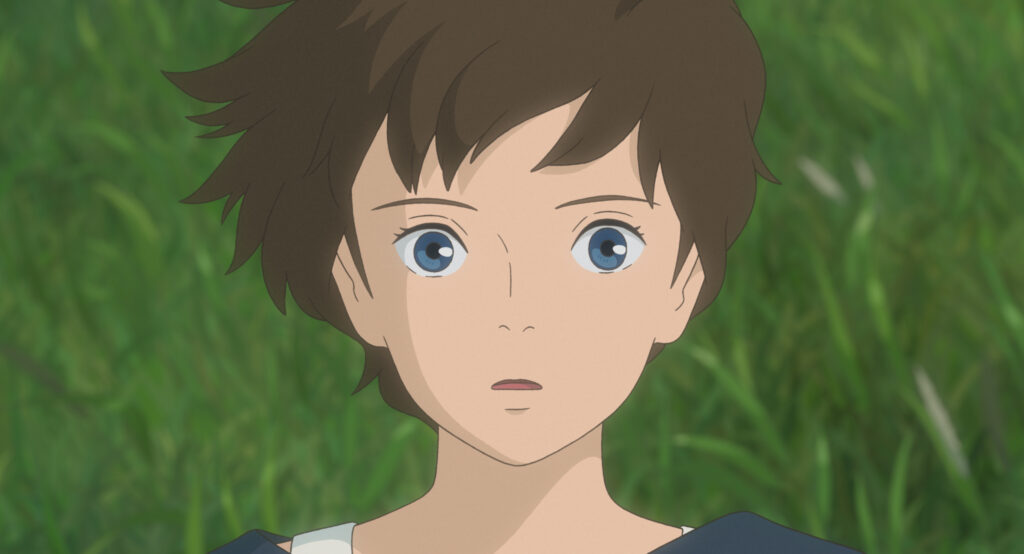
Nobuko acknowledges that “it’s actually really pretty.”
Someone (probably Nobuko, though it’s a bit hard to confirm) starts to say “almost like a foreign…” before Anna gets upset, tells them to leave her alone, and then calls Nobuko a “fat pig.”
Nobuko becomes riled up too and becomes a bit mean as well.
What was once the possibility of a friendship seems to fade away instantaneously. However, Nobuko isn’t unreasonable, and suggests that they drop their squabble and tries to extend an invitation to hang out again.
And, in response, Anna runs away.
Of course, Nobuko made mistakes, but Anna’s reaction was uncalled for. She started insulting a girl who was commenting on her pretty eyes. Even if the execution was a bit off, Nobuko wasn’t trying to be unkind.
This scene establishes one of Anna’s flaws.
Studio Ghibli Characters: Yoriko
Despite Anna’s struggles, Anna’s foster mother, Yoriko, sincerely cares about Anna.
After seeing a doctor for her asthma, Anna notes the cost of seeing him, causing Yoriko to question her.
In order to help her daughter get better, she sends Anna to live with her relatives, the Oiwas. This may seem cruel to some, but she truly does it to help Anna.
After she arrives, Anna calls Yoriko “auntie” which confuses Mr. Oiwa at first—probably because Yoriko views Anna as a daughter.
Ultimately, Yoriko is kind and cares deeply about Anna, even providing her postcards so Anna can write to her.
Studio Ghibli Characters: Setsu and Kiyomasa Oiwa
Then we have the Oiwas, who aren’t Anna’s biological family, but they are related to Yoriko. Anna lives with them over the summer in order to help her with her asthma, and during her stay with the Oiwas, she meets Marnie.
The Oiwas are extremely kind and welcoming. When Nobuko’s mother accuses Anna of pulling out a knife on her daughter—which is not true—Mrs. Oiwa says she “can’t imagine that.”
Nobuko’s mom goes on and on and insults Anna. Through this, the Oiwas remain calm (even offering the woman a flashlight to help her get home). They welcome Anna home and choose to believe the best about her despite the slander.
When Marnie Was There Anime Review: Ghosts & Spiritual Themes *Spoilers*
Ghosts are a reoccurring concern in When Marnie Was There. Although it’s possible to think of Marnie as a figment of Anna’s imagination, caused by mental illness, it’s clear that Marnie can’t be a real girl (or at minimum, her presence is extremely questionable).
There are a couple of reasons for this. 1) The house is abandoned, as established on Anna’s first visit and 2) Marnie dresses archaically, suggesting she is from a bygone era.
Even if Marnie is a ghost (which is debatable), there are no occult rituals. She’s framed as a mysterious girl with an unexplained presence through most of the film. Anna often passes out, so in some ways, it seems like she’s dreaming about Marnie.
But let’s pretend Marnie is a ghost—which seems to be one of the most common interpretations. If she’s a ghost, that makes this Studio Ghibli film a ghost story.
How are ghosts handled in the film? Are there any occult or weird spiritual things that occur?
Does When Marnie Was There Contain Ghosts? *Spoilers*
Fandom supports the idea of Marnie being a ghost:
After Marnie’s passing, her spirit returned to her hometown, mainly to her childhood home and the abandoned silo — [sic] the townsfolk seemed to notice her presence and started avoided [sic] said places, thinking (correctly) that they were haunted. (source, accessed 12 April 2026).
Anna is warned to stay away from certain places, like the Marsh House or silo, because they’re allegedly haunted, but she chooses to visit those places, anyway, and meets her grandmother, Marnie’s, ghost.
…Anna finds herself drawn to the Marsh House and ends up reliving some of her grandmother’s memories through Marnie herself (who adopted her preteen appearance), taking the place of Kazuhiko (Anna’s biological maternal grandfather) in most of the memories. Anna seemed subconsciously aware of the fact that Marnie was a ghost, but she didn’t show any fear towards her — [sic] Anna’s time with Marnie also helped Anna become more willing to open up to the people around her and, overall, become more cheerful and optimistic. (source, accessed 12 April 2026)
There’s a viable chance Anna likely befriended her grandmother’s ghost, which is, from a Christian perspective, quite alarming. We are not supposed to have contact with the dead. Anna spends a lot of time talking and playing with Marnie.
So, are the spiritual elements enough to keep Christians away from the film? Not necessarily. I missed a lot of the ghost elements the first time watching, so it depends on conviction—especially since Marnie’s presence could possibly be explained by mental illness (maybe).
FAQs for When Marnie Was There
Where to watch When Marnie Was There
When Marnie Was There is available for rent, purchase, or stream on many online sites. Here is an updated list of where you can stream When Marnie Was There.
Is When Marnie Was There a romance?
No, When Marnie Was There is not a romance, although it contains mild romantic elements on occasion. The story is focused on Anna, an antisocial girl, and Marnie, a mysterious girl who befriends her.
What is When Marnie Was There about?
When Marnie Was There follows Anna, a girl who struggles with making friends, and Marnie, a girl who lives in a mysterious and seemingly abandoned mansion.
Can Christians watch When Marnie Was There?
With discernment, Christians can potentially watch When Marnie Was There. It does potentially contain ghosts, a Japanese cultural festival, a brief mention of witches, and a potentially haunted silo/mansion.
Is When Marnie Was There safe for kids?
Technically, When Marnie Was There is safe for kids in the sense that it is not graphic or mature in content, but I would recommend waiting until your children are emotionally mature before considering it. The anime film is an emotionally heavy story dealing with grief, loss, and letting go.
Although elementary school kids might be able to watch it, they might not comprehend the true nature of the story.
Ponyo, The Secret World of Arrietty, or My Neighbor Totoro would be better Studio Ghibli movies to consider for family viewing.
Is When Marnie Was There appropriate for kids?
When Marnie Was There is (sorta) appropriate for kids. It’s technically PG and isn’t inappropriate in a content flag sense (it is not gory, violent, sexual, crude, and although there are a few frightening scenes, they’re within the realm of a solid PG rating), but it contains heavy emotional themes (loss, grief, unforgiveness, etc.) that might be difficult for younger kids to grasp.
What are movies like When Marnie Was There?
Although no two Studio Ghibli movies are quite alike, some similar (ish) films to consider from Studio Ghibli are From Up on Poppy Hill, Porco Rosso, and Grave of the Fireflies (this one is REALLY sad and emotionally traumatizing with an even heavier emotional tone than Marnie).
Is When Marnie Was There sad?
Yes, When Marnie Was There is a sad anime film.
Is When Marnie Was There scary?
When Marnie Was There contains a few scary scenes—particularly when Anna and Marnie visit the silo—that may be frightening for some viewers, but overall, it’s not a frightening, scary, or intense film.
I’m looking for a Studio Ghibli When Marnie Was There review
Our review of When Marnie Was There is located above and covers themes, events, and characters in the film.
What age is When Marnie Was There good for?
We’d recommend When Marnie Was There for ages 10 and up with discernment; Common Sense Media recommends it for ages 9 and up.
When Marnie Was There Review: Conclusion
When Marnie Was There is a beautiful anime film about grief, loss, and friendship. It’s emotionally heavy because Anna carries a lot of baggage, but the film is a beautiful lesson of forgiveness and letting go of emotional burdens.
As far as an age recommendation goes, we’d recommend When Marnie Was There for ages 10 and up with discernment; Common Sense Media recommends it for ages 9 and up.
Ultimately, Christians need to use Biblical wisdom and discernment when choosing any form of media, and When Marnie Was There is no exception. Overall the film is a beautiful lesson of forgiveness and letting go of emotional burdens, but the ghost aspect might make some Christians wary.
If you are looking for a less spiritual and emotionally lighter Studio Ghibli film to watch as a family, The Secret World of Arrietty might fit the bill.
When Marnie Was There Parent Guide
Does When Marnie Was There have sexual content or nudity? No, When Marnie Was There does not contain sexual content or nudity.
- Part of Anna’s chest is visible when a doctor listens to her heart; not explicit.
- Characters talk about the possibility of cute boys where Anna is from.
- A woman runs away and gets married. “She was expecting, you see.” So, most likely it was out of wedlock daughter ran away, was expecting and got married.
Does When Marnie Was There contain language? When Marnie Was There contains a few insults and unkind phrases, but no cursing.
- Anna says her Mom “whines like a goat.”
- A character calls his spouse “Hon-buns.”
- Shut up
- Kids call a quiet man a “mute.”
- A character calls their mom “boring and tacky.”
- “You fat pig.”
- Delinquent
Is When Marnie Was There scary, violent, or gory? Yes, When Marnie Was There contains a bit of scary content, but it does not contain gore and the violence is minimal.
- A child hurts himself on the playground.
- Anna trips and falls.
- A character claims that Anna pulled out a knife.
- Child abuse: Nan pulls Marnie and roughly brushes her hair, and Marnie’s maids threaten, frighten, and drag Marnie to the silo during a storm (Marnie is scared of the silo).
- Anna hopes Marnie’s abusers get struck by lightening.
- Anna’s oars get stuck and she crashes into the dock. Marie saves her though.
- The silo is scary and might be intense for younger or sensitive viewers.
- Anna passes out in the rain and has a fever.
- A girl’s parents die in a car accident. A snowy road with a car and first responders shown.
Does When Marnie Was There contain alcohol or smoking? Yes, When Marnie Was There contains a bit of alcohol and smoking.
- Wine mentioned.
- Alcohol in social contexts at a party.
- Smoking shown on multiple occasions (including at the party).
- Anna is given a drink to her good health…its wine. Anna takes a sip and realizes its wine, she hiccups. Marnie asks “Too much wine?”
Does When Marnie Was There contain magic, spiritual elements, or ghosts? When Marnie Was There contains ghosts, but it does not contain actual magic. Some spiritual elements are mentioned as well.
- Ghosts mentioned on multiple occasions.
- Anna believes that the world has an “invisible magic circle,” and she’s “outside” the circle.
- Mention of a haunted silo.
- Mention of yoga.
- Ghosts are allegedly at the marsh house, and Mr. Oiwa tells her she should stay away from it.
- Mention of power of the moon.
- Children attend the Tanabata festival. There, they sing about bringing out the candles, are given candy, light candles, and write wishes.
- Characters wear yukata at a festival.
- Mention of witches: “Dear little witch.” & “It takes one [a witch] to know one”
- Characters talk about “flower for a good fortune.”
- Luck/lucky/luckiest girl.
- A little girl says “Maybe I’m psychic.”
- Pinky promise.
- A church has a couple of crosses.
Photo Credit: © 2014 Joan G. Robinson/Keiko Niwa/Studio Ghibli, NDHDMTK. Courtesy of GKids Press Room.



Well done. When I read your reviews, I think they would be most helpful after a parent watches the movie/shows and then reads the review to see what you find important and meaningful about the themes and characters. I’m not good at uncovering the deeper aspects concerning what’s really going on in there. My simple mind allows me to watch a story and compare my background to someone else, notice the differences and try to learn something new about the world or how to care for others, even if there is a bit of fantasy/fiction involved. I haven’t watched a lot of anime besides the ‘Fireflies’ and a few episodes of spy family. I am more fascinated in watching more after reading these reviews. Just wondering if you could suggest what I watch next. Thanks!