Coraline Christian Review & Parents’ Guide
This Coraline Christian review compares the film’s official rating and intended audience to the film’s age appropriateness and scariness. The review also discusses characters, spiritual content, and themes from a faith-based perspective. A parents’ guide for Coraline is included at the end.
We aim to answer the question: Is Coraline safe for Christians, children, and sensitive viewers?
Quick Facts about Coraline
Studio: Laika
Writers: Henry Selick and Neil Gaiman
Rating: PG
Year: 2009
Runtime: 100m (1h 40m)
Quick Coraline Content Guide
Sex and Nudity: Minimal non-sexual, non-explicit nudity, save one scene where someone re-enacts the Venus de Milo.
Violence and Gore: Minimal blood, but multiple fights.
Frightening Scenes: Many frightening elements and scenes more akin to a PG-13 movie. Lots of suspense, unsettling images, and grotesque characters.
Language: Some insults and exclamations.
Substance Abuse: Minimal.
Spiritual: Several references to magical/mystical devices. Many references to the supernatural, including ghosts and a magical doll.
My Rating
What Age is Coraline Appropriate For?
We recommend that only teenagers and adults watch Coraline because those under the age of 13 may be frightened, upset, or unsettled by the film’s content. However, whether you (or your family) watch the film is ultimately up to your personal discretion.
Coraline‘s Age Rating and Intended Audience
Coraline‘s official rating is PG, but personally, I disagree with that rating (and so do many others). While the novella was also intended for children, that doesn’t mean that it’s acceptable for every child.
In fact, the director noted, “Just like [with] the book, I’m in agreement with Neil [Gaiman, the novella’s author] that it’s not necessarily for the very young.”
While the earlier scenes in the Other World may appear fun and bright, the story underneath is quite dark. The visuals slowly turn sinister to match the film’s increasingly perilous tone complete with grotesque characters, disturbing imagery, and an otherworldly monster pulling all the strings.
One reviewer noted the film is, “first and foremost a beautifully constructed horror film.”
I watched Coraline with my sister as an adult, but Myne was deeply frightened by the film as a child. She’s written a reflection on her experience, and it will be linked here once it’s available next week.
Is Coraline Actually Safe For Kids?
Coraline is too intense and scary for many kids. Even some teenagers and adults find it frightening, so many children would likely be terrified by the film. However, each family is different, and their sensitivities, convictions, and preferences may vary. That’s why the decision to watch or skip Coraline is different for every family.
Some kids who like dark and creepy things may love it. Coraline is, after all, often called a “horror film for children.” The director, Henry Selick, seemed to think so, saying, “I know that kids love to be scared, so as long as things do work out.”
Sure, Henry, but not all kids. So, watch with good judgement.
Is Coraline Scary?
Yes, Coraline is definitely scary. There are many intense scenes, including threat of bodily harm, imprisonment, high-speed chases, and overall terror. The monstrous villain, the Other Mother, is also terrifying.
Synopsis: What is Coraline About?
Coraline is a 2009 film based on Neil Gaiman’s novella. The film stars Dakota Fanning (My Neighbor Totoro) in the titular role of Coraline, an unhappy girl who’s desperate for fun and attention. Her parents won’t play with her, the new neighbors are odd, and her house is dreary.
Put plainly, she’s unhappy.
But on one gloomy day, she finds a secret door that leads to a magical new world. Everything there is like her home but better: delicious meals, a magical garden, and the Other Mother, who creates it all for her with love. But this new world comes with a price and deeply buried secrets.
Will Coraline be able to find truth between the lies and escape? Or will she will be forced to stay forever in the Other World?
Differences Between Coraline’s Book and Film Adaptation
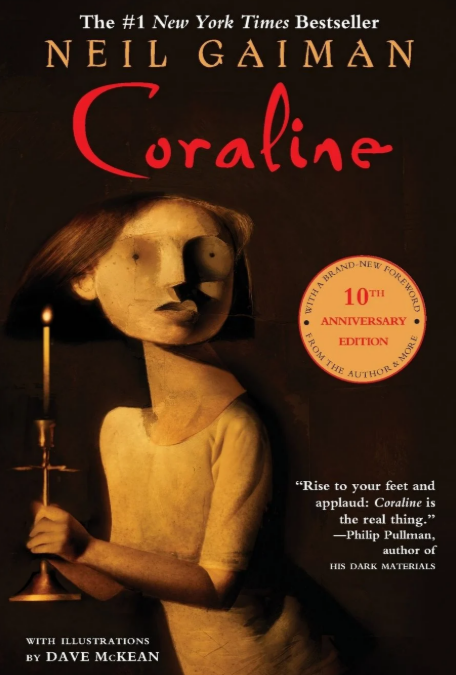
Coraline was originally a novella written by Neil Gaiman, whose creativity and love of the mythological have enchanted audiences for years. So, it wasn’t a surprise when he reached out to Henry Selick to get Coraline adapted into a film.
Gaiman has mentioned that the movie is vastly different than his novel, but it turned out to be exactly what he wanted. He even returned the script to Selick before agreeing it was different enough!
Between the film and the novella, you’d think that the film would be scarier since it contains visuals, but some believe the book to be scarier.
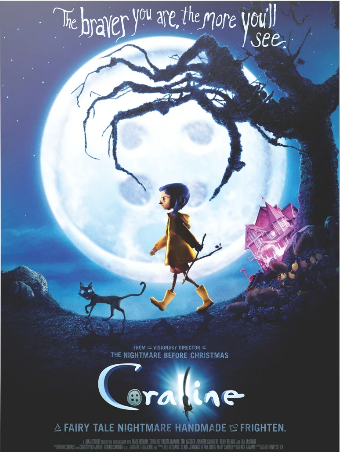
Even Coraline’s character designs are vastly different between the book and the film–notice how, on the cover of the novella, film Coraline’s striking blue hair and yellow raincoat (depicted on the article’s cover photo) are absent.
The novel version of Coraline shows remarkable maturity for someone her age. Her politeness hides a shrewd, clever mind that the movie Coraline lacks. She recognizes falsity, quickly understands the Other Mother’s intentions, and sets on her adventure with a cool, pragmatic attitude.
Coraline in the movie, however, says what she thinks and pays the price. She’s rude, arrogant, and blunt. When faced with a problem, she brazenly talks her way out of it or throws something at it.
Overall, movie Coraline’s disagreements are far more vocal than book Coraline’s. This suits the movie better since private thoughts cannot be depicted in film format unless they’re spoken or otherwise shown.
There are other, smaller, differences as well:
- In the book, Coraline says she doesn’t like spices or “exotic things.” The film makes the real food in Coraline’s world look downright disgusting, not “exotic.”
- There’s an entire backstory in the movie about someone’s sister disappearing years ago that is not present in the book.
- Coraline’s parents in the book are distracted but not mean like they are in the movie.
- The neighbors (Miss Spink, Miss Forcible, and Mr. Bobinsky) act normally in the book as opposed to the film’s oddball caricatures.
- The mouse circus is never shown in the book, but the movie shows the mice performing.
One big change is the addition of Whybe, who’s not present in the book at all. However, he gives important context while also being a sympathetic figure to Coraline, so his inclusion in the film is certainly justified.
The cat is one of the few things that doesn’t change very much. Cats are cats, no matter what media form they take.
Overall, though, I believe the movie was a faithful adaptation to the book with enough changes to make it more memorable.
Coraline Christian Review: A Christian Perspective on the Terrifying Children’s Film
I struggle to write a review about Coraline because the film itself is objectively phenomenal, but from a Christian perspective, there are concerns. No matter how well-executed, Coraline still should be viewed cautiously.
This post will go hand-in-hand with a reflection post written by Myne, since this movie traumatized her as a child, similar to how Spirited Away did for me. Her reflection on Coraline will be published later. Once available, it will be linked here.
Coraline’s Critical Acclaim
With its edgy, creative, and thoughtful storytelling, Coraline hits the mark for many viewers and critics. New York Magazine called it “exquisite, entrancing, very occasionally enervating,” and Entertainment Weekly said it captured, “a tone that perfectly rides the line between creepy and spellbinding.”
The L.A. Times summed it up well, saying it’s, “a remarkable feat of imagination, a magical tale with a genuinely sinister edge.”
It was nominated for an Academy Award for “Best Animated Feature,” a Golden Globe, and four Visual Effects Society categories. It then won more awards, including a BAFTA, three Annie Awards, and a “Best Feature” award from Annecy International Animated Film Festival.
The Internet at large generally praises Coraline, as well, and it’s on many Halloween movie lists.
Coraline’s Cast
The cast of Coraline is full of famous talent. Dakota Fanning (My Neighbor Totoro) brilliantly captures Coraline’s brattiness while adding undistinguished charm. It’s no surprise that she’s been in several horror pieces since this, including The Watchers and The Perfect Couple.
Meanwhile, Teri Hatcher manages to be both maternal and terrifying as both Coraline’s real mother and the Other Mother (a difficult balance). She’s been in other children’s media, too, including the WondLa series, Planes, and (Captain) Jake and the Never Land Pirates.
Keith Davis does a su-purr-b job at voicing the cat, although I personally like him best as Dr. Facilier from The Princess & the Frog.
Jennifer Saunders and Dawn French stun as Miss Forcible and Miss Spink, respectively, and have been in featured other children’s media, but they were featured together again in Death on the Nile.
My personal favorite voice in the film is Ian McShane, who provides a rough, Russian edge to Mr. Bobinsky. Makes sense, considering his other roles as mobsters and villains.
While the voice cast is fantastic, the actors are not the only artistic minds behind the film.
Artistry in Motion: One of Coraline’s Best Attributes
Coraline‘s best attributes are, hands-down, the overall artistry and creativity.
According to the studio’s official website, it took over 500 people to create Coraline‘s unique blend of stop motion and computer animation. This included puppeteers, animators, painters, mold makers, and even face librarians. Add in your usual movie makers, and that’s a lot of talented folks.

But no matter how many hands you have, it doesn’t change just how complex Coraline is. Each element had to be made and adjusted just right, over and over again.
The Museum of Pop Culture’s website explains that making one puppet took 10 people three to four months to make. It took two years just to get through pre-production, which doesn’t include the actual shooting and editing time.
This work was made more complicated by the sheer detail and creativity in every frame, down to the hand-knitted sweaters for several characters. TIME calls it an “art film,” whereas Flood Magazine states, “Pause any frame of Coraline and you have a greater artistic achievement than the entire history of Illumination Studios.”
I personally think they’re entirely right. The frightening elements aside, this is a beautiful film that gave jobs to many artists. For that alone, I commend it.
But don’t forget one of the morals of the story: Coraline is “an object to be admired, but not embraced.”
The Characters of Coraline
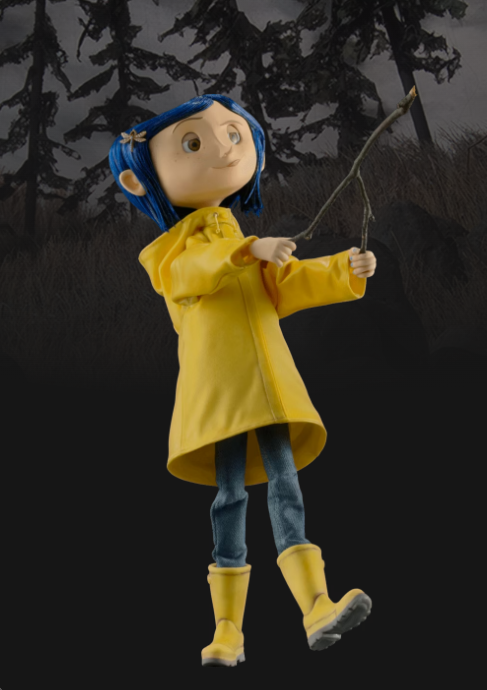
Coraline Jones
Coraline is one of those “love them or hate them” sort of characters. She’s rude, self-absorbed, and annoying for much of the film.
However, at her best, she’s fun, strong, and resilient. (It takes a lot of fortitude to throw a cat at a monster’s face.)
Her main flaw is not appreciating the life around her, which is understandable. But I’ll give her credit where it’s due: she finds her own fun where she can, like finding the mysterious well.
By the end of the movie, she realizes how much she has to be grateful for. She also actively works to make the world around her match the one she wants.
She convinces her parents to start a garden, makes friends with the neighbors, and invites Whybe’s grandmother back to her house to explain what happened to the kids years ago.
Her character arc won’t turn heads, but the lessons she learns are valuable for us all.
Coraline’s Parents
Coraline’s parents are depicted as boring, normal, and honestly, a bit mean. Coraline’s mother is frequently angry at Coraline and ignores her, preferring to focus on work instead. Coraline’s father rarely gets frustrated with Coraline, but he also ignores her for most of his screen time.
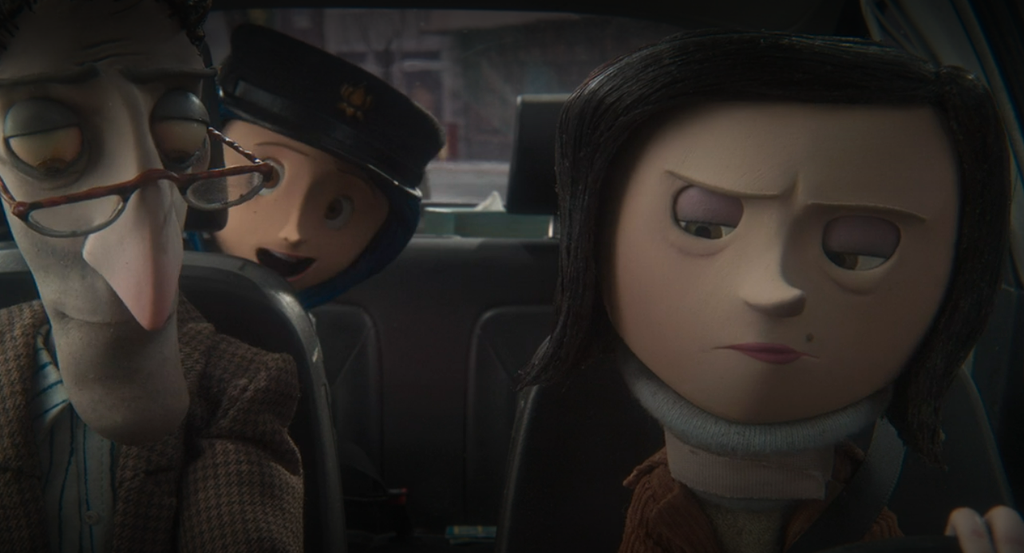
They’re not quite neglectful to the point of being abusive, but they trust Coraline (foolishly) to fend for herself. They also don’t indicate interest in her daily activities or perspectives.
Coraline has to push her parents to interact with her with all. Otherwise, she is mostly ignored.
However, that’s not to say they don’t love her. In the book, Coraline points out a moment where her father protected her from a wasp attack. It was meant to show true bravery, but it also shows paternal love.
In the movie, we see small moments of care, like when her father plays with her octopus toy and her mother gives her the gloves she wanted. It’s not momentous, but it is something.
The Other Mother
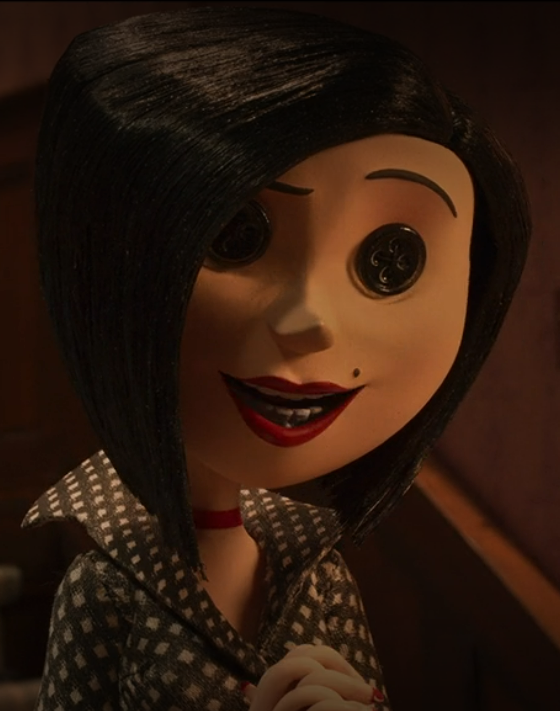
The Other Mother isn’t human, and she doesn’t have an official name. Characters simply call her the “Beldam” and “Other Mother.”
Technically, the term “beldam” means “an old woman,” but in myths and fairytales, they’re shapeshifting witches. Usually, they love challenges and are drawn to child abuse.
The Other Mother incorporates these stereotypes perfectly. Her only goal is to trap children in her web and steal their souls. It’s unclear if she feeds on their souls or just keeps them, but it’s undoubtable that she’s not to be handled lightly.
Miss Spink and Miss Forcible
These two old ladies are quite the duo. They frequently talk about their past as famous actresses (and it’s implied they were burlesque dancers). They’re rarely seen without each other, as shown later in the Other World’s sick interpretation of them.
According to the author, they are canonically lesbian, but this is not mentioned at all in the movie. They can easily be interpreted as close friends or sisters.
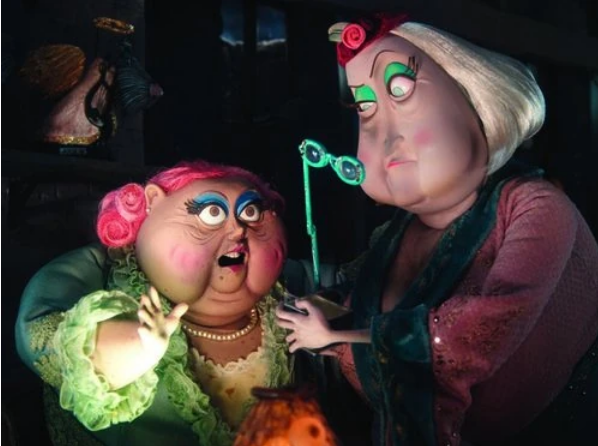
They’re bumbling, to be sure, but they do help Coraline by giving her a hag stone (the green triangle stone with the hole in it) that allows her to see “hidden things.”
Mr. Bobinsky

Mr. Bobinsky is the old man that lives upstairs in the Pink Palace. In the movie, he’s a Russian gymnast (or acrobat?) who is training a mouse circus. He’s tall, blue-skinned, and overweight, although his book counterpart is small and nerdy-looking.
In the movie, he’s also given a Russian accent and sports a liquidator medal (awarded to those who helped with the Chernobyl cleanup). It’s unnecessary to the plot but makes him a more memorable and interesting character.
Generally, Mr. Bobinsky is kind to Coraline (except in his Other World form). He passes along several warnings to her, and he congratulates her at the end of the film.
His Other World version is more central to the plot, although it isn’t really him (it’s just rats in his coat). The rats-portraying-Mr.-Bobinsky insist that Coraline should stay in the Other World, giving her the chance to reflect on what she really wants.
Be Careful What You Wish For: Themes Present in Coraline
“You probably think this world is a dream come true. But you’re wrong.”
There are plenty of themes in Coraline—gratitude vs. greed, familial love, the illusion of perfection, true bravery, and the necessity of normality.
I think most of it can be summed up in the classic phrase: “Be careful what you wish for.”
Coraline wishes for entertainment, attention, delicious food, and beautiful clothes—she basically wants her world to be better. At the root of it, though, I believe she wants love. She wants to be cared for and understood.
However, she wants to be cared for the way she wants, not the way reality has presented itself, and Coraline’s Other Mother takes these desires and perverts them.
She gives Coraline exactly what she thinks she wants…at a price.
It’s eerily similar to what Satan does. He takes the good that God has created and twists it for his own means. It’s easy to think “what’s the harm?” with things like money, power, and romance.
They’re not inherently bad, but Satan twists them until they promote selfishness and pride, unlike God’s original design.
The Other Mother continually tries to manipulate Coraline into staying in the Other World. One of her creations, the Other Mr. Bobinsky says:
“Nothing’s changed. You’ll go home. You’ll be bored. You’ll be ignored. No one will listen to you, not really listen to you. You’re too clever and too quiet for them to understand. They don’t even get your name right. Stay here with us.”
The Other Mother takes what Coraline wants, so she can turn it into the perfect trap. She makes her world appear better than reality, so Coraline selfishly wants to stay there forever. Satan makes us believe something similar (that we truly want something that is harmful), although his real goal is to undermine God and keep us from honoring God.
The movie reflects this idea well. The ghost children let their selfish desires grow until they let the Other Mother sew buttons into their eyes. This lets her steal their souls and keep them until Coraline sets them free.
The big question is why the Other Mother bothers to do this. What does she want with Coraline, specifically? Why bother with her soul at all?
The Coraline Fandom page offers some speculation:
“It could be possible that, since her creation, The Beldam relies on the souls of the children to continue existing, to the point that she becomes increasingly desperate and more impatient to get Coraline Jones to sew the buttons on her eyes. This is shown when she screams that she will die without Coraline.”
It’s plausible—we aren’t given an exact reason for the Beldam’s cruelty. Personally, I think Coraline was an unfortunate victim who happened to be close to the Beldam’s lair. But I do think there has to be a deeper meaning.
A Twisted Version of Love: Why Does the Beldam Want Coraline?
The cat is the only one who offers insight into the Beldam’s potential motive.
“She wants something to love, I think. Something that isn’t her. Or, maybe she’d just love something to eat.”
The Other Mother confirms it, saying she just wants to love Coraline and wants her to be a “loving daughter.” Deep down, we all want something to love.
We are created in the image of our loving Father. We are quite literally created to love. However, our love is flawed, unlike God’s perfect love. And that can lead to selfish depictions of love.
Maybe we want to love others just so they adore us in return. Maybe we just want something to become what we want. Or maybe we just want to fulfill our own needs through another person.
Healthy love may include (in some cases) reciprocation, change, and fulfillment of needs. But true selfless love doesn’t look like that. 1st Corinthians 13 says:
“4 Love is patient, love is kind. It does not envy, it does not boast, it is not proud. 5 It does not dishonor others, it is not self-seeking, it is not easily angered, it keeps no record of wrongs. 6 Love does not delight in evil but rejoices with the truth. 7 It always protects, always trusts, always hopes, always perseveres. 8 Love never fails.”
Although initially selfish, Coraline demonstrates selfless love later in the movie. She helps the ghost children, saves her parents, and helps where she can (such as removing the ties that keep the Other Wybie from frowning).
She recognizes her flaws and accepts reality as it is. Furthermore, she comes home and changes it for the better, hopefully learning many lessons along the way. This is key to her character arc, and makes her a dynamic, well-rounded character.
Coraline’s Horror Elements
Horror in Motion: The Main Issue with Coraline
As previously mentioned, Coraline is a horror film. The macabre moments from the book and the clever design choices play dangerously well together on screen.
I can’t say it any better than Intersect Magazine did:
“As a child, I thought this movie was the most terrifying thing in the world. Now, after rewatching it as an adult, I can say with 100% certainty that I was right.”
As someone who enjoys horror flicks, I find this one scarier than many I’ve watched. Many horror movies rely on gore, profanities, and sexual content to meet the R-rating, but this movie could get there on terror alone.
Film critic Roger Ebert sums it up well:
“I know kids are exposed to all sorts of horror films via video, but “Coraline” is disturbing not for its gory images but for the story it tells. That’s rare in itself. Lots of movies are good at severing limbs, but few at telling tales that can grab us down inside where it’s dark and scary.”
Along with the story, the visuals are enough to inspire nightmares. Want to see what I mean? Here’s just one example (see the parents’ guide below for more scary moments).
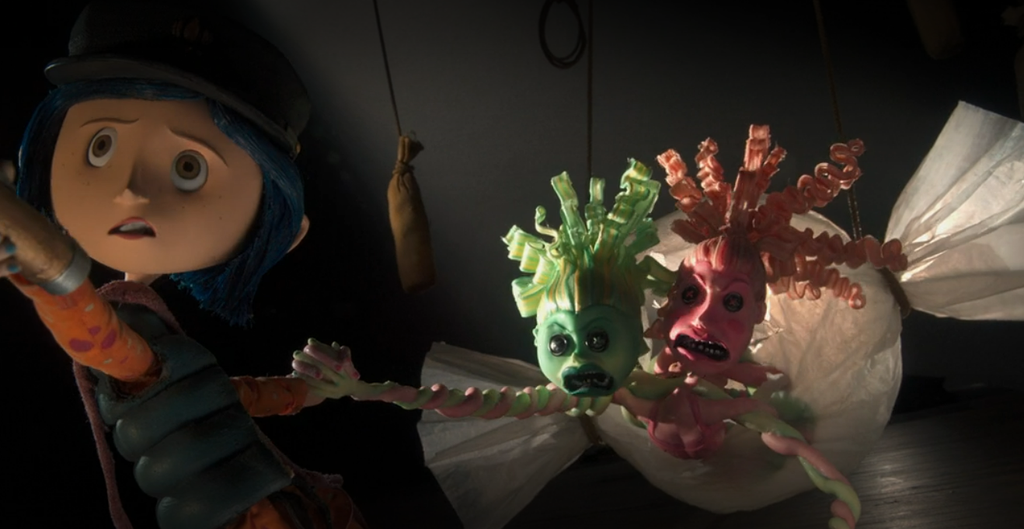
The twisted (literally) Other versions of Miss Spink and Miss Forcible give me the creeps every time—their screeching while crawling after Coraline is unsettling enough to haunt anyone for years.
Here’s a clip from the film that helps depict how absolutely horrifying Coraline can get:
No matter how you swing it, Coraline is creepy to the core.
It might be marketed as a kid’s movie, but it’s got some moments that have lived in my head for years. I still haven’t gotten over the Other Father in his pumpkin form chasing after Coraline, or the Other Whybe’s sewn smile.
Coraline as a film is a stunning masterpiece, but it’s not for the faint of heart. Although it does have themes of bravery, true love, and wisdom, the overall horror factor cannot be ignored.
FAQs for Coraline
Does Coraline have a happy ending?
Yes, Coraline has a happy ending. She escapes the Other Mother and rejoins her family and neighbors in the real world.
Is Coraline a horror movie?
Yes, I would argue that Coraline is a horror movie due to the many frightening elements and generally suspenseful, frightening tone overall.
Is Coraline based on a true story?
No, Coraline is not based on a true story—it’s based on a novella by Neil Gaiman.
Can families watch Coraline together?
If there are children under the age of 10, we do not recommend watching Coraline, even together as a family. However, teenagers and parents could potentially watch Coraline together.
What should parents know before watching Coraline?
Coraline is a scary film that many children may find frightening, so caution is recommended especially if your child is sensitive or easily scared.
Is Coraline family-friendly?
No, Coraline is not particularly family-friendly. Teenagers and adults would probably be able to handle it, but children under the age of 13 would most likely be frightened and overwhelmed.
Coraline Parents’ Guide
Sexual Content, Romance, and Nudity in Coraline
- A man performs acrobatic tricks, including the splits, in midair. Coraline appears mildly uncomfortable.
- A man jumps down towards Coraline, who is holding gardening shears. He almost is impaled in the groin, but he is fine.
- An old lady performs on stage wearing basically her underwear. Coraline says she’s “practically naked.”
- Another lady performs on stage wearing nothing but a bikini bottom and gems over her breasts. It’s done for comedic effect to mimic The Birth of Venus, but it’s still inappropriate.
Language & Insults in Coraline
- Coraline mocks her friend’s name “Whybe” as “Why-were-you-born.”
- “Dingbats.”
- “Wuss puss.”
- “Crap.”
- “Oh my G*d.”
- “G*d.”
- “Little Rascals chick.”
- “Jerk wad.”
Scary & Intense Scenes in Coraline
- The Other Mother unstitches a burlap human-shaped doll while menacing music plays in the background. She then makes the doll a spitting image of Coraline.
- A character wearing a skeleton biker mask appears from the fog while lightning crashes above him.
- Miss Spink and Miss Forcible show a wall of taxidermy dogs dressed as angels.
- The Other Mother suggests Coraline sew buttons into her eyes.
- The Other Mother’s form grows taller and more angular until she looks skeletal and inhuman.
- In a close-up shot, the Other Father contorts his face to make an overly exaggerated frown that extends past human proportions.
- The Other Mother screams and shoves Coraline into a room with no windows or doors.
- Hands suddenly grab Coraline from a room.
- Coraline and the Other Whybe race to escape the Other Mother as she calls out for her.
- Miss Spink yells and stabs a candy bowl with two metal knitting needles.
- A doll that looks like Coraline’s parents burns in a fire.
- The Other Father mans a giant mechanical grasshopper that attacks Coraline and later falls through a bridge to sink below a murky pond.
- A talking empty suit taunts Coraline as it slinks around the room.
- The Other Miss Spink and Forcible scream at Coraline and chase after her.
- The Other World disintegrates around Coraline as she races to the house, escaping just in time.
- Coraline faces down the skeletal Other Mother in a green lit room that appears to breathe in and out.
- Coraline throws the cat at the Other Mother, who fights it off.
- The Other Mother stomps on the floor, and the floorboards fall into a giant spider web. Coraline gets caught in the middle. The Other Mother falls, screaming, right where Coraline was, and she scuttles after Coraline like a spider.
- Coraline tries to shut a door with the Other Mother fighting to open it from the other side. Once the door is shut, the Other Mother screams while the tunnel shortens. Coraline escapes just in time.
- The Other Mother’s metal hand chases Coraline quietly just out of sight.
- Coraline traps the metal hand in a blanket, but it shreds through the fabric.
Gore, Injuries, & Violence in Coraline
- Coraline gets poison oak on her hand.
- The cat breaks the neck of a circus mouse, which then turns into a large rat.
- Coraline is stuck on a second-floor metal balcony that topples to the ground. Coraline falls but recovers.
- Coraline’s Other Father tries to attack her with a giant grasshopper, but she runs away.
- Coraline fights the Other Whybe until she realizes who it is.
- The Other Mother’s metal hand grabs Coraline and pulls her down the path. Whybe fights the hand.
Substances in Coraline
- Coraline’s mother calls someone drunk.
- Coraline says that someone wasn’t drunk, just eccentric.
Spiritual Content in Coraline
- Coraline uses a dowsing rod.
- Coraline and her friend talk about “water witching.”
- Coraline’s father sings about a “witchy-twitchy girl.”
- A mysterious well is surrounded by a circle of mushrooms called a “fairy ring.”
- Toys come alive and fly around the room.
- In the Other World, Coraline’s friends can talk to her from inside a picture frame.
- A cake magically sprouts candles and frosting.
- Miss Spink wears a hat with an evil eye.
- Misses Spink and Forcible read tea leaves.
- Button eyes magically change color.
- Three ghost children appear and talk to Coraline, explaining the Other Mother “ate up their lives” and that she took their souls.
Conclusion: Coraline Christian Review
While Coraline is an objectively well-made piece of art, it’s not for everyone. Coraline is a cult classic for a reason, but it’s up to each viewer to decide if they’re ready to embark on the terrifying journey to the Other World.
Recommended Posts
Cover Photo: © Laika