Spirited Away and Media Discernment: What the Studio Ghibli Film Taught Me
Spirited Away* is a 2001 Studio Ghibli film that’s one of Hayao Miyazaki’s best. However, the anime film, although beautiful, is surprisingly frightening for a PG-rated film.
Today, one of our editors, Selah, discusses Spirited Away and media discernment to offer a personal reflection on a film that had a lasting impression on her. She shares how the film personally impacted her young self as well as practical takeaways for implementing media discernment in your own life.
*Our Spirited Away review and parents’ guide post is available here.
Summary of Spirited Away
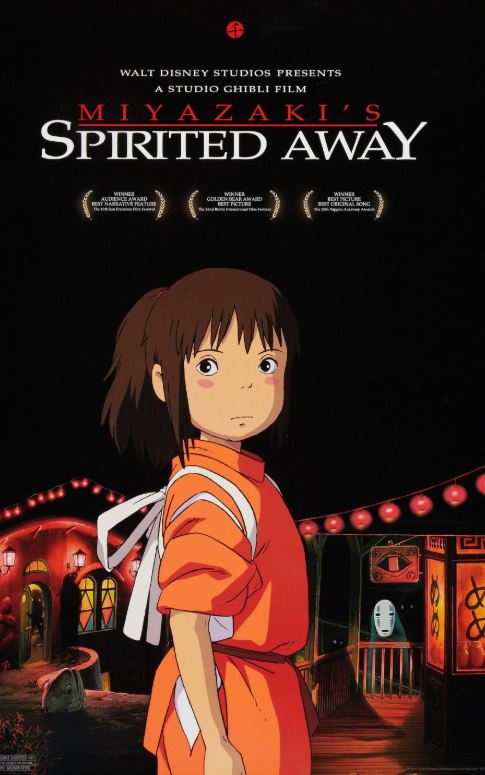
Spirited Away follows Chihiro, a cranky ten-year-old who isn’t happy about moving to a new town. On the way to their new house, her parents stop at an abandoned “theme park.” But Chihiro soon learns that it’s actually an entrance to the spirit world, and the spirits aren’t keen on letting her and her parents go. With the help of new friends, Chihiro uses every ounce of her courage and kindness to get out with her parents (and her memories) intact.
Spirited Away and Media Discernment: A Christian’s Reflection
Children’s movies, particularly animated movies, often seem harmless. Talking animals and “happily ever afters” don’t seem very scary. As strange as it may initially seem, the need for discernment extends even to seemingly family-friendly movies. Why? Because children’s films aren’t always as innocent as they seem, and they can leave a lasting impression on viewers.
For example, a Guardian article describes the moment when a five-year-old ran screaming out of the house while watching Willy Wonka and the Chocolate Factory.
Another person noted that Scar’s gleeful cruelty in The Lion King scared him for years.
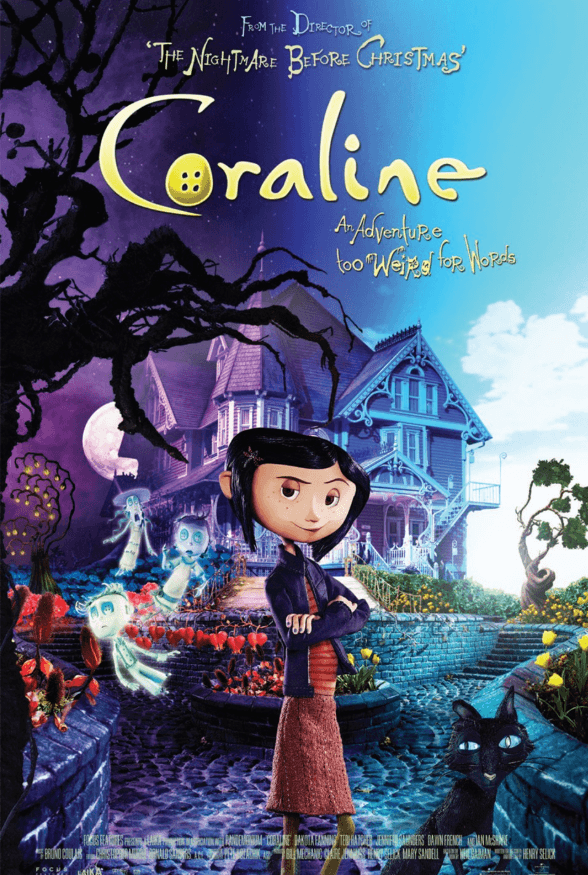
Oh, and lest we forget how Coraline was “categorized as a children’s film…but qualifies for a horror film.”
Personally, I was scared of the Child Catcher in Chitty Chitty Bang Bang, and I was only able to watch it all the way through as an adult. All that to say, family movies and children’s media are not so easy to brush off.
Overall, I hope this article will remind readers of the necessity of discernment with all media, whether that’s with a children’s film or any other story.
A Personal Narrative on Spirited Away
Picture, if you will, an eight-year-old girl with a vivid imagination. She’s always dreaming that she’s somewhere in a fantasy world, dancing with a handsome prince or defeating her enemies.
This is a story about protecting that little girl (aka me).
I was at home in the media room. I was probably playing with toys or doing something else, and the movie Spirited Away played in the background. At first, I ignored it, not finding it interesting. However, as the animation brightened and the music shifted, I became sucked in. I watched as Chihiro explored the “abandoned theme park” only to run into someone who tells her she needs to leave immediately.
The music rose as Chihiro raced back, but her parents were no longer there—only giant, grotesque pigs.
I wasn’t intrigued anymore. I was apprehensive. Surely, the pigs weren’t her parents, right? They didn’t look anything like Chihiro’s parents, and they acted like they didn’t even recognize their own daughter! A pit dropped in my stomach. I wouldn’t want my parents to turn into pigs!
Despite this frightening development, I continued watching Chihiro explore her new world, meeting monsters and spirits; some kind, some mean.
One of them was seemingly obsessed with Chihiro. He was mostly silent, with a ghostly body and a white mask. He didn’t do much, but he seemed harmless.
That is, until this monstrous creature was left alone. When he stumbled across a frog spirit hunting for leftover coins from earlier that day, the ghost-monster offered a palmful of gold to the frog, who greedily accepted the gift. Just as the frog admired his prize with joy – CHOMP! In a flash, the monster opened a giant maw full of square teeth and swallowed him whole.
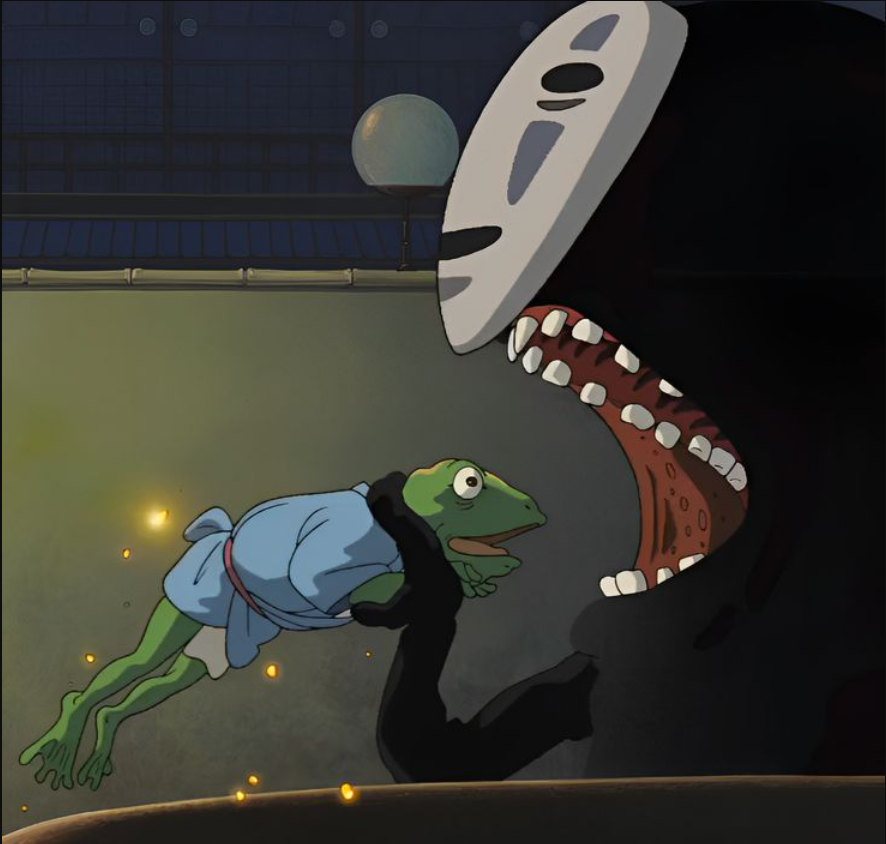
I was horrified, shocked, and bewildered. This eerie monster, who had seemed fine up to this point, ATE people? Was this all a trick? Was the monster a villain? Was the frog dead forever?
The scene ended, and the story continued, but I didn’t watch anymore. I didn’t want to experience anything else like that. The once colorful and interesting movie became terrifying in a heartbeat. As the years went by, the moment when the monster ate the frog remained ingrained in my memory, a haunting reminder of an otherwise forgotten film.
Years later, I was at my neighbor’s house, and they had a movie on in the background. I wasn’t paying much attention, but suddenly, I saw the ghostlike monster! And then, when the frog is swallowed, the pieces click into place. That’s the movie!
I now knew the origin of my childhood fear.
Although the fear never entirely went away, time and knowledge softened it. I now understood the monster wasn’t real, the movie wasn’t real, and that I am truly safe.
That’s what matters.
Reader, I have lived with Spirited Away in my thoughts for over a decade now. You’d think I would hold a grudge since it scared me so thoroughly, but I don’t.* Spirited Away is actually one of my favorite movies as an adult.
However, despite liking this movie now, I do want to use this reflection as a place to educate on the importance of media discernment and how my experience impacted me.
*Except for No Face, the ghostlike monster who devoured the frog. I am still struggling to forgive him.
Spirited Away is a Family Movie, and a Beautiful One At That
Spirited Away is, technically, a family movie, so my parents weren’t “wrong” for letting me watch it as a kid. However, that doesn’t mean I was able to handle it at the time, and if I had a parent to discuss the film with me, I’m certain I would have handled it better. In the end, I had to rewatch it as a teenager to process it.
Upon my rewatch, I had expected pretty animation, good music, and of course, No Face. Although those elements were present, it was so much more than that.
As Loud and Clear put it, Spirited Away, “…hits deep through its beautifully presented story alone.” It’s creative and enchanting, and I haven’t found its equal for world-building.
The score is tantalizingly gorgeous, and the animation is both fun and meticulously detailed. The background scenes alone are rich with color and patterns, and you could spend hours analyzing individual frames.



Then there are the characters, who practically leap off the screen with how realistically they act. Chihiro is both charmingly ridiculous and clever with how she approaches problems. (I personally love when she yells at the owner of the bathhouse after being denied a job. If life were only that easy….) Through it all are themes of loyalty, bravery, selfless kindness, and self-discovery.
Overall, Spirited Away was a pleasant surprise when I rewatched it, but it came with some downsides.
Spirited Away Contains Some Graphic and Immoral Content
Spirited Away is critically renowned and a family movie; to quote the Harvard Crimson, “How much harm could a talking frog, giant baby, or a set of googly-eyed dust bunnies do?” But it’s not those elements that make the film so shocking.
There was quite a lot of violence, immorality, and, frankly, just gross things throughout the entire movie. Here are a few examples of what makes Spirited Away so shocking (spoilers ahead):
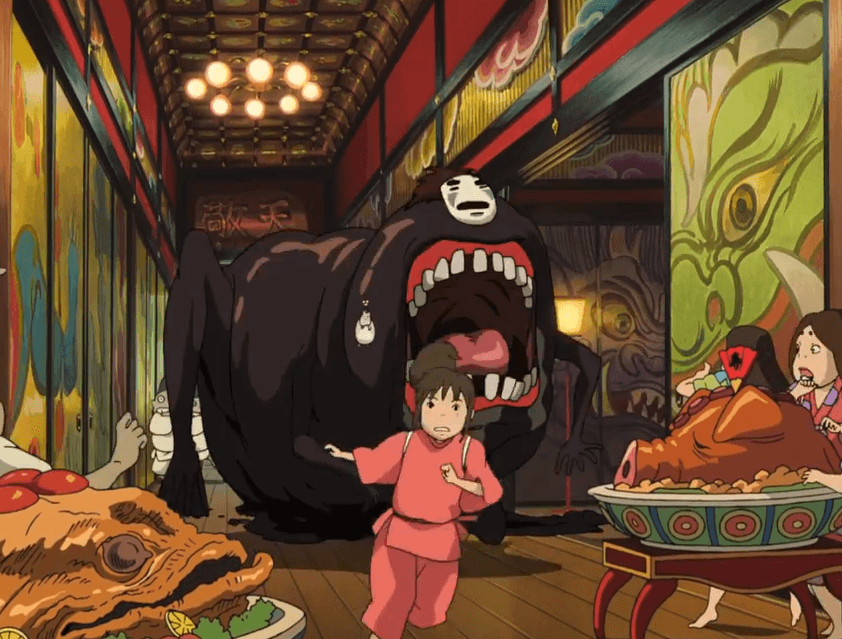
No Face chases the protagonist full-tilt throughout the bathhouse.

A witch breathes fire (and is quite an unpleasant character to look at, anyway).
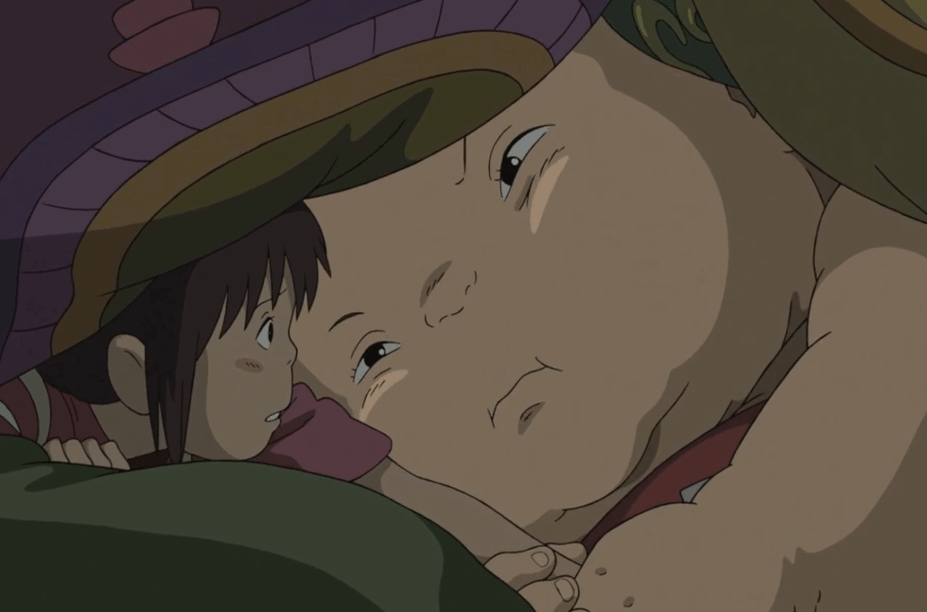
The protagonist is threatened with bodily harm multiple times. (In the picture, the giant baby tells Chihiro that if she doesn’t play with him, he’ll break her arm.)

There’s also a fair bit of blood (and the character comes close to death)…

…sludge-like vomit…
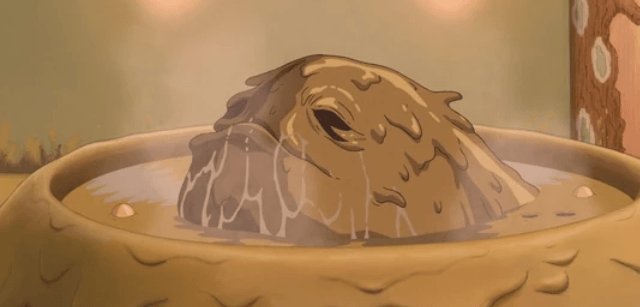
…a muddy stink spirit…
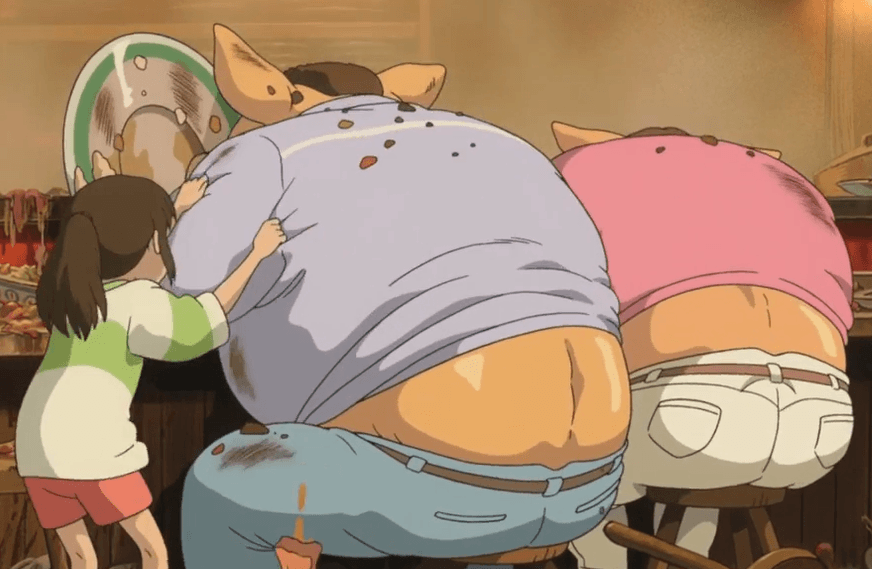
…and as aforementioned, giant pigs.
All in all, there are plenty of unpleasant things in this movie, and it’s not fit for every kid.
Why Discernment is So Important for Christians
That’s not to say that children should never be exposed to unpleasant things (we do live in the world, after all), but we are also called to not be a part of the world.
John 17:14-16 (NIV) says:
“I have given them your word and the world has hated them, for they are not of the world any more than I am of the world. 15 My prayer is not that you take them out of the world but that you protect them from the evil one. 16 They are not of the world, even as I am not of it.”
In this passage, Jesus is praying for protection over His disciples. He knows they’re going to be targeted by their association with Him and because of their own actions as they continue His ministry. He knows they are set apart, consecrated by God to grow His kingdom on earth. As Christians, we, too, are called to a higher standard.
Part of our calling is to serve the Lord and to make disciples. We are also called to love each other well, and I believe part of that includes protecting each other from what could cause us to stumble or could cause us harm. We can protect the people around us using gifts like discernment.
Discernment means recognition and understanding, particularly when marking something as different. It’s a part of making a rational choice about something. In this case, I believe we should use our best judgment regarding the media we consume. I know some kids could watch movies like Spirited Away without batting an eye.
However, I was not that child. For goodness’ sake, I was scared by the Child Catcher from Chitty Chitty Bang Bang (see below). So, some discernment would have been nice when considering my viewing choices.

To be clear, though, I’m not blaming my parents. They turned on what they thought was an appropriate movie, likely something I myself might have picked from Blockbuster. However, because it wasn’t prescreened or discussed with me, I was scared of No Face for years. To a lesser degree, I was scared of losing my parents as Chihiro did. Even Home Alone gave me anxiety, so the thought of my parents becoming mindless animals was terrifying.
That’s why I am not magnanimous towards reviews that paint this movie as one of the best children’s films of all time. Yes, objectively, it’s a “good” film. It has strong moral themes, a clever storyline, and inspiring characters. But that does not mean it’s the right film choice for many families.
I’m not alone when I say this, either. Authors Colin Odell and Michelle Le Blanc note the film wasn’t “Disney-cute.”
“It’s sense of menace was palpable, and it was responsible for frightening many a small child who sympathised with Chihiro’s terrifying predicament.”
Odell, Colin and Michelle Le Blanc. Studio Ghibli: The Films of Hayao Miyazaki and Isao Takahata, no. 4. Harpenden, Kamera Books, 2024.
Although beautiful, this movie can be quite scary for some viewers. We are called to live with wisdom and sound judgment, which extends to what we watch, read, and listen to. We need to use wisdom when deciding what we consume.
Proverbs 3:21-22 (NIV) says:
“My son, do not let wisdom and understanding out of your sight, preserve sound judgment and discretion; 22 they will be life for you, an ornament to grace your neck.”
We are blessed to live in a generation with so many entertainment options, many of which are educational and helpful. However, like one of my favorite verses says, “‘All things are lawful’ but not all things are beneficial” (English Standard Version, 1 Cor. 10:23).
Some films are not going to be edifying—some are just for fun. And that’s one of the joys God lets us have! Some movies won’t teach us solid lessons or Biblical truths, but that doesn’t mean they’re automatically bad. For example, the Super Mario Galaxy Movie didn’t include much growth or morality, but it was creative and nostalgic with minimal questionable content.
God gave us the Holy Spirit and capable brains to help us view everything through a lens of spiritual judgement. And, of course, we have God’s Word, which should be used to test everything. These tools can help us decide if something is good for our growth.
As a child, Spirited Away was so scary that it wasn’t good for my growth. However, I could have eased my fears initially by talking about it with my parents or a trusted mentor. But instead, I shoved it in a corner and refused to think about it. It was far easier to forget and move on.
Who knows if I would have even remembered it again if it hadn’t been for that one evening at my friend’s house? I’m grateful the Lord put it in my path again so I could conquer my fear and learn about media discernment, especially as it pertains to individuals.
Practical Ways to Apply Media Discernment
Media discernment can sound intimidating and formal, but in reality, it’s simple to practice and an essential skill. Here’s how you can use wisdom to decide what movies to watch in the future:
1. Practice Discussing Content
Even if you’re not a parent or guardian, you can discuss media with your family, friends, and co-workers. Strike up a conversation and ask around. Talk about what you’ve seen and ask about things you want to see.
Having a sounding board can help you make future decisions and help you decide which stories may or may not be beneficial for your growth. (For example, it was only when I was discussing Assassination Classroom that I realized just how much problematic content there was!)
As an adult looking back, I wish I had had a conversation about what I watched. Specifically, I wish I had told my parents what happened. If they’d asked, I would have said something—I knew I was safe with them. I felt loved. I knew they would listen to whatever I had to say.
That is a major step in guarding impressionable minds: giving them a space where they know their thoughts and opinions are valued. Even if it’s something “small” or “silly,” they need to know they can share what they feel and think.
2. Watch Films Together
Another way to practice discernment is by watching movies with a friend, coworker, or family member who wants to see it. If something happens, you can discuss it with them in real-time. Or you can skip particular scenes, or even stop the movie altogether if needed.
(For example, I wish someone had warned me about the giant spiders in The Hobbit‘s second movie. I had to step out of the theater thrice.)
3. Watch Films Ahead of Time
Watching movies ahead of time lets you enjoy the film privately and plan what to discuss (or what to skip). For example, because I’ve already watched Coraline, I know I wouldn’t show it to anyone under the age of 13.
4. Read Reviews
Not all review sites are created equal, but some websites, like Common Sense Media and PluggedIn, provide content guides that can help you prescreen movies and shows. Other sites let you read reviews from fellow watchers, hopefully warning of any elements you’re not comfortable with. As always, take their words with a grain of salt, but reviews are a good place to start.
Spirited Away and Media Discernment: Concluding Thoughts
Thankfully, I’ve recovered from this experience. It didn’t give me any lasting scars, and I love this movie nowadays. The story is engaging, and it inspires me to be kind and brave. There are Biblical lessons of courage, hard work, and selflessness (plus it’s just gorgeous to watch).
More than that, though, I’ve learned that fears can be overcome. God doesn’t waste even minuscule experiences from ordinary days. This movie and the experience I had with it taught me the importance of choosing media wisely and how differently people can perceive media. I hope that this article helps you realize the same.
Cover Photo: © 2001 Hayao Miyazaki/Studio Ghibli, NDDTM. Courtesy of GKids Press Room.




One Comment
Comments are closed.