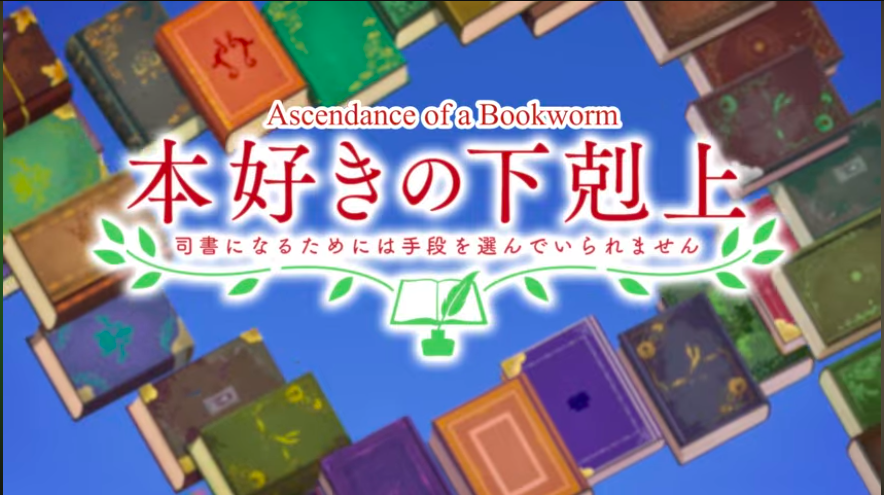
Ascendance of a Bookworm Christian Review: Series Overview Post & Parent Guide on Miya Kazuki’s Isekai Fantasy
Ascendance of a Bookworm is a unique isekai franchise centered on a girl who loves books—but is it appropriate for Christian viewers, readers, or kids?
Our Ascendance of a Bookworm review serves as a complete overview of Miya Kazuki’s bibliophile fantasy isekai, providing a parent guide and a Christian analysis of the series. We will link to our season by season anime reviews, light novel reviews, and manga reviews that will provide detailed, installment specific parent guides. We will also discuss the plot of Ascendance of a Bookworm.
If you’re wondering whether Ascendance of a Bookworm is worth watching, good for teens, or appropriate for Christian viewers, this Honzuki no Gekokujō review will answer those questions.
Quick Facts
- Author: Miya Kazuki
- Year: 2013-2017 (web novel), 2017-Present (Hannelore’s Fifth Year); 2019-2022 (anime, seasons 1-3), 2026-Present (anime, season 4-unknown)
- Age Rating (Anime): 12+ Suggestive Dialogue, Violence (Crunchyroll); TV-PG (IMDB)
- Age Rating (Light Novels): Teen
- Where to watch Ascendance of a Bookworm: Crunchyroll (as of April 2026)
- Genre: Fantasy, Isekai
- Episode Count: 36 (seasons 1-3)
- Ascendance of a Bookworm Light Novel Volume Count: 33
My Rating
Synopsis: What is Ascendance of a Bookworm about?
When the book-loving Urano Motosu dies from an avalanche of books, she is transported to a fantasy world called Yurgenschmidt and reincarnated as a poor girl named Myne. In this world, books are rare and extremely expensive, and since she still has her memories from her past life, she’s determined to find books, even if it means making them herself.
However, this will prove to be rather difficult. Myne’s body is extremely frail, so she can’t even walk down the steps on her own. Plus, she doesn’t have any tools, and even parchment and ink are expensive. To complicate matters even further, Myne has knowledge and abilities that anyone would love to get their hands on—even ill-intentioned individuals.
Ascendance of a Bookworm is an isekai blending high fantasy, economics, political intrigue, and magic in a world far unlike our own. The world of Yurgenschmidt was first introduced in the web novel before being adapted into an anime, light novel, and manga.
Ascendance of a Bookworm Christian Review: An Overview of Miya Kazuki’s Fantasy Series
Ascendance of a Bookworm, also known as AoaB or Honzuki no Gekokujō: Shisho ni Naru Tame ni wa Shudan o Erandeiraremasen, is an isekai series created by Miya Kazuki. AoaB started out as a web novel in 2013, but now the Ascendance of a Bookworm franchise includes light novels, manga, anime, drama CDs, audio books, a musical, a spinoff, short story collections, fan books, and even junior versions of the light novels.
Myne’s home is in Ehrenfest, and Ehrenfest is a part of the country of Yurgenschmidt.
List of our Ascendance of a Bookworm Reviews
Below is a master list of every Ascendance of a Bookworm review on our website. Click on any of them to go directly to that particular review.
Ascendance of a Bookworm Anime Reviews
- Ascendance of a Bookworm Season 1 Anime Review
- Ascendance of a Bookworm Season 2 Anime Review
- Ascendance of a Bookworm Season 3 Anime Review
- Ascendance of a Bookworm Season 4 Anime Review (TBA); here’s my first impression.
Ascendance of a Bookworm Manga Reviews
Ascendance of a Bookworm Light Novel Reviews
- TBA
Ascendance of a Bookworm: Main and Secondary Characters
Key characters in Ascendance of a Bookworm include Myne, Lutz, Ferdinand, Benno, and Tuuli:
- Myne, also known as Rozemyne or Urano Motosu, is the main character of Ascendance of a Bookworm. She loves books more than anything else.
- Ferdinand is Myne’s boss, mentor, and guide in Ascendance of a Bookworm. He is known as the head priest in the anime and the high priest in the light novels. He is a noble and a blue-robed priest at the cathedral.
- Lutz is Myne’s best friend, business partner, and greatest support other than her family. He monitors Myne’s health and knows her better than anyone—arguably even better than her family.
- Benno is a merchant who has business dealings with Myne. He’s a friend and guardian for her and cares quite a bit about profits.
- Tuuli is Myne’s older sister and an apprentice seamstress. Tuuli helps Myne achieve her goals and is a major support to her.
Myne’s Inventions in Ascendance of a Bookworm
Myne loves to make anything she doesn’t have. She’s very creative and economical, and because of her knowledge from Japan, she’d able to introduce many different inventions to Yurgenschmidt including shampoo, recipes, games, etc. One of my favorite creations is her hair ornaments that she crafts with thread and a crochet hook. As a crocheter, I love recreating them. To celebrate Season 4’s release, I recreated Myne’s baptism hair ornament.
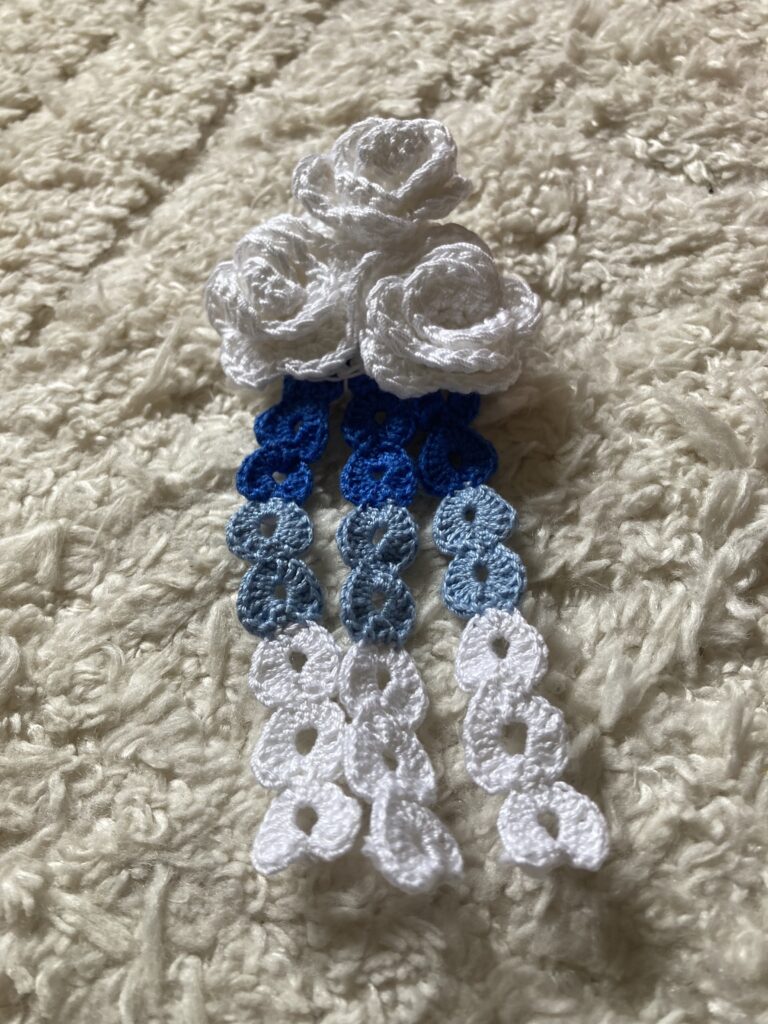
*I am not a photographer, so I know the photo is not the best.
Magic in Ascendance of a Bookworm
This section explains the Ascendance of a Bookworm magic system, including contracts, schtappes, and highbeasts.
As a high fantasy isekai, it should come as no surprise that Ascendance of a Bookworm contains fantasy magic common in isekais.
In the context of AoaB, magic is necessary for the world to function, and it’s grounded in high fantasy tropes.
In this section, I’m going to discuss some different magic concepts that occur in Ascendance of a Bookworm. The information is based on sources such as the anime, light novels, and the Ascendance of a Bookworm wiki. Spoilers may be present, but if they are, they will not be detrimental to the main storyline.
Magic Contracts in Ascendance of a Bookworm
Magic contracts exist in AoaB. For commoners to sign a magic contract or even gain their citizenship, they must use their blood as part of the signing. From a Christian perspective, I know it sounds alarming—it makes me uncomfortable. However, there are a few reasons why this happens:
First off, the use of blood is not ritualistic. It’s a part of the signature process. The books go deeper into the lore than the anime does, but commoners are the only ones who have to use blood for these contracts. They use it because it has trace amounts of mana (magic power) that is needed for the contract. Nobles have the use of magical items that replace the blood signatures—items that the commoners do not have access to. Plus, commoners rarely have mana, so without blood, the magic contracts would not work.
The magic contracts are framed as important and are used for important agreements, such as extremely profitable ones. Once the contract is signed, no one can break the contract unless everyone who signed it agrees to it. Otherwise, you could potentially die for breaching a contract. It sounds extreme, but it helps protect one’s interests in the world.
These contracts are first introduced in season 1 of the anime and continue to appear throughout.
Magic Circles in AoaB
Magic circles appear in the anime. They don’t resemble the common pentagramic magic circles used in occult rituals; they seem to be designed specifically for the anime (at least based on the occurrences through Season 3 of the anime; later season use is still to be determined).
In the light novels, they’re more practical than stylistic (which makes sense since you can’t see them directly as a reader). People may embroider them onto clothing in order to keep the wearer safe, so they’re often protective.
Highbeasts in Honzuki no Gekokujō
Highbeasts are a unique form of magical transportation in Ascendance of a Bookworm. Highbeasts are the magical creatures Myne, Ferdinand, and the knights ride on in Seasons 2 and 3 of the anime. As noble society becomes more prominent in the Ascendance of a Bookworm world, highbeasts become essential. They are created from a magical stone and aren’t real animals. Highbeasts function as transportation, and run on magic (just as a car runs on gasoline).
Highbeasts are first introduced in season 2 of the anime.
Schtappes in Ascendance of a Bookworm
Schtappes are magical tools in Ascendance of a Bookworm that function similarly to wands, and they function as a multitool. Only nobles can gain schtappes, and even in noble society, not everyone has one. They are conduits for someone’s personal mana (magical ability) and are strictly connected to a person’s own abilities. They can turn into pens, help send messages, turn into weapons, and even send a distress signal.
Schtappes technically cast spells. Characters often say a specific word before transforming their schtappe into something or when using a specific ability. Schtappes are essential to noble culture.
Schtappes are first introduced around season 2 of the anime and their use is limited to nobles.
The Royal Academy in AoaB
*Spoiler* The Royal Academy is a school for noble-born children. A noble is only recognized as a noble if they have graduated from the Royal Academy. At the Royal Academy, students learn all sorts of subjects, gain their schtappes, and study magic along with learning their chosen profession (attendant, scholar, knight, or how to rule their duchy).
The Royal Academy is first mentioned in season 2 of the anime, albeit by a different name. As of April 2026, it has not appeared as a setting in the anime.
*Spoiler* The Royal Academy is a central setting starting in part 4 of the light novels.
Name Swearing in Ascendance of a Bookworm (Light Novels)
Name swearing in Ascendance of a Bookworm is a unique magical contract system.
In Yurgenschmidt, someone can swear to follow a specific person by creating a special stone and offering their name to a person. This is a way to swear fidelity and ensure that one cannot betray their master. For high ranking officials, this is a way to ensure your own security with the people who follow you. Giving someone your name is a serious decision that isn’t taken lightly, and most people never do this.
This “swearing” is between two people.
This concept is introduced in the later parts of the light novels, and has not been covered by the anime as of April 2026.
The Society in Ascendance of a Bookworm (Minor Spoilers)
The world of Yurgenschmidt in Ascendance of a Bookworm features a strict class system, mana-based nobility, and limited literacy among commoners.
In Episode 31 of the anime, Myne and Ferdinand discuss the potential consequences of literacy among the commoners. Myne acknowledges that “This is a world that cannot function without nobles who can use magic.”
In nearly all cases, nobles are the only ones born with mana (magic power). And, even within the noble class, not all nobles utilize this power. Some commoners, such as Myne, are born with mana, but they often die early.
Ferdinand, in response to Myne’s observation about the necessity of nobles, notes, “It may be true that it’s possible to rule with magic, but there’s no guarantee how that will play out.”
Ferdinand and Myne aren’t sure what would happen if literacy became commonplace. Ehrenfest (and Yurgenschmidt) is a class based society where nobles rule. If a commoner pushes back, there’s a risk of execution, and even innocent third parties may be executed (for example, Myne’s family may be killed because of their association with Myne).
Yet, some nobles are reasonable and willing to offer mercy, or even treat commoners well despite their status. However, even these nobles understand the importance of status in their society, and their mercy only extends so far.
Children & Concubines in Ehrenfest: Ascendance of a Bookworm Sexual Content
In Ehrenfest, commoners often have to do whatever they can to survive, and sometimes, that involves children planning to become a concubine/mistress in the future. It’s sad, but that’s unfortunately how society functions.
Frieda, one of Myne’s friends, is around age seven when she tells Myne that she plans to become a noble’s concubine when she comes of age. Notice that it’s when she comes of age, not before. She has the same illness Myne has—the devouring—which means that she cannot survive without magical items that the nobility has. I’m not saying this is okay—it’s not—but I don’t want people to assume that young children are becoming concubines at the drop of a hat.
Delia is eight and, like Freida, also aims to become a concubine for the High Priest at the cathedral. She is an orphan and tries to do whatever she can to improve her life. After she starts working for Myne, she sits Benno’s lap and flirts with him since that’s what she does for the High Priest, but Benno quickly puts a stop to it.
This moment, although highly problematic, reveals important information about Delia’s backstory. Delia believes that flirting with her master’s guests is her job is as a retainer, and she clearly wasn’t taught any better which is extremely sad. Children deserve protection.
At another point, Delia learns that a noble (who apparently likes kids) will be coming, and encourages her to look presentable.
The implication is there, but despite this, nothing is ever shown onscreen, and it’s never confirmed (at least in the anime) if Delia has ever done more than flirt or not.
Then, we have Wilma, who was s*xually *ssaulted* by a male blue robed priest. We don’t know when it happened, just that it was a past experience. It’s implied, not shown (other than a flashback to a man pulling her away).
These situations are heartbreaking, and thankfully they’re discussed as opposed to shown.
Of course, these situations are not morally permissible, but they reveal quite a bit about how society functions in Ehrenfest.
Take this as a reminder that we should be protecting the vulnerable among us, and always keep your eyes and ears open for children who may need our help and protection.
*I know censoring words may bother some people, but I do not want to trigger any programs that look for these words without understanding context.
Religion and the Church in Ascendance of a Bookworm: A Christian Perspective
The religion of Ascendance of a Bookworm is vastly different from Christianity. They are polytheists and most of the clergy is selfish, focusing on their own personal gain as opposed to helping others. This contrasts sharply with Christianity.* Philippians 2:3 (ESV) calls us to “Do nothing from selfish ambition or conceit, but in humility count others more significant than yourselves.”
*I am aware that many Christians do not represent Christ well—some are often selfish, rude, or cruel. However, merely calling yourself a Christian doesn’t make you one. The fruit of a person’s life is a much more reliable test of who is walking with Christ than a person’s claim is.
Ascendance of a Bookworm: Polytheism Explained
AoaB’s religion is polytheistic; Christianity, in contrast, is monotheistic (I know the idea of the Trinity can be confusing, so here’s an article if you would like to learn more).
Characters pray to their gods, worship their gods, etc. Their gods sometimes offer them blessings/magic power. We never meet the gods (at least as of Part 4 of the light novels). Those who work for the church dedicate their lives—or at least part of their lives—to serving the gods, and perform rituals and mana dedication.
Personally, I am not a fan of this polytheism, and if you ever choose to read the light novels, I recommend skimming over any prayers. The Ascendance of a Bookworm religious system is a key part of Myne’s life, but Myne’s story is about much more than her time at the church.
Ascendance of a Bookworm Christian Devotionals
I’m not saying that Ascendance of a Bookworm is something you should study for moral or spiritual guidance. It’s not the Bible and should never be treated as such. However, I’ve written multiple devotionals/reflections concerning characters or events in Ascendance of a Bookworm that remind me of a Biblical principle.
- Finding God in Anime Volume 3: One of the three devotionals I submitted to this devotional anthology is about Myne & her hard work.
- Above Anime: A Bookworm’s Gift of Salvation
- Above Anime: Ascendance of a Bookworm and Being Ready
Ascendance of a Bookworm Season 4
After four years, the Ascendance of a Bookworm anime finally has a season 4! Season 4 started airing on April 4, 2026, and picks up where season 3 left off.
It will be airing for 2 consecutive cours (which means it will be airing for 2 anime seasons).
FAQs: Ascendance of a Bookworm Christian Review
Is Ascendance of a Bookworm safe for kids?
Ascendance of a Bookworm is not necessarily safe for kids; it’s not particularly graphic, but it was not created for or intended for kids.
The franchise as a whole is better for teenagers, although the anime *could* potentially be acceptable for preteens/mature children with parental screening.
Can Christians read Ascendance of a Bookworm?
Christians may be able to read Ascendance of a Bookworm with discernment.
However, be sure to use discernment when deciding if Ascendance of a Bookworm is safe for you. The series does contain polytheistic themes and magic, along with other content, that may make Christians wary.
Can Christians watch Ascendance of a Bookworm (Honzuki no Gekokujou)?
With discernment, Christians may be able to watch Ascendance of a Bookworm. It’s my favorite anime, and I know many other Christians who enjoy it, too.
However, Christians will want to know that the Ascendance of a Bookworm anime contains magic, polytheism, and suggestive language (particularly around children aiming to become future concubines, which I explain in more detail above) that may make Christian viewers wary.
What age is Ascendance of a Bookworm for?
The Ascendance of a Bookworm anime is rated 12+ and up, so it is aimed at older preteens and teenagers. The light novels are also created for teens.
However, with parental prescreening and discernment, some preteens might be able to handle the anime (I would still recommend waiting on the light novels).
Does Ascendance of a Bookworm contain magic or spiritual themes?
Yes, Ascendance of a Bookworm contains magic and a polytheistic religion.
Is Ascendance of a Bookworm clean?
Ascendance of a Bookworm is pretty clean, with caveats. It’s not created for young children; it’s best for mature preteens and teenagers (with discernment).
Ascendance of a Bookworm (anime) mature themes include suggestive language (such as discussing “flower giving,” child concubines, and some non-sexual nudity limited to children getting baths, cartoons shown shirtless, a silhouette of a female figure in the end credits for Season 1, and a young character shown shirtless [armpit up, nothing sensitive shown]).
Language is limited to the occasional use of d*mn or hell and other mild insults/curse replacement words. Wh*re is also used once. Other content flags are highlighted in my content overview below, or in my season by season detailed parent guides available here, here, and here.
Do Lutz and Myne end up together? Do Lutz and Myne get married?
*Spoiler* Lutz and Myne do not end up together, and they do not get married.
Who knows that Myne was reincarnated? Who knows Myne’s secret?
*Spoiler* A few people know that Myne has memories from another world/was reincarnated from another world. The characters with varying knowledge of Myne’s secret include but are not limited to Lutz, Ferdinand, and Karstedt.
Ascendance of a Bookworm Episodes by Season
Ascendance of a Bookworm Season 1 contains 14 episodes and two OVAs. AoaB Season 2 contains 12 episodes and 2 recap episodes. Season 3 of the anime contains 10 episodes. Ascendance of a Bookworm Season 4 will run for two cours—likely 24 episodes.
Ascendance of a Bookworm anime age rating
The Ascendance of a Bookworm anime age rating is 12+ per Crunchyroll.
Where to watch Ascendance of a Bookworm
Ascendance of a Bookworm is available to stream on Crunchyroll as of April 2026.
Season 4 of Ascendance of a Bookworm can be streamed on Crunchyroll as of April 2026.
For a fully updated list of where to watch Honzuki no Gekokujou, click here.
Where to read Ascendance of a Bookworm (Honzuki no Gekokujou)
Ascendance of a Bookworm is available on Amazon. Some libraries include it in their catalogue, on Libby, or on Hoopla. AoaB is often available at bookstores as well.
List of Ascendance of a Bookworm (Honzuki no Gekokujou) Light Novel Volumes
The Ascendance of a Bookworm light novels series by Miya Kazuki contains 33 volumes, not including spin-offs, short story collections, manga, or Royal Academy stories. The 33 volumes are split into five parts:
Part 1: 3 Volumes
Part 2: 4 Volumes
Part 3: 5 Volumes
Part 4: 9 Volumes
Part 5: 12 Volumes
All 33 volumes of Honzuki no Gekokujou have been released in English.
Hannelore’s Fifth Year, the Honzuki no Gekokujou spin-off, currently has three volumes (as of April 2026); two have been published in English.
Ascendance of a Bookworm plot summary
Here is the Ascendance of a Bookworm storyline explained: A Japanese bibliophile named Urano Motosu dies from an avalanche of books and finds herself reincarnated in a fantasy world. Urano, now known as Myne, a weak and sickly five-year-old child, still has her memories from her life in Japan—including her overwhelming desire to read books.
Unfortunately, in this new world, books are rare and pricey, and Myne’s family is very poor. Since buying books is out of the question, Myne decides to make books instead, and this choice will turn the entire world on its head.
This serves as a spoiler-light Ascendance of a Bookworm plot summary and story explanation.
Ascendance of a Bookworm Season 4 release date
Ascendance of a Bookworm Season 4 released on April 4, 2026.
Ascendance of a Bookworm Season 4 episode count; How many episodes will Season 4 have?
The Ascendance of a Bookworm Season 4 episode count (expected) is likely around 24 episodes, so Season 4 of the AoaB anime will likely be approximately 24 episodes, or two cours.
Is Ascendance of a Bookworm worth watching?
Yes, Ascendance of a Bookworm is worth watching. Although some isekais can get repetitive, AoaB is not like that. It doesn’t rely on cliche isekai tropes; it’s a very in-depth world with plenty of detail and lore, and the story becomes more and more interesting as the story progresses.
Is Ascendance of a Bookworm a good anime?
Yes, Ascendance of a Bookworm is a good anime—in fact, it’s a great anime. Game Rant ranked it #12 on their Best Isekai Anime Of All Time (Definitive 2026 Ranking) list.
Is Ascendance of a Bookworm slow paced?
Ascendance of a Bookworm does not need to rely on frequent high stakes battles, excessive violence, or fast paced thrills that many other isekais include. Instead, it focuses on worldbuilding, carefully establishing characters and a detailed fantasy world. Miya Kazuki considers everything: weird plants, unusual animals, economics, politics, magic, religion, and even unique cooking techniques.
Each season expands the story and scope, and the stakes grow higher as the series progresses. While there are fantasy battles, danger, and fighting—especially in the later volumes of the light novels—Ascendance of a Bookworm stands out for its story depth and worldbuilding, not the typical action-packed isekai tropes.
Does Ascendance of a Bookworm have romance?
Ascendance of a Bookworm has romantic elements here and there, but it is not a romance.
Is Ascendance of a Bookworm dark?
Ascendance of a Bookworm has some darker elements: danger, murder, death, kidnapping, political intrigue, deadly illness, etc. but it doesn’t rely heavily on dark elements. Overall, the story is fairly wholesome, particularly in the earlier installments; the later ones have higher stakes. So, it can be dark at times, but it is not a particularly “dark” story—at least not in the earlier parts.
Ascendance of a Bookworm Parent Guide
This is a summary/highlight of some of the main content concerns in Ascendance of a Bookworm. Our detailed parent guides with per season breakdowns are available in our individual reviews for each season. Our Season 1 Ascendance of a Bookworm review is available here, our Season 2 Ascendance of a Bookworm review is available here, and our Season 3 Ascendance of a Bookworm review is available here.
Ascendance of a Bookworm Parent Guide (Anime)
Does Ascendance of a Bookworm contain language?
Ascendance of a Bookworm contains some language.
- D*mn occurs infrequently, h*ll occurs on occasion, as does heck.
- Darn, crap, and shut up appear on occasion.
- Insults and other unkind words/phrases used. Wh*re used once.
Does Ascendance of a Bookworm contain sexual content or nudity?
Ascendance of a Bookworm does not really contain sexual content or nudity. It has suggestive language, but most occurrences of anything potentially problematic are in non-sexual contexts.
- Nudity is limited to an extremely cartoonish depiction of Ancient Mesopotamians, a cartoonish depiction of men in a boxing ring, children getting baths (non-explicit) or shown shirtless just below shoulder up.
- Frieda and Delia both plan to become a noble’s concubine. They are 7 and 8, respectively. This is just discussed, not shown, and in the case of Frieda, she expresses that it will happen when she comes of age. In the context of this world, unfortunately children feel like the best way to survive is by doing this.
- Otto, in Season 1, rushes Myne out after she washes his wife’s hair. The implication is there, but nothing is shown. His wife, however, is depicted with cleavage in Season 1. In Season 2 and 3, she becomes more modest.
- A character uses a phrase comparing Myne to the goddess of water in Benno’s eyes. Sometimes, this phrase can mean a sweetheart/lover/paramour. Benno and Myne both push back on the idea that they’re lovers (they aren’t), even though the age gap is allegedly not super taboo in that world. She’s called this because she “brings great change” for Benno’s business, not because of anything inappropriate.
- Myne puts on her robes in the Ferdinand’s room, causing him to give her her own room. Nothing sensitive is shown, and it’s not even clear if she even took anything off. Later, Delia suggests Myne could “ruin yourself as a woman” by doing that.
- Delia sits on Benno’s lap. She says “Surely you could use some womanly charms around here if you want to please your guests.” Allegedly “smiling and fawning over” the High Priest’s visitors was her job before. Benno quickly puts a stop to this.
- Myne has a meeting with Ferdinand. For a moment, it looks like they will be talking “in bed” which shocks those present. However, it’s not a chat in bed; he is taking her to his hidden room where they can talk privately.
- Episode 21: We discover that Wilma doesn’t like to be around men. Rosina says “a blue-robed priest made promises and tricked Wilma, forcing her to offer her flower to him. No other harm befell her, but she has been afraid of men since that day.”
Does Ascendance of a Bookworm contain violence or gore?
Ascendance of a Bookworm contains a bit of violence and some blood, but it’s not dominated by violence:
- Characters cut themselves in order to sign with blood (it’s not in an occultic context, and I’ll explain more in the magic and spirituality category below).
- Myne and her family have to battle evil nobles. This involves combat.
- Blood appears occasionally, but it is not excessive. This is not a particularly gory show.
- In multiple scenes throughout Seasons 1-3, characters fight a dangerous plant known as a trombe with weapons, knives, etc.
- Myne chokes the High Priest (known as the High Bishop in the light novels). She goes a bit crazy with her mana, and has rainbow eyes. The priest turns purple. She nearly kills him; he foams at the mouth and passes out.
- Sometimes, Myne has violent ideas (like holding a bloody carnival to get revenge). Her ideas don’t come to fruition, however.
- A noble attacks Myne, pulls her hair, cuts her, threatens to cut her eyes out, and throws her down.
- The orphans are shown living in terrible conditions. It’s sad but not terribly graphic, although the condition of the orphanage does bother Myne (understandably). She quickly choses to reform it, and saves the orphans.
- People fight with magic, weapons, or their bodies. Though people do get hurt, very few characters actually die. Sometimes, blood occurs, and people get injured. One of the most graphic examples is when Myne attacks the High Priest and nearly suffocates him. He even foams at the mouth.
Is Ascendance of a Bookworm scary or intense?
- In multiple scenes throughout Seasons 1-3, characters fight a dangerous plant known as a trombe with weapons, knives, etc. One of these events at the end of Season 2 involves Myne being captured and attacked by said plant (it acts similar to a constrictor snake for her).
- Myne is often the target by hostile nobles, leading to capture, harm, or harassment. She is always okay, but sometimes, the attacks can be intense.
- Myne nearly gives up and disappears (basically su*cidal ideation).
- Families get mad at each other.
- When Myne’s mana goes berserk, she can get scary and intense and violent. One of the scariest examples is at the end of Season 1 when she meets with the High Priest to negotiate.
- Myne frequently passes out and gets sick, especially at the beginning. She nearly dies.
- A couple of characters get kidnapped near the end of Season 3. This can be intense.
- In anger, a character hurts his servant (he hits her with a cup).
- Off screen, some people break into Lord Karstedt’s room. One commits suicide and the other explodes, along with his horse.
Does Ascendance of a Bookworm contain magic or spiritual themes?
Yes, Ascendance of a Bookworm contains polytheism and magic throughout the story. For more detailed information on the religion/magic, read my explanation above in the magic and religious sections.
Does Ascendance of a Bookworm contain alcohol or substance abuse?
Occasionally Ascendance of a Bookworm contains alcohol, but it appears infrequently. Adults visit a bar, and Myne’s father drinks, and some nobles appear to have alcoholic beverages, but it’s not a central part of the story.
Ascendance of a Bookworm Light Novel Parent Guide
To Be Added.
Ascendance of a Bookworm Manga Parent Guide
To Be Added.
Photo Credit: Screenshot from Crunchyroll Youtube. Under fair use for review/commentary/education/criticism. All rights retained by owners.