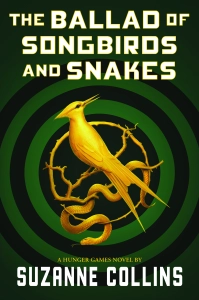
The Ballad of Songbirds and Snakes Review: A Dark Prelude to the Hunger Games
In this review of The Ballad of Songbirds and Snakes (novel), we will explore the book from a Christian perspective. We will also provide discernment insights for The Hunger Games prequel.
Quick Facts
Author: Suzanne Collins
Book Year: 2020
Film Year: 2023
Quick Content Guide
Main concern: Violence and frightening scenes.
My Rating
Synopsis: The Ballad of Songbirds and Snakes
Young Coriolanus Snow is at a turning point in his life. With little material wealth and his family on the verge of ruin, he volunteers as a mentor for the 10th annual Hunger Games, hoping to prove that the Snow family will always “land on top.” He doesn’t expect to fall in love with his tribute, Lucy Gray, leading him to question: Will love or political success land Snow on top?
Christian Review of The Ballad of Songbirds and Snakes: A Hunger Games Prequel
The Ballad of Songbirds and Snakes (TBOSAS) was my first review for Renewed Mind Reviews, back when the name and pretty much everything else was different.
Suzanne Collins’ popularity with Christian readers still holds strong; in a literature class at a Christian university, I had to read The Hunger Games, and that was in 2022.
Recently, I’ve started revisiting and updating my reviews. Although I haven’t reread The Ballad of Songbirds and Snakes, I feel like I have some new insight into the novel that I didn’t when I first wrote this TBOSAS review.
My original post was a Christian perspective on The Ballad of Songbirds and Snakes, but it was very short and wasn’t as deep or analytical as it could have been—plus, it didn’t cover much outside of Sejanus and Coriolanus.
Here’s what my former introduction to The Ballad of Songbirds and Snakes review looked like (with minor edits):
It’s always interesting to see things through the antagonist’s perspective, and Collins’ masterful storytelling helps us understand why Snow is so evil. Well, sort of.
More than a decade after my introduction to The Hunger Games, I revisited the magic and corruption of Panem—this time from the perspective of President Snow.
While The Hunger Games captivated my generation, I was initially skeptical about a prequel released so long after the original trilogy’s success. Still, nostalgia won, and I picked up The Ballad of Songbirds and Snakes while waiting for a flight.
I think it’s an acceptable introduction, but I’ve grown so much since I first published it, and I felt like I needed to expand significantly on the review.
I first started the novel in 2023 but didn’t finish it until 2024. Since then, Suzanne Collins’ has released Sunrise on the Reaping (Haymitch’s story). Although discourse has somewhat calmed down, Sunrise on the Reaping continues to propel itself into the spotlight with the upcoming film adaptation, keeping The Hunger Games relevant.
Varying Interpretations of TBOSAS
Since my original review, I’ve learned that some readers of The Ballad of Songbirds and Snakes have struggled to get through the book like I did.
Fans interpret the book differently, some believing that Collins’ intends for us to sympathize with Coriolanus Snow. Other readers push back, arguing that she doesn’t want us to sympathize with Snow (here’s an example of the discourse).
Should We Sympathize with Coriolanus Snow?
No, we should not sympathize with Coriolanus Snow.
It’s easy to root for the main character—not because they’re worth rooting for, but because we spend the most time with him. TBOSAS gives us a glimpse into Snow’s motivations, and although he’s evil, it’s easy to sympathize with him at times.
I find it interesting how easy it is for us to fall for main character bias—i.e. the desire to root for whoever the main character is, regardless of whether they’re actually good or not.
We need to be vigilant about not allowing evil to masquerade as good. Isaiah 5:20 (NIV) reminds us “Woe to those who call evil good and good evil, who put darkness for light and light for darkness, who put bitter for sweet and sweet for bitter.”
I agree with those who interpret the third person narrator as a way to disconnect readers from Snow and share his backstory in a way that ultimately establishes him as one of the true villains of The Hunger Games franchise. Some more examples of the online discourse are here, here, here, and here.
I haven’t reread the book since my first reading two years ago, but I do wonder if my perspective would change by revisiting the novel again.
Coriolanus Snow’s Beginnings in The Hunger Games Prequel *Spoiler*
Coriolanus Snow begins the novel away from the wealth and power he eventually attains. His family’s name is nearly all he has left, and he becomes a mentor in the 10th Hunger Games to secure success and a scholarship—ultimately positioning himself for a future presidency. He craves power from the opening pages, but he also seems to care for his family, particularly his Grandmother and cousin Tigris.
At first, he appears to resist the horrors of the Hunger Games. He offers Lucy Gray food, even breaking the rules for her. However, his motivations are selfish—he wants her to win because her success means his success.
Snow’s humble beginnings show his humanity which is part of the reason why so many readers have varying interpretations on whether Snow is sympathetic or not (see the Reddit posts linked above).
Suzanne Collins’ Prequel Reveals How Coriolanus Becomes President Snow *Spoiler*
The youthful Coriolanus Snow we meet in The Ballad of Songbirds and Snakes may not initially be President Snow of The Hunger Games, but by the end of the novel, all disconnect between the two fades away. Coriolanus becomes the cruel embodiment of The Hunger Games‘ President Snow, and any sympathy we may have had for him at the start of the novel fades away.
To gain power, Snow betrays everyone who relies on him and kills without remorse.
Snow never resists the Capitol—only anything that stands in the way of his ambition. When faced with the choice between love and power, he chooses power.
Righteousness in The Ballad of Songbirds and Snakes *Spoiler*
Coriolanus may be a villain surrounded by villainous Capitol citizens, but the Capitol’s cruelty doesn’t overshadow righteousness.
Coriolanus’ classmate, Sejanus truly cares for the tributes, risking his reputation to help all of them, not just his own tribute. The mentors of the 10th Hunger Games want their tribute to win not because they see the value in human life, but because they want earthly reward. Coriolanus and Sejanus are both mentors, but whereas Sejanus sees their humanity, Coriolanus sees a way to further his own standing.
Sejanus wasn’t always a Capitol citizen; he came from the Districts. He remembers his humble past and refuses to allow the Capitol to corrupt him. Sejanus chooses compassion and truly believes in the tributes’ humanity.
Sejanus embodies Christlike compassion—he cares for the less fortunate and recognizes the moral corruption of the Capitol. His actions contrast with Snow’s selfishness, highlighting the biblical call to resist evil and stand for righteousness.
Lucy Gray Baird: The Heroine of TBOSAS *Spoiler*
My original review barely touched on Lucy Gray Baird. I much prefer Katniss Everdeen, or even Maysilee Donner, to Lucy Gray Baird.
But, she is a breath of fresh air. Lucy Gray Baird is not Katniss Everdeen; she’s not particularly skilled in survival like Katniss, but she is a skilled manipulator.
In most of her public interactions, Lucy switches between vulnerability and faux confidence as she weighs up what will work best to manipulate those around her. Source
She has an odd connection to snakes and uses them to her advantage (or, rather, Coriolanus helps use them to her advantage) but ultimately, she wins The Hunger Games due to cheating.
Dean Casca Highbottom discovers that Coriolanus cheated by giving Lucy Gray rat poison to kill another tribute and by using a handkerchief with her scent to save her from snake mutts; Highbottom confronts Coriolanus with the evidence. Threatened with his family’s public disgrace, Coriolanus reluctantly joins the Peacekeepers for a 20-year contract, but requests to be assigned to District 12, hoping to see Lucy Gray again. (Source)
After Coriolanus and Lucy Gray Baird cheat in The Hunger Games, both are sent to District 12.
Love in TBOSAS *Spoiler*
Lucy Gray Baird stirrs Coriolanus’ emotions, causing him to fall in love with her. This love, however, is not pure love. What is the Christian perspective on The Ballad of Songbirds and Snakes‘ depiction of love? To answer this, we need to turn to Scripture.
1 Corinthians 13:4-7 (NIV) defines love, which contrasts sharply with Coriolanus’ relationship with Lucy Gray Baird:
Love is patient, love is kind. It does not envy, it does not boast, it is not proud. It does not dishonor others, it is not self-seeking, it is not easily angered, it keeps no record of wrongs. Love does not delight in evil but rejoices with the truth. It always protects, always trusts, always hopes, always perseveres.
Coriolanus leaves Lucy Gray Baird when things get tough, and he only thinks about himself. He doesn’t tell her the truth and hides a murder from her.
Lucy Gray Baird and Coriolanus plan to run away and live out the rest of their days together. However, Lucy Gray Baird discovers Coriolanus’ conniving and murderous nature; Coriolanus discovers a way to regain power, and their romance dies.
What Happened to Lucy Gray Baird? *Spoiler*
Part of what makes Suzanne Collins’ A Ballad of Songbirds and Snakes (and Sunrise on the Reaping) so beautiful is poetry. Poetry offers a huge clue concerning Lucy Gray Baird’s fate.
From the very beginning, readers wanted to know what actually happened to Lucy Gray Baird because the ending of The Ballad of Songbirds and Snakes is rather open ended. Lucy Gray Baird’s fate is often speculated, but since we don’t have a confirmed answer, we have to look at the clues, and the best clue we have is Lucy Gray Baird’s special poem: William Wordsworth’s “Lucy Gray.”
The poem implies that Lucy Gray disappears—she was supposed to bring a lantern to her mother, but never made it.
Her parents find her footprints, but never find her body or any confirmation of her fate.
Like Lucy Gray Baird, Lucy Gray’s fate is unknown:
—Yet some maintain that to this day
She is a living child;
That you may see sweet Lucy Gray
Upon the lonesome wild. (From Wordsworth's "Lucy Gray" Source)
Did Lucy Gray Baird survive? Possibly, but I doubt we will ever know for sure.
Is Lucy Gray Baird Related to Katniss Everdeen?
A common claim in The Hunger Games fandom is that Katniss Everdeen is Covey, or even related to Lucy Gray Baird. Covey is a term describing Lucy Gray Baird’s family (they’re not biological).
In Sunrise on the Reaping, Suzanne Collins confirms that Katniss’ father, Burdock, is distantly related to some Covey.
So, is Katniss related to Lucy Gray Baird? Possibly, but I’m not convinced.
FAQs for The Ballad of Songbirds and Snakes by Suzanne Collins
What is The Ballad of Songbirds and Snakes about?
The Ballad of Songbirds and Snakes is a prequel to The Hunger Games. It follows a young Coriolanus Snow and his rise to power.
Is The Ballad of Songbirds and Snakes suitable for children or teens from a Christian discernment perspective?
The Ballad of Songbirds and Snakes is better for teens than children as it contains quite a bit of violence. Older children will comprehend the deep themes of cruelty, war, evil, and love better than younger children will. However, it’s up to each family to decide when they want to introduce the novel (or film) to their children.
Where to watch The Ballad of Songbirds and Snakes
The Ballad of Songbirds and Snakes is available on many streaming services. You can purchase or rent the film on Amazon or Apple TV (as of November 2025). Here’s an updated list on where the film is currently available. Also, don’t forget to check your local library’s DVD collection.
What age is The Ballad of Songbirds and Snakes suitable for?
In my personal opinion, The Ballad of Songbirds and Snakes is suitable for children ages 12 and up. However, this age suggestion requires discernment and parental approval.
Conclusion: Christian Review of The Ballad of Songbirds and Snakes
In our review of The Ballad of Songbirds and Snakes by Suzanne Collins, we explored the novel from a Christian perspective.
While I couldn’t put down the original Hunger Games trilogy, The Ballad of Songbirds and Snakes was much easier to set aside. It took me months to finish, and while Collins’ writing is immersive, the book ultimately falls short of its predecessors.
If you’re a fan of The Hunger Games, you might enjoy revisiting Panem, but this prequel lacks the heart and urgency that made the original trilogy so compelling.
Age recommendation: +12 and up with discretion.
Parent Guide of The Ballad of Songbirds and Snakes
This is not all encompassing. It just represents what stood out to me.
Language
- Nothing that stood out to me; may be an occasional word or so.
Sexual Content
- Characters swim in underwear.
- Descriptive embraces between Lucy Gray and Snow
- A few homosexual characters are mentioned, though without any sexual content.
Violence
- Significant violence throughout the novel, including multiple character deaths.
- Snow murders/causes the murder of multiple people
- Characters are cruel, Snow turns on other people, and in this world, violence leads to power.
Cover Photo Credit: Cover photo of The Ballad of Songbirds and Snakes by Suzanne Collins courtesy of Scholastic Press Room. Under fair use for review/commentary/education/criticism. All rights retained by owners.




2 Comments