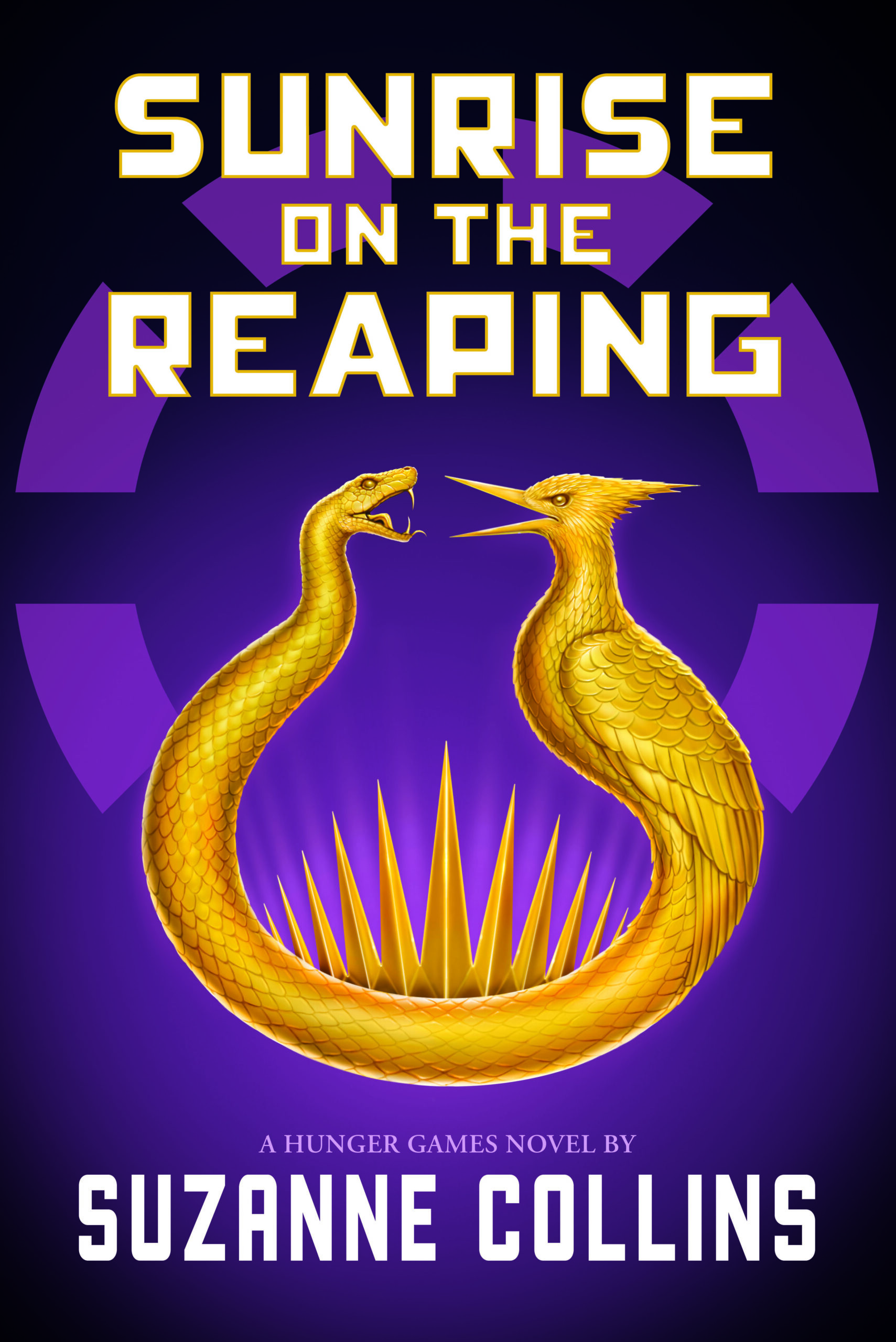
Sunrise on the Reaping Review & Parent’s Guide: A Faith-Based Look at the Hunger Games’ Darkest Prequel
In our Sunrise on the Reaping review, we will explore the newest Hunger Games novel from a Christian perspective. We will also provide a Sunrise on the Reaping content guide.
For our review on The Ballad of Songbirds and Snakes, click here.
Quick Facts
Author: Suzanne Collins
Demographic: Young Adult
Series: The Hunger Games
Published: 2025
Publisher: Scholastic
Genre: dystopian
Movie Adaptation: Yes, in 2026
Quick Content Guide
Language: Frequent crude and harsh language, including “p*ss” and related (x7), “jack*ss” (3+), “crappy,” “jerk scum,” “shrew,” “lunatic,” and “what the h*ll.”
Violence & Gore: Severe. Brutal deaths, graphic violence, characters eaten alive, decapitation, burning, poisoning, mutt attacks, horse beaten bloody, severe injuries, and suicide mentions.
Frightening/Intense Scenes: Severe. Implied torture, poisoning, Capitol cruelty, violent breakdowns, and a character repeatedly injuring himself.
Sexual Content/Nudity: No sex; romance with kissing. Tributes stripped for cleaning (non-sexual). Brief male exposure, revealing Capitol behavior, lewd gestures, nudity during recovery, pants partially unzipped, and a same-sex relationship forced into secrecy.
Drugs/Smoking/Alcohol: Moderate. Heavy alcohol use, Capitol drugging, hallucinogens (toad-licking), “sleepy syrup” addiction, gambling, and smoking.
My Rating
★★★★★ (5/5)
Synopsis: What is Sunrise on the Reaping About?
Twenty-four years before The Hunger Games, future mentor of Katniss and Peeta, Haymitch Abernathy, wants nothing more than to live a quiet life with those he loves—his ma, his little brother Sid, and the love of his life, Lenore Dove. He may be a bootlegger, but he doesn’t drink. However, when he is reaped for the 50th Hunger Games—also known as the Second Quarter Quell—his world shatters.
This year’s Quarter Quell comes with a cruel twist: four tributes from each district must fight in the arena. Alongside Haymitch are Louella, his dear childhood friend; Maysilee, the refined daughter of a wealthy merchant; and Wyatt, a boy burdened by his family’s dark reputation. As the Hunger Games begin, Haymitch is forced to navigate deadly politics, brutal competition, and a desperate fight for survival.
But survival isn’t his only goal—his choices in the arena will have consequences far beyond the Games. Determined to leave his mark, he makes choices that will alter not only his fate but the course of Panem’s history. How does our sharp-tongued future mentor navigate the Games and challenge the Capitol? And how does this brutal experience set the stage for the rebellion, decades before he guides Katniss and Peeta in Catching Fire?
Sunrise on the Reaping Review: A Christian Perspective on The Hunger Games Prequel
I am convinced that Sunrise on the Reaping is one of Suzanne Collins’ best books. While A Ballad of Songbirds and Snakes (see review here) took me months to finish, I devoured Sunrise on the Reaping in a weekend. Part of it was to get my review out while the topic was fresh, but another part was because it was so well written that I didn’t want to put it down.
Thirteen-year-old me, who sat in a hotel room before my great grandmother’s funeral finishing Mockingjay, desperate for more Hunger Games, has finally found satisfaction. Back then, I desperately wanted more of Panem’s world, but at the time it seemed unlikely. Now, over a decade later, I can say with confidence that Suzanne Collins has written a book worthy of standing alongside The Hunger Games trilogy.
While A Ballad of Songbirds and Snakes was good, it lacked the appeal of the original books. Sunrise, on the other hand, captures what made the series great: tight pacing, compelling characters, and an oppressive, despondent setting. Even better, it fills in the gaps between A Ballad of Songbirds and Snakes and The Hunger Games in a way that feels satisfying—leaving me only wanting more books like it.
Sunrise on the Reaping Review: A Darker Look at the Capitol’s Cruelty
Much like Catching Fire, this book is violent. We watch beloved characters die in brutal ways—whether at the hands of mutts (which are often programmed to target specific tributes—cheating much?) or other tributes. The deaths hit harder due to the strong alliances formed, particularly among the “Newcomers.” Seeing bright young lives extinguished in an instant reinforces just how cruel the Capitol is, making the emotional weight of this story even heavier.
The Capitol’s oppression feels even more apparent in Sunrise on the Reaping. Perhaps it’s because I first read The Hunger Games and Catching Fire as a young teen, and I never reread Mockingjay (though I have reread the first two). But now, reading Sunrise as an adult, the Capitol’s cruelty struck me in a way it never had before. The book highlights its many forms of oppression—murdering loved ones, targeting specific individuals, forcing rebels to watch their children die, and torturing others into submission.
Haymitch’s Story Hits Hard: SOTR Review *Spoiler*
One of the book’s greatest strengths is how it develops Haymitch Abernathy. Before reading this, I never particularly liked him. But Sunrise completely changed my perspective. His backstory is filled with heartbreak, and for the first time, his motivations and struggles feel truly clear. He deeply loves people and craves real connection, yet his pain and loss lead him to the drunken stupor we see in The Hunger Games.
A key part of his story is his relationship with Lenore. She claims she “mates for life,” and it’s clear that she is his anchor—her image brings him comfort even in his darkest moments.
Major Spoiler: When Snow murders Lenore, my hatred for him reached new heights. While A Ballad of Songbirds and Snakes established his cruelty, this book made it feel even more personal and sickening. His obsession with power is on full display, and oddly enough, he already seems as physically ill as he is in the original trilogy, which raises questions about how he lasted so long.
The Power of Alliances and the Fight for Survival
At first, Haymitch is hesitant to trust anyone besides Louella. But as the Games progress, he realizes that alliances can be beneficial.
Spoiler: He often ditches others for his secret plans, but he also learns the strength of working together. One tribute, Ampert, even attempts to unite most of the non-Career tributes in an alliance—a strategy reminiscent of Ecclesiastes 4:9-12, emphasizing the strength found in numbers.
Maysilee, the so-called snooty town girl, undergoes significant growth as well. She proves to be caring, resourceful, and unwilling to be a pawn in the Capitol’s games. She rebels in her own way, determined to carve her own path.
Then there’s Wyatt, a brilliant but ostracized tribute due to his family’s gambling reputation. Louella distrusts him, but his eventual fate is unexpectedly touching:
Spoiler: Wyatt dies protecting another tribute—a moment that resonates deeply with Haymitch, as it reflects what Wyatt longed for from his own family.
Tying It All Together: Familiar Faces and Surprising Details
One of the most interesting aspects of Sunrise is how it ties into the larger Hunger Games world. At first, references to past characters—like Burdock Everdeen—felt forced. But as the story progressed, I found myself appreciating these connections.
Haymitch’s mentors include Mags and Wiress. Mags’ presence is comforting, while Wiress’ is bittersweet. One chilling line stands out:
“Most of last year’s tributes went nuts. Not Wiress.” (87)
Given what happens to her in Catching Fire, this is a haunting moment.
The book also sheds light on Effie Trinket’s early years. Though she is part of Capitol society, she proves herself to be more than just a clueless escort. When District 12’s original stylist is too mentally unstable to perform their duties (obsessed with reptiles, of all things), Effie steps up as an impromptu designer. She’s the only one who checks on Haymitch during the victory tour, solidifying her role as a future friend and supporter. As Haymitch later reflects:
“At least the Trinkets aren’t mean, just clueless.” (173)
Then there’s the infamous potato battery scene.
Spoiler: In one of the book’s strangest moments, Ampert’s dad tells Haymitch to “meet his dad at the booth with the potato” (107). It turns out to be Beetee, teaching tributes how to conduct energy through a potato battery. The scene is both bizarre and hilarious, but it also subtly foreshadows future events.
The Letdowns: The Potato Battery and the Poe References
While I loved Sunrise on the Reaping, I did have a few disappointments.
First, the potato battery.
Spoiler: Given how much attention it received, I expected it to play a major role in the Games. Instead, Haymitch only uses it once—wasting precious provisions in the process. While its presence is symbolic, it felt like a missed opportunity for a more impactful moment.
Second, the final chapter before the epilogue.
Spoiler: I majored in English in college (and minored in English, if that counts for anything), and while Edgar Allan Poe is a masterful writer, Collins leaned too heavily on Poe in the final chapter. I’ve seen others comment on this as well—it felt a bit out of place compared to the rest of the book.
Christian Perspective on Sunrise on the Reaping
At the core of The Hunger Games series lies a world dominated by governmental corruption, manipulation, murder, and control. President Snow is the antithesis of a good ruler—cruel, manipulative, self-serving, and entirely devoid of remorse. Unlike David from the Bible, who acknowledges his mistakes, repents, and continues on the right path, Snow justifies his cruelty in pursuit of power, embodying corruption rather than true leadership.
The Capitol’s sacrifice of district children in the yearly Hunger Games mirrors the biblical worshippers of Molech, who offered children as sacrifices.
Haymitch, initially inclined to go it alone, comes to recognize the value of alliances. By surrounding himself with like-minded individuals, he helps plant the seeds of rebellion, setting the stage for Katniss’s future role.
Lenore Dove speaks of angels and heaven, prompting Haymitch to reflect on the possibility of an afterlife. He acknowledges, “Maybe Lenore Dove’s right, and I will meet up with them [all the dead who have already gone], and one day with her, in another world. Or maybe there’s just nothing, in which case, it won’t hurt any. I just don’t know” (246). While Haymitch remains uncertain of what comes after death, we can rest in the assurance of eternal life through faith in Jesus.
John 3:16 (NIV) offers this promise: “For God so loved the world that he gave his one and only Son, that whoever believes in him shall not perish but have eternal life.”
When we place our trust in Jesus and accept Him as our Savior, we are promised eternal life.
Sunrise on the Reaping Review: What Order Should I Read The Hunger Games In?
There has been recent debate about the correct reading order for the books, particularly whether Sunrise on the Reaping can be read without first reading The Ballad of Songbirds and Snakes or The Hunger Games.
Should you read The Hunger Games in chronological order? Should you read The Hunger Games in publication order?
Based on common sentiment, here’s my recommended order:
For first-time readers of The Hunger Games:
- The Hunger Games
- Catching Fire
- Mockingjay
- The Ballad of Songbirds and Snakes
- Sunrise on the Reaping
For returning readers: Honestly, read it however you like. If you’ve already experienced the series, reading chronologically could be an interesting approach, but the order above tends to provide the most satisfying reading experience.
Sunrise on the Reaping Movie Cast
To the excitement of The Hunger Games fans, the cast of Sunrise on the Reaping has been announced, and many fans are thrilled overall with the casting choices (I mean, who wouldn’t be? McKenna Grace AND Elle Fanning?).
Our Leading Man, Haymitch
The protagonist of Sunrise on the Reaping, Haymitch Abernathy, will be played by Joseph Zada (in the original Hunger Games trilogy, Woody Harrelson played Haymitch).
Members of the Capitol include:
Elle Fanning is the young version of Effie Trinket (Elizabeth Banks played Effie Trinket in the original trilogy).
Kieran Culkin is a younger version of Caesar Flickerman (Stanley Tucci was the original Caesar Flickerman, and no matter how desperately I want to see him with tons of makeup playing Caesar again, I’m excited to see where Kieran Culkin takes the role).
Jesse Plemons is Plutarch Heavensbee (Philip Seymour Hoffman in Catching Fire and Mockingjay).
Ralph Fiennes is President Snow (Donald Sutherland in the original trilogy and Tom Blyth in The Ballad of Songbirdsand Snakes).
Glenn Close plays Drusilla Sickle.
The Tributes and Mentors include:
Mckenna Grace is Maysilee Donner, Ben Wang is Wyatt Callow, Kelvin Harrison Jr. as Beetee Latier (Jeffrey Wright in Catching Fire and Mockingjay), Molly McCann as Louella McCoy, Percy Daggs IV as Ampert Latier, Iona Bell as Lou Lou, and Rada Rae as Wellie.
The fans are not joking when they mention how heartbreaking it will be to watch these characters meet their fates in the Games–there are so many precious young and talented actors who will break our hearts.
I’m actually very excited for this film.
There is no way I could list every single actor; there’s a lot, and the information is widely available online. I chose to list some of the Capitol and Tribute characters but there are plenty of others from District 12, other tributes and mentors, etc. A full list is available here.
FAQs for Sunrise on the Reaping Christian Review
How violent is Sunrise on the Reaping?
As a member of The Hunger Games series, Sunrise on the Reaping is very violent. The tribute deaths, for example, are both emotional and horrifying.
Does Sunrise on the Reaping have sexual content?
Not really. Haymitch and his girlfriend, Lenore Dove, are affectionate. Some characters are naked or make inappropriate gestures. See my Sunrise on the Reaping parent guide for more information on sex and nudity in the novel.
Does Sunrise on the Reaping contain profanity or crude language?
Words include p*ss (and related) and about three uses of jack*ss. See below for content guide on Sunrise on the Reaping, which includes the language used in the novel.
Is Sunrise on the Reaping acceptable for Christian teens?
It depends on parental conviction and maturity. Some Christian teens may be able to read Sunrise on the Reaping as a tale of resilience; others may have problems with the content. It’s up to a parent to make the wisest decision for their family, but this entire article is a Christian review on Sunrise on the Reaping, so hopefully it can help you make a wise decision for your family.
How should Christian parents approach Sunrise on the Reaping?
Cautiously. Sunrise on the Reaping contains graphic violence, some language, frightening and intense scenes, and some sexual content. But at the same time, it’s a tale of teamwork, fighting for a common cause, and resilience. Haymitch’s tale is heartbreaking, but it also resonates with modern readers.
Our parent guide on Sunrise on the Reaping is at the bottom of this article for your convenience.
Does Sunrise on the Reaping spoil the original Hunger Games series?
Sunrise on the Reaping’s epilogue certainly does spoil the original Hunger Games; however, the main story is a prequel so it functions more as a set up to the future trilogy.
Is Sunrise on the Reaping suitable for 12-year-olds, 13-year-olds, or 14-year-olds?
Maybe; it depends on their maturity level. Our review explores the content of Sunrise on the Reaping from a Christian perspective, so hopefully it can help you make a wise decision on the novel.
Does Sunrise on the Reaping have a happy or sad ending?
The ending of Suzanne Collins’ SOTR is sad but also hopeful.
Will there be another Hunger Games book after Sunrise on the Reaping?
As of November 2025, no news on a new Hunger Games novel has been released.
Is Sunrise on the Reaping darker or more violent than the original trilogy?
The Hunger Games is already dark, and Sunrise on the Reaping is at least as dark as the original trilogy if not more so. It’s brilliantly written, but it is certainly graphic and violent (and sad).
How does Sunrise on the Reaping compare to the other Hunger Games books?
Sunrise on the Reaping is, in my personal opinion, one of the best Hunger Games books. It ranks with The Hunger Games and Catching Fire at least (or perhaps exceeds it). It’s a fantastic addition to The Hunger Games franchise and I think it’s way better than The Ballad of Songbirds and Snakes which I found rather difficult to get through.
Sunrise on the Reaping Review: Final Thoughts
In our Sunrise on the Reaping review, we explored the newest Hunger Games novel from a Christian perspective.
Despite a few minor disappointments, Sunrise on the Reaping is a phenomenal addition to The Hunger Games series. It brings back the intensity, depth, and emotional weight of the original trilogy while expanding on the world of Panem in a meaningful way.
For longtime fans, it’s a must-read (with discernment, of course). For anyone curious about the history of The Hunger Games, it offers an unforgettable, heartbreaking look at the brutal reality of the Quarter Quell.
Suzanne Collins has once again proven why she’s a master of dystopian storytelling.
Sunrise on the Reaping is a worthy addition to The Hunger Games series, exploring themes of violence, political corruption, and personal motivation. Fans of the series will likely enjoy this installment.
Happy reading!
Sunrise on the Reaping Review: Detailed Content Guide
Language in Sunrise on the Reaping
- Words/phrases used:
- piss (and variations), jackass (x3), filthy beasts, nasty, disgusting creature, caught hell for, need to take a piss, brats, crappy, loogie, don’t give a hang what anyone thinks, jerk scum, crummiest sinkhole, sucks for you, brutes, fudging, egghead, dolts, you little shrew, brown-nosing, slackard
- The four District 12 tributes are described as “Shrew, lunatic, calculator, rascal.”
- Other phrases: What the hell (x2), run like hell, trashiest, wicked stingers, idiot, meathead, toadies, what the heck, piece of trash, fish-eating, bootlicking, feckless, miserable wretch, must have been hell
Violence/Gore in Sunrise on the Reaping
- A tribute is flung from the chariot and dies, leaving another character in a puddle of their blood
- A horse is beaten until it bleeds
- A character is stabbed in the solar plexus
- Another character has blood on their face, vomits, and becomes very sick
- A poisoned rabbit bleeds
- The Games include intense mutt attacks:
- Bats wound a character
- Squirrels eat another tribute alive
- Ladybugs explode like ticks in a bloody manner
- A bomb explosion leaves a character with hearing damage
- A large porcupine impales tributes
- One tribute is attacked by birds and dies in a bloody way
- Another is decapitated
- The final two survivors fight a brutal, bloody battle
- A character assumes another was tortured, raped, and starved
- A tribute nearly starves to death
- Some victors are mentioned to have committed suicide after the Games
- One character’s father kills himself, while another’s family is burned alive
- A character considers joining them but is stopped by friends
- A tribute is poisoned by gumdrops, foams at the mouth, and dies
- Another character throws rocks and injures someone
- Recurring theme of wanting to die but being unable to due to promises made
Frightening/Intense Scenes in Sunrise on the Reaping
- A tribute has likely been tortured and has implants; their ear frequently bleeds
- A tribute dies almost immediately (offscreen) but is revealed to have died protecting another
- A tribute finds flowers from home, sniffs them, and dies
- A character repeatedly hits their head against a tree until they bleed
- A Career tribute’s sword cuts another’s ear
- Two Careers are killed by one tribute, while another is killed by someone else
- Two victors from later books are implied to have been tortured by the Capitol
Drugs/Smoking/Alcohol in Sunrise on the Reaping
- A character is a bootlegger, working with a woman who makes illegal white liquor
- Early on, he refuses to drink despite frequent offers, but by the end, he turns to alcohol to escape reality
- A character smokes cigarettes
- Several tributes are drugged by the Capitol in different ways
- Gambling is mentioned
- One tribute comes from a gambling family, making them skilled at calculating odds
- The Capitol frequently drinks, with mentions of drunkenness and slang like rotgut
- Toads are licked for their hallucinogenic effects
- Many characters drink
- A character is described as pickled
- A Capitol figure wants to take a tribute to the casino if they win due to their mathematical skills
- Another character gets someone drunk to extract information about how to break the arena
- The air in the Games is drugged
- Other mentions: all foam, no beer and sleepy syrup, which one character becomes addicted to
Sex/Nudity in Sunrise on the Reaping
- No sex scenes
- A main character and their love interest frequently:
- Kiss
- Embrace
- Express romantic affection
- The character dreams of:
- Lying on a bed of pine needles with their love interest
- Kissing their neck
- Having hopes of marriage and children
- Capitol stylists strip the tributes to clean them (not explicit or sexual)
- One tribute exposes themselves and walks in a cocky manner
- Crepe paper is used for modesty, but there are concerns about rear ends being exposed
- The prep team takes pre-Games photos
- One character appears to have no visible pants
- Some are dressed in sexy red cowboy suits
- A nearly naked woman makes lewd gestures
- There is a naked statue
- A character kisses a snake
- Some characters strip down to their underclothes
- A character is described as naked as a jaybird while recovering from an explosion
- The Capitol wants to see a character’s scar, so they unzip their pants but maintain modesty
- Two characters kiss and flirt
- One character sleeps outside half-naked
- One male character is dating another male, something the main character supports but is kept secret due to disapproval from the Peacekeepers
Photo Credit: Cover of Sunrise on the Reaping by Suzanne Collins courtesy of Scholastic Newsroom under fair use for review/commentary/education/criticism/education. All rights reserved by respective owners.






One Comment