Sugar Apple Fairy Tale Review Part 1: An Exploration of Love, Slavery, and Redemption
In Part 1 of our Sugar Apple Fairy Tale review, we will explore the anime from a Christian perspective. Part 2 of our Sugar Apple Fairy Tale review contains a content and parent guide.
Sugar Apple Fairy Tale – Quick Facts
Year: 2023
Episodes: 24
Language: English Dub
Streamed on: Crunchyroll
Genres: Fantasy, Drama, Romance, Fairytale, Shojo
Rating: 12+ for drug use/violence
Quick Content Guide
Nudity/Sexuality: Some nudity and mild sensuality, but no explicit sexual acts. A newborn fairy appears fully nude (Episode 4 from 4:56–5:55, flashback in Episode 22), resembling an adult female despite her age. Another fairy is seen topless from the shoulders up. A female character unbuttons her shirt to reveal a hidden fairy wing. Characters kiss, whisper romantically, and hold each other. A male fairy is forced into a “companion” role, made to carry a woman to bed, stroke her hair, and kiss her against his will, though no explicit acts occur. Some suggestive situations & innuendo.
Language: Mild profanity: “dn” x2, “btard” x1. Frequent insults including “filthy human,” “piece of trash,” “scarecrow,” “low-life,” and “filthy curs.”
Violence/Gore: Sword fights, injuries, and blood. Fairies’ wings are crushed or torn for control. A character lures wolves to attack another character with blood. Another is nearly burned with boiling sugar.
Frightening & Intense Scenes: Themes of slavery, betrayal, and murder. A character attempts a gruesome murder. A fairy nearly starves due to loyalty. A character commits suicide.
Alcohol/Drugs: A drink resembling wine appears. A character drinks in sorrow.
My Rating
★★★★☆ (4/5)
Synopsis of Sugar Apple Fairy Tale
In a world where humans enslave fairies, Anne Halford is one of the few who believes in the equality of fairies and humans. Her lifelong dream is to become a Silver Sugar Master, a prestigious title earned by only a select few. Her mother, now deceased, was one of them. Determined to follow in her mother’s footsteps, Anne sets off for Lewiston, the site of the annual selection of the next Silver Sugar Master. She packs her belongings into a wagon, eager to fulfill her destiny.
However, the journey is dangerous, and Anne has no choice but to buy Challe Fen Challe (also spelled Shall Fen Shall), a warrior fairy, for protection. Though Anne intends to free him as soon as possible, their relationship is strained—Anne seeks friendship, while Challe resents all humans, including her. Will Anne achieve her lifelong goal of becoming a Silver Sugar Master, and will she overcome the animosity between her and Challe to forge a true bond of friendship?
Christian Review of Sugar Apple Fairy Tale
Sugar Apple Fairy Tale follows Anne Halford, a Silver Sugar artisan, and Challe Fen Challe, a warrior fairy, on their journey to understanding and accepting one another. The anime highlights many Christian virtues, such as hard work, equality, perseverance, second chances, and both romantic and platonic love.
Anne believes that fairies and humans should be treated as equals, but Challe resents humans. However, as they grow closer, they learn to accept each other despite their differences. Although fairies in the anime are not technically human, they resemble humans in appearance, speech, and morality, making their struggles feel deeply relatable.
The voice acting in Sugar Apple Fairy Tale is superb. In episode 14, Ivan Jasso, the original voice of Challe, was unavailable, so Alejandro Saab (known as Miyamora in Horimiya and Cheng Xiaoshi in Link Click) stepped in. I watched the series twice and never noticed the difference!
Celeste Perez brings a soft yet determined sincerity to Anne’s character, perfectly capturing her sense of justice, love, and perseverance. Meanwhile, Ciarán Strange infuses Mithril with the perfect balance of energy, enthusiasm, and sass. While all the voice actors deliver strong performances, these three stand out as the heart of the series.
Character Analysis: Anne, Challe, and Mithril
The main characters in Sugar Apple Fairy Tale are well-developed and easy to root for.
Anne
Anne is extremely hardworking, determined to earn the title of Silver Sugar Master without taking shortcuts. She firmly believes that enslaving fairies is wrong and treats them as equals. Though she feels forced to buy Challe for protection, she fully intends to set him free and treats him with kindness and respect.
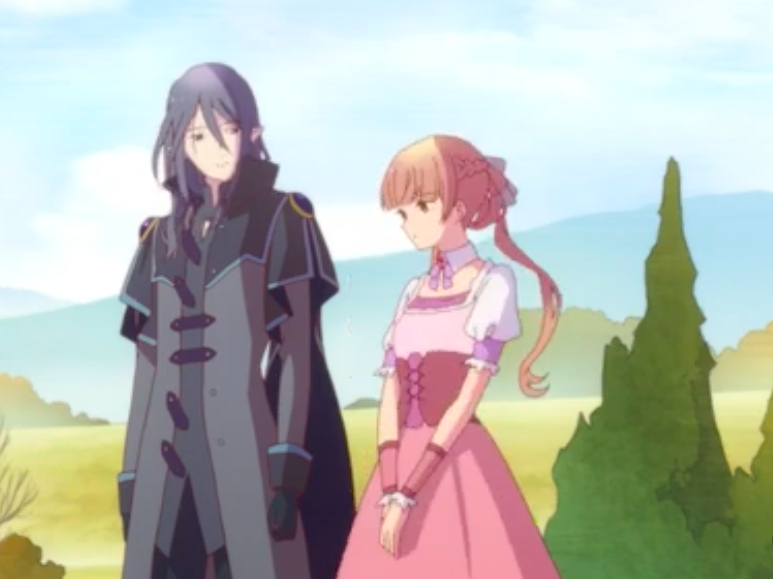
Challe
Challe, despite his hardened exterior, is one of the most loyal characters in anime. He would sacrifice anything for Anne—even his own freedom—and supports her dream with unwavering dedication.
Lord Mithril Lid Pod
Mithril Lid Pod, the show’s lovable scene-stealer, is fiercely loyal to Anne. After she rescues him from slavery, his fairy pride keeps him from openly expressing gratitude, yet his actions speak louder than words. His mischievous matchmaking between Anne and Challe adds comedic charm. Many fans, including myself, would love to see a spin-off series about Mithril’s adventures!
Sugar Apple Fairy Tale Review: Faith and Values
The show emphasizes many Christian values, including hard work, equality, forgiveness, redemption, and serving others.
Anne develops her skills in Silver Sugar artistry through dedication and perseverance. She actively learns from others, takes feedback to heart, and strives to improve with each creation. Her goal is not just technical excellence but to craft sugar confections that hold deep meaning for the recipient. She firmly believes in the equality of humans and fairies, despite society viewing fairies as second-class citizens.
Because fairies in Sugar Apple Fairy Tale share so many qualities with humans—consciousness, emotions, and free will—they can be seen as part of humanity in a broader sense. This theme aligns with Galatians 3:28-29 (ESV): “There is neither Jew nor Greek, there is neither slave nor free, there is no male and female, for you are all one in Christ Jesus. And if you are Christ’s, then you are Abraham’s offspring, heirs according to promise.”
Just as Anne sees fairies and humans as equals regardless of societal norms, Christ sees all of His followers as equals—Jew or Gentile, slave or free.
Sugar Apple Fairy Tale Review: Forgiveness and Redemption *Spoiler*
Anne, though she never states it outright, clearly forgives Jonas for his past betrayals. Despite his deceit and selfish actions—including cheating her out of her title, stealing from her, manipulating her emotions, and even attempting to have her killed—she does not let hatred consume her. Instead of abandoning him in the alley where she finds him at his lowest, she first informs him that he has been accepted back into the Radcliffe Workshop, refusing to exploit his desperation. Only after he declines to return does she offer him a job at Paige Workshop. This demonstrates not only her mercy but also her refusal to take advantage of his vulnerability, choosing instead to see his humanity.
*Spoiler* A Wolf in Sheep’s Clothing
The Bible provides a strong warning about the dangers of false prophets:
“Beware of false prophets, who come to you in sheep’s clothing but inwardly are ravenous wolves.” — Matthew 7:15 (ESV)
At first, Jonas seems like a kind and sweet childhood friend to Anne, rejected only because she doesn’t want to settle down and doesn’t feel romantically about him. Some viewers might even pity him, seeing him as a young man suffering from unrequited love. However, this illusion shatters when he orders his fairy servant, Cathy, to douse Anne in blood and guts in an outrageous murder attempt. He blames her for not falling in love with him (which is hypocritical, as he does not love her). However, the ultimate irony is that Jonas sends wolves to kill her, making him a literal and metaphorical “wolf in sheep’s clothing.”
Sugar Apple Fairy Tale Review: Concerns for Christian Anime Viewers
While Sugar Apple Fairy Tale is relatively clean and wholesome, it still contains themes that may raise concerns for Christian viewers. One significant issue is the depiction of slavery, which is explored in greater detail below.
Slavery in Sugar Apple Fairy Tale: A Complex Morality
In the world of Sugar Apple Fairy Tale, fairies are often enslaved by humans. The lore suggests that a human king, Cedric, and a fairy king were once friends, but a war resulted in the enslavement of fairies. Some believe Cedric failed to unite the two races, while others think it was divine intervention. Regardless, fairies remain enslaved, and many harbor resentment toward humans.
- Anne is one of the few who believes in equality between humans and fairies. However, her actions reveal a moral contradiction—while she opposes slavery, she purchases Challe to protect her, even as she frees Mithril Lid Pod. Her intentions are pure, but she still participates in the system of fairy enslavement.
By the end of the story, fairy slavery persists, with some fairies choosing to stay with their masters. Others, like Challe and Mithril, remain with humans despite being freed.
Religion in Sugar Apple Fairy Tale: Divine Authority and Fairy Treatment
Religion plays a crucial role in the series, though the belief system is partially explored. It’s unclear whether the religion is monotheistic or polytheistic, but the church teaches that humans are divinely destined to rule over fairies.
- Anne prays in both a church and to her mother, and the Holy Beginnings Festival marks a time of prayer and celebration. Lord Herbert’s spirit is trapped in his castle until Noah intervenes, further tying spiritual themes into the story. A cultural practice of honoring the dead through sugar confections also plays a significant role, especially in Anne’s desire to honor her mother and Lord Herbert.
Problematic Characters in Sugar Apple Fairy Tale: Brigit and Jonas *Spoiler*
Brigit’s Transformation
Brigit starts as a selfish and manipulative character. She desires Challe and forces him into servitude, despite being engaged to Mr. Elliot Collins. However, after being betrayed by Gladus, she undergoes a transformation and eventually repents for her actions.
Jonas: A Deceptive and Dangerous Character
Jonas is far more dangerous than Brigit. He is willing to lie, steal, and even kill to advance his career as a silver sugar artisan. His repeated marriage proposals to Anne, attempts to sabotage her work, and orchestrations of an attack on her reveal his true nature. When Anne is in danger, Jonas pretends to want to help but later refuses to take responsibility, claiming he was merely panicked.
Even when Anne offers him a job at Paige Workshop, Jonas does not express gratitude. However, he does tell the other artisans that Anne will be fine after she is captured by Lefall Fen Lefall—hinting at a potential redemption arc.
Sugar Apple Fairy Tale Review: Challe’s Dominance, Gentleness, and Possessiveness
Challe Fen Challe’s character presents a mix of dominance and care, which makes his dynamic with Anne both compelling and unsettling. Early in the series, Anne asks Challe to protect her, but he refuses, insisting that she assert control by crushing his wing. His interactions with Anne can sometimes feel possessive, as he whispers in her ear and occasionally calls her “good girl,” adding a subtle romantic or suggestive tone to his words.
Despite these complexities, Challe genuinely cares for Anne. He grows into a character who is willing to risk everything to protect her, including his freedom. His transformation into a true protector highlights his deep affection for her.
Sugar Apple Fairy Tale Review: Anne and Challe’s Age Gap
I recently came across a Reddit post expressing concern over the age gap between Anne and Challe in Sugar Apple Fairy Tale, and I thought it deserved some attention. To start, here’s the basic context: Anne is about 15 years old at the beginning of the story (and at least 16 by the end), while Challe is over 100 years old.
In the world of Sugar Apple Fairy Tale, fairies have long lifespans, and their lifespans vary depending on their origins.
As a result, a fairy’s “middle age” could be as short as six months or extend to several centuries.
This unique aspect of the fairy world helps explain the age gap, but it also brings up interesting questions about maturity, relationships, and cultural norms in a fantasy setting. I’d like to offer some thoughts.
A Biblical Perspective on Marriageable Age
Got Questions, a resource for biblical insights, discusses how historical and biblical views on marriageable age differ from modern standards. While I recommend reading the article in full, here’s a brief summary relevant to our discussion:
- Cultural Variations: Maturity and the age of marriage vary greatly across cultures. In modern Western society, individuals are not typically expected to be self-sufficient or consider marriage until their twenties, or even later. However, historically, people were expected to mature socially and emotionally much faster, with marriage happening at younger ages.
Sugar Apple Fairy Tale is set in a fictional world, where fairies exist, and the customs are vastly different from our own. The story’s portrayal of relationships reflects a unique cultural context that is not meant to directly mirror our real-world standards.
While this doesn’t excuse or overlook the age gap between Anne and Challe, it’s important to remember that the story takes place in a fantasy world with its own rules and norms.
Navigating Sensitive Themes: Grooming and Uncomfortable Dynamics
That being said, it’s also important to address the potentially problematic dynamics between Anne and Challe. There are moments where Challe’s behavior could be interpreted as dominant, possessive, or even gently manipulative. Some viewers may interpret aspects of their relationship as problematic or concerning. If these elements make you uncomfortable, it’s perfectly acceptable to skip this show.
As Got Questions notes:
“The bottom line is that p*dophilia and child marriages are unacceptable. A person must be fully grown to be married; he or she must be physically mature enough for sexuality and childbearing. Beyond that, the Bible does not specify a minimum age for marriage.”
Age Gap and Personal Comfort
Anne is likely mature enough for marriage by the standards of the Sugar Apple Fairy Tale universe, but it’s understandable if her young age still feels uncomfortable to some viewers. Unfortunately, grooming is a serious and prevalent issue in real life, and it’s never acceptable.
If you feel that Challe’s behavior crosses the line into grooming or if the age gap feels problematic for you, this is a valid reason to skip the show. Everyone’s comfort level is different, and it’s important to respect those boundaries (Romans 14:5-6).
FAQs for Sugar Apple Fairy Tale Review
Is Sugar Apple Fairy Tale safe for Christians? Can Christians watch Sugar Apple Fairy Tale?
Depending on the person, Sugar Apple Fairy Tale may be safe for some Christians, with discernment. Christians may be able to watch Sugar Apple Fairy Tale with discernment. I’ve outlined the various content flags in my content guide for Sugar Apple Fairy Tale, linked here.
Is Sugar Apple Fairy Tale clean?
Sugar Apple Fairy Tale is somewhat clean. There is some language (two uses of d*mn & related and one use of b*st*rd) plus some other expressions, insults, and unkind phrasing.
Sugar Apple Fairy Tale does have some non-sexual nudity: a newborn fairy appears fully nude (in episode 4 from 4:56–5:55, and there’s a flashback in episode 22), resembling an adult female despite her age. Another fairy is seen topless from the shoulders up. A female character unbuttons her shirt to reveal a hidden fairy wing.
Additionally, a male fairy is forced into a “companion” role, made to carry a woman to bed, stroke her hair, and kiss her against his will, though no explicit acts occur. Some suggestive situations & innuendo.
Some scenes in Sugar Apple Fairy Tale are frightening or graphically violent, so user discretion is advised.
Overall, Sugar Apple Fairy Tale is rated 12+ for drug use and violence.
Where to watch Sugar Apple Fairy Tale?
Sugar Apple Fairy Tale is available to watch on the streaming services listed here. I personally watched Sugar Apple Fairy Tale on Crunchyroll.
Is Sugar Apple Fairy Tale safe for kids?
No, Sugar Apple Fairy Tale is not safe for kids. It’s rated 12+.
Does Sugar Apple Fairy Tale have sexual content or nudity? Does Sugar Apple Fairy Tale have fanservice?
Sugar Apple Fairy Tale doesn’t have explicit sexual content, but it does contain some non-sexual nudity, suggestive situations, and innuendo.
Sugar Apple Fairy Tale isn’t fanservice heavy, but it does have a few suggestive moments & nudity—and a rather sensual male lead—that requires discernment and wisdom.
Sugar Apple Fairy Tale Review: Conclusion
Sugar Apple Fairy Tale presents a whimsical world of fairies, sugar confections, hard work, and romance. However, it also explores darker themes such as slavery, manipulation, and violence. The series includes subtle sexual undertones, occasional gore, and a newborn fairy depicted with adult-like anatomy. Anne often finds herself in life-threatening situations, adding tension to the plot. Additionally, some viewers have expressed concerns about grooming, a reality that is never acceptable.
Christians have freedom in Christ, but this freedom doesn’t give us permission to sin (1 Peter 2:16, Romans 6:1-2). It’s important to dwell on Scripture.
Because our posts on Sugar Apple Fairy Tale are so long, we have split our posts into two parts. To read part two of our Sugar Apple Fairy Tale review (our content guide) click here.
Cover Photo Credit: Screenshot from Crunchyroll Dubs Youtube. Under fair use for review/commentary/criticism/education. All rights retained by owners.


5 Comments